Chesapeake Bay Retriever as a Service Dog
Register Any Breed
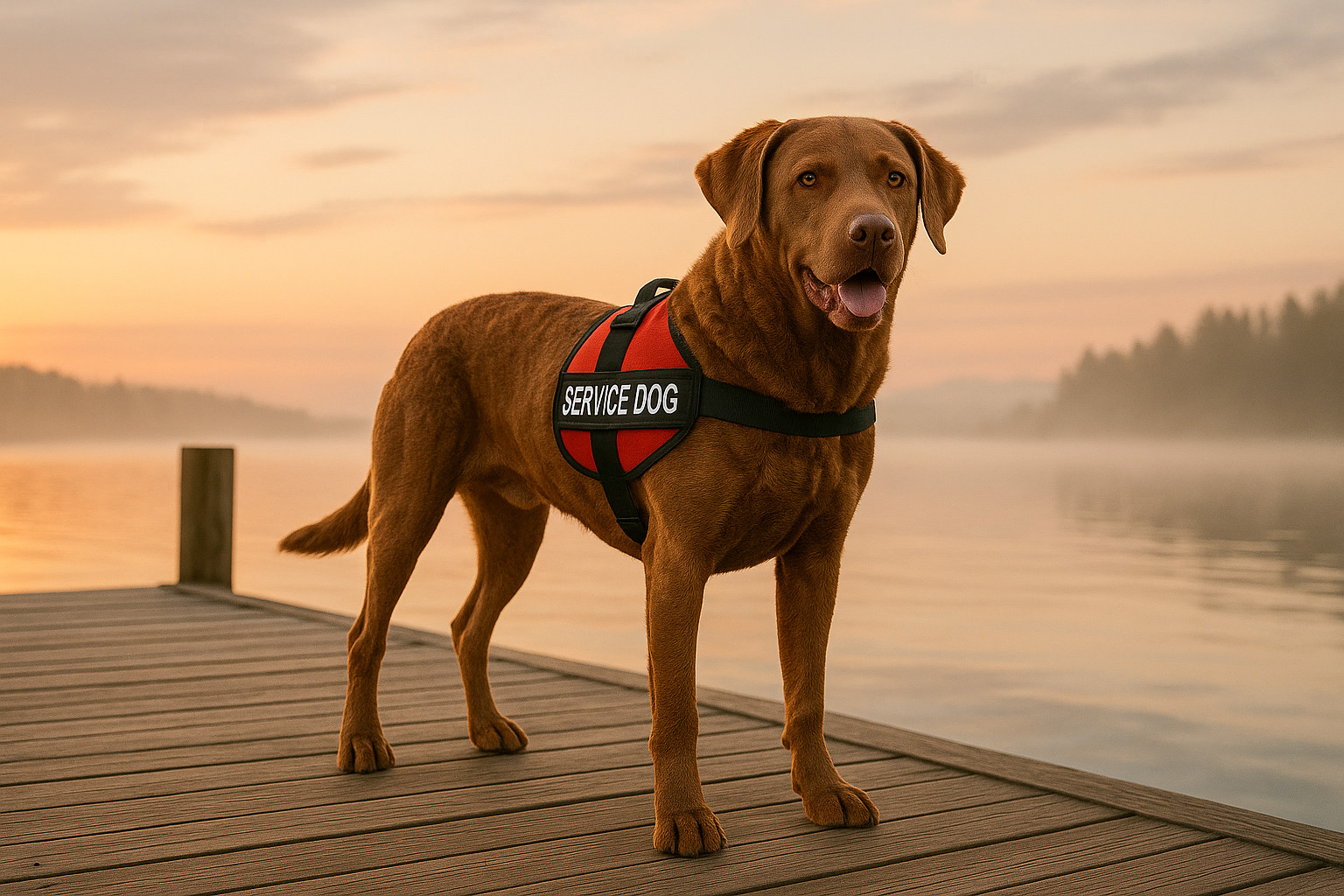
In the world of service dogs, choosing the right breed is crucial for fostering a successful partnership. The Chesapeake Bay Retriever (CBR) is one such breed that has piqued the interest of many looking to find the perfect canine companion for service work. Known for their intelligence, strength, and earnest disposition, these dogs are often considered for roles that require physical stamina and loyalty.
Chesapeake Bay Retriever Overview
The Chesapeake Bay Retriever is a breed synonymous with resilience and adaptability. Originating from the United States, particularly the Chesapeake Bay area, this breed was initially developed for retrieving waterfowl under challenging conditions. Today, their strength, endurance, and nature make them potential candidates for diverse service dog roles.
Physical Characteristics
Chesapeake Bay Retrievers are medium to large-sized dogs, typically weighing between 55 to 80 pounds, with males generally larger than females. Their most distinguishing feature is their thick, oily double coat, which is water-resistant and helps them thrive in harsh weather conditions—a trait essential for their original role in water retrieving.
Key physical characteristics include:
- Height: 21 to 26 inches at the shoulder
- Coat: Dense and short with a woolly undercoat
- Color: Varies from dark brown to sedge or deadgrass
The physical build of the Chesapeake Bay Retriever is muscular and robust, reflecting their capability for tasks that demand both power and endurance. Their webbed feet make them natural swimmers, a trait beneficial for search and rescue tasks in aquatic environments.
Temperament and Attitude
Chesapeake Bay Retrievers are renowned for their loyal and protective nature, typically forming strong bonds with their handlers. This loyalty is a double-edged sword; while it fosters a deep connection crucial for service work, it also means these dogs can be overprotective if not properly socialized.
Key temperament traits include:
Register Any Breed
- Intelligence: They are quick learners, capable of understanding complex commands and tasks.
- Independence: Though intelligent, they can be stubborn and prefer to do things on their terms.
- Aloofness with Strangers: Socialization from a young age is vital to ensure they remain approachable in public settings.
In stressful environments, Chesapeake Bay Retrievers tend to remain calm but may require direction to prevent them from becoming overprotective of their handler.
Types of Service Work
Given their strength, intelligence, and loyalty, Chesapeake Bay Retrievers are suitable for several types of service work:
- Mobility Assistance: Their strong build allows them to assist in mobility tasks such as pulling wheelchairs or providing balance support.
- Search and Rescue: Their swimming ability and tenacity make them excellent candidates for water and land-based search and rescue operations.
- Medical Alert: While not common, some have been trained successfully for medical alert tasks, detecting seizures or low blood sugar levels.
- Emotional Support: Their bond with their handler makes them suitable for emotional support roles, although they may not always have the calm demeanor required in highly social environments.
It's important for handlers to consider the Chesapeake Bay Retriever's potential challenges in high-stress public environments where their protective nature might be misinterpreted.
Health Considerations
Chesapeake Bay Retrievers are generally healthy dogs but can be prone to certain conditions which might impact their service work capabilities:
- Hip Dysplasia: Common in larger breeds, it can affect their ability to perform physically demanding tasks.
- Eye Conditions: Progressive retinal atrophy and cataracts could impair vision, affecting their ability to guide or perform search and rescue.
- Bloat: As deep-chested dogs, they are at risk for gastric torsion, a serious and often life-threatening condition.
Regular veterinary check-ups and a suitable diet and exercise routine can help manage these health issues and sustain their service life.
Training and Suitability
Chesapeake Bay Retrievers are highly trainable thanks to their intelligence but require a knowledgeable handler due to their independent nature. The training should begin early, focusing on:
- Socialization: Crucial to prevent overprotective behavior and to ensure they can perform effectively in a variety of settings.
- Obedience: They excel with firm, consistent training that includes positive reinforcement techniques.
- Task-Specific Training: Depending on the service role, training should be tailored to either enhance their natural retrieving instincts or teach specific tasks such as medical alerting.
Their independence is both a challenge and an asset; they can perform complex tasks without constant guidance but may also question directions, necessitating a handler who can assert authority tactfully.
Summary of Chesapeake Bay Retriever
Chesapeake Bay Retrievers possess numerous attributes that make them valuable service dogs, yet they also have traits that require careful management. Ideal for roles that utilize their strength and loyalty, they thrive with experienced handlers who can balance training with socialization to mitigate their protective instincts.
Pros:
- Strong and muscular, well-suited for physical tasks
- Intelligent and quick to learn complex commands
- Protective and loyal, fostering a strong handler bond
- Excellent swimmers, advantageous for aquatic search and rescue
Cons:
- Can be overly protective, requiring thorough socialization
- Prone to specific health issues like hip dysplasia
- Stubborn and independent, needing a firm and knowledgeable trainer
- Potential difficulty adapting to highly social environments due to aloofness
Ideal Service Roles:
- Mobility Assistance
- Search and Rescue
- Emotional Support (with consideration of social nature)
In conclusion, while Chesapeake Bay Retrievers have certain behavioral nuances and health considerations, their capabilities in terms of strength, intelligence, and adaptability make them a noteworthy breed for several specialized service roles. Handlers considering this breed should prepare for a commitment to consistent training and health management to fully utilize their potential as service dogs.


-
Public Access Kits
$149.00 Learn more This product has multiple variants. The options may be chosen on the product page -
Quick Ship Premium Vests
$48.00 – $82.00 Learn more This product has multiple variants. The options may be chosen on the product page -
Service Dog Bandana
$39.95 Learn more This product has multiple variants. The options may be chosen on the product page
Custom ID Cards

Custom ID Cards
Custom Service Dog Tags
Official Dog Vests

Smart Vests
Official Public Access Kits
Complete Kits
USA & CANADA Letters
High Quality Bandanas
Service Dog Tags
Smart Tags

ESA TAGS