German Wirehaired Pointer as a Service Dog
Register Any Breed
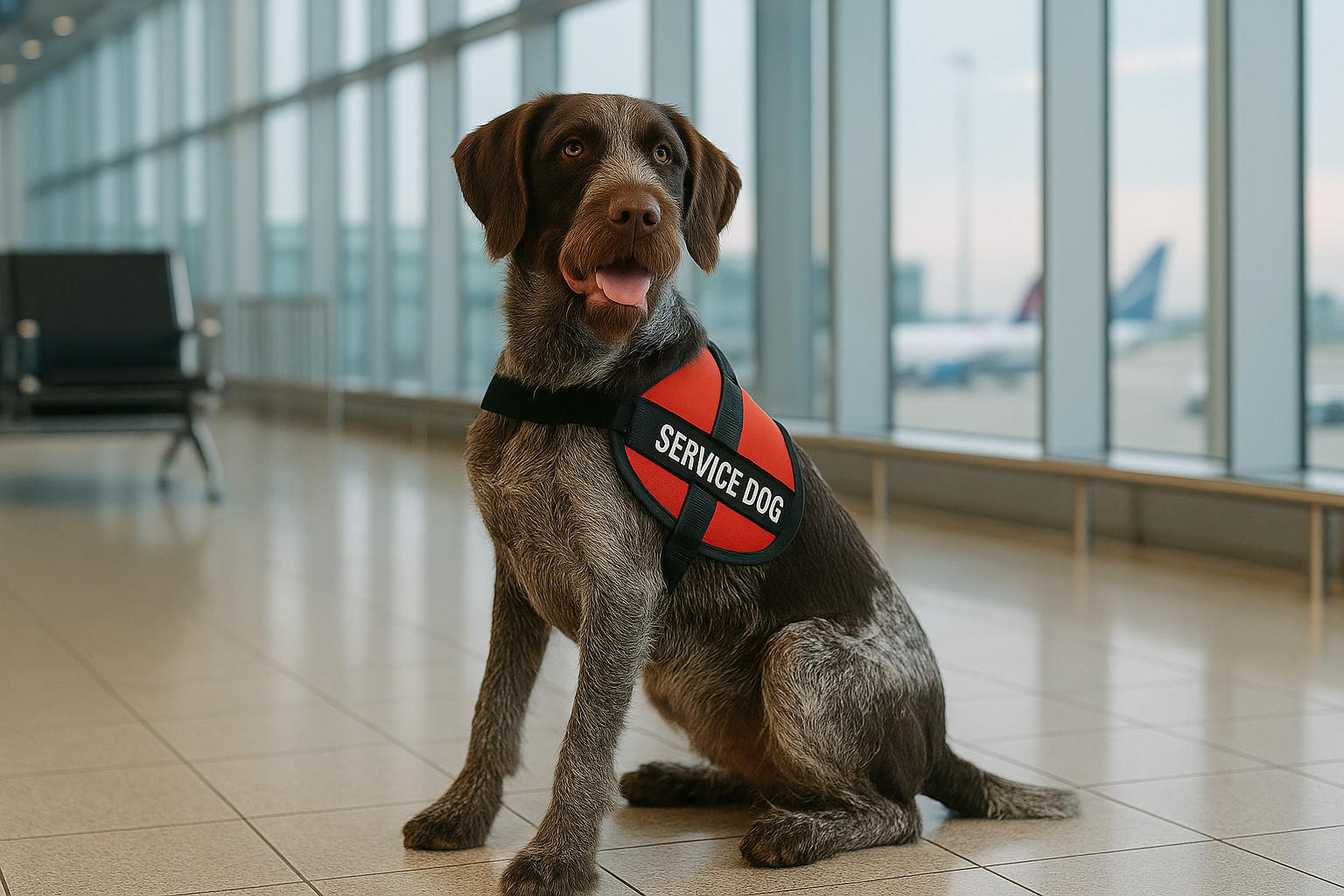
The German Wirehaired Pointer is an intelligent, versatile, and hard-working breed that excels in various roles, including that of a service dog. Known for their distinctive wiry coat and robust build, these dogs are celebrated for their hunting prowess. This article explores the suitability of the German Wirehaired Pointer as a service dog, examining their physical characteristics, temperament, types of service work they may be suited for, health considerations, training capabilities, and overall suitability.
German Wirehaired Pointer Overview
The German Wirehaired Pointer originated in Germany in the late 19th century and was bred to be a versatile hunting dog. Today, this breed is recognized for its capability to adapt and perform in diverse roles. Their robust energy and intelligence make them well-suited to various tasks beyond their traditional hunting duties, including as service dogs.
Physical Characteristics
German Wirehaired Pointers are medium to large-sized dogs with an average height ranging from 22 to 26 inches and a weight of 50 to 70 pounds. Their sturdy, athletic build allows them to be energetic and durable. Key physical traits include:
- Coat: Their distinctive wiry coat is weather-resistant and provides protection, yet requires regular grooming to maintain.
- Eyes and Ears: They have expressive eyes that convey intelligence and long, floppy ears that contribute to their alert appearance.
Their physicality supports roles that require endurance and strength, making them capable of service work that involves mobility assistance or outdoor activity.
Temperament and Attitude
German Wirehaired Pointers are known for their spirited and intelligent nature. They possess a balanced temperament characterized by:
- Energy: High energy levels require them to have regular exercise, which can be channeled into physical service tasks.
- Loyalty: Deeply attached to their handlers, they form strong bonds that are essential for effective service work.
- Curiosity: They are naturally curious, which can make them enthusiastic learners but sometimes leads to distraction in untrained individuals.
In public or stressful environments, their alert disposition and social nature can be advantageous for service roles, although their curiosity must be properly managed through training.
Types of Service Work
Given their physical and behavioral traits, German Wirehaired Pointers can excel in various types of service work:
Register Any Breed
- Mobility Assistance: Their strength and endurance allow them to assist in physical tasks that require pulling or supporting weight.
- Medical Alert: Their keen sense of smell can be trained to detect changes in body chemistry, aiding in diabetes or seizure alert tasks.
- Emotional Support: With their strong attachment and loyalty, they are suitable for providing emotional support and comfort in therapeutic settings.
Their willingness to learn and adaptable nature make them versatile candidates for customized service roles, provided they receive appropriate training.
Health Considerations
While German Wirehaired Pointers are generally robust and healthy, some breed-specific health issues may impact their suitability for service work. Known concerns include:
- Hip Dysplasia: A genetic disease that can affect mobility, crucial for service dogs engaged in physical tasks.
- Eye Conditions: Such as cataracts or progressive retinal atrophy, which can affect their ability to perform certain tasks over time.
- Ear Infections: Due to their floppy ears, they might be predisposed to infections that require regular maintenance.
Regular health screenings and preventive care are essential to ensure their longevity and effectiveness in a service dog role.
Training and Suitability
The intelligence and eagerness to please of German Wirehaired Pointers make them highly trainable; however, their independent nature requires a consistent and structured approach to training.
- Trainability: They quickly grasp commands and thrive in a task-oriented environment, but may assert independence if not guided firmly.
- Consistency: Regular, consistent training sessions are crucial to harness their intelligence and manage their energy effectively.
- Socialization: Early socialization is recommended to ensure they are well-adjusted in various environments and stimuli.
With proper training and socialization, they can become capable and reliable service dogs suited to a variety of environments and tasks.
Summary of German Wirehaired Pointer
In conclusion, the German Wirehaired Pointer can serve as a proficient service dog given their unique combination of traits and characteristics. Here is a summarized evaluation of their suitability for service work:
Key Strengths:
- Highly energetic and strong, suitable for mobility assistance and active service roles.
- Loyal and forms strong bonds, ideal for emotional support and therapeutic tasks.
- Intelligent and quick learners, capable of mastering complex tasks with regular training.
Key Weaknesses:
- High energy and curiosity can lead to distraction if not properly managed.
- Independent nature may challenge training without consistent guidance.
Ideal Service Roles:
- Mobility Assistance
- Medical Alert (e.g., seizure or diabetes alert)
- Emotional Support and Therapy Work
Ultimately, with the right training and management, German Wirehaired Pointers can be outstanding companions and service dogs, providing invaluable support to their handlers. Their physical capabilities and keen intelligence allow them to excel in demanding roles, provided their needs for exercise and mental stimulation are met.


-
Public Access Kits
$149.00 Learn more This product has multiple variants. The options may be chosen on the product page -
Quick Ship Premium Vests
$48.00 – $82.00 Learn more This product has multiple variants. The options may be chosen on the product page -
Service Dog Bandana
$39.95 Learn more This product has multiple variants. The options may be chosen on the product page
Custom ID Cards
Custom ID Cards
Custom Service Dog Tags
Official Dog Vests
Smart Vests
Official Public Access Kits
Complete Kits
USA & CANADA Letters
High Quality Bandanas
Service Dog Tags
Smart Tags

ESA TAGS