Rat Terrier as a Service Dog
Register Any Breed
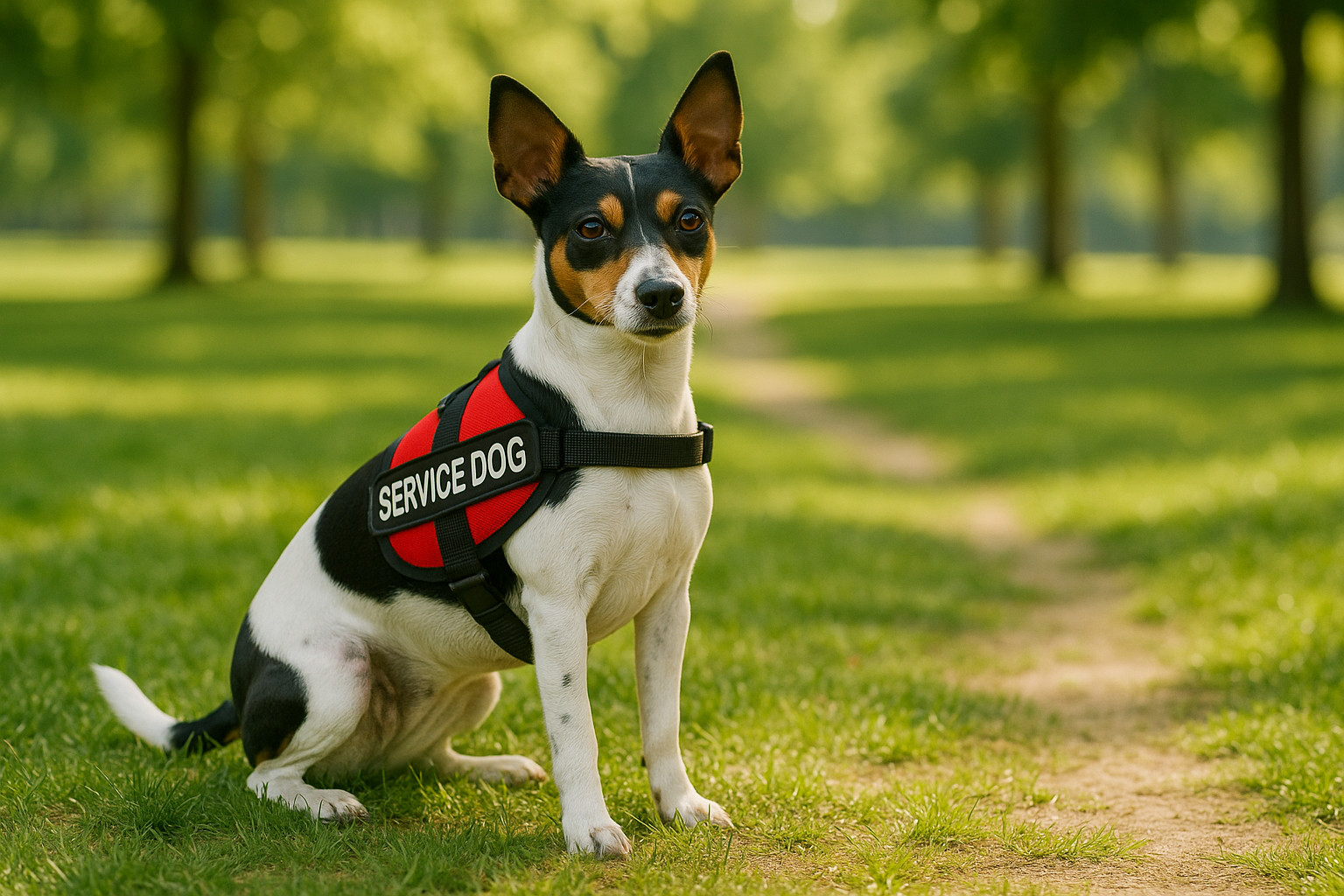
Understanding the suitability of different dog breeds for service roles is essential as each breed comes with its unique set of skills and challenges. In this article, we will explore the viability of the Rat Terrier as a service dog, assessing their physical characteristics, temperament, and specific attributes that could impact their efficacy in a service-oriented role.
Rat Terrier Overview
Rat Terriers are a small to medium-sized breed known for their agility, intelligence, and alert nature. Originally bred for hunting and farm work, they have evolved to become companions known for their versatility and adaptability.
Physical Characteristics
Rat Terriers are a small but robust breed, with a typical weight ranging from 10 to 25 pounds and standing about 10 to 18 inches tall at the shoulder. Their bodies are compact and muscular, with a square-proportioned frame that supports agility and endurance. They have smooth coats, which can come in a variety of colors, commonly featuring a tri-color pattern of black, white, and tan.
- Size and Strength: While their smaller size might limit their suitability for mobility assistance roles, it enables them to be highly agile and adaptable. This makes them ideal for roles in confined or urban environments where larger dogs might struggle to maneuver.
- Energy Levels: Rat Terriers are known for their high energy levels which demand regular exercise. This characteristic could serve well in service dog roles that require constant activity or vigilance, such as medical alert tasks where they need to be responsive and attentive over long periods.
Temperament and Attitude
The temperament of a Rat Terrier is typically lively, intelligent, and quick to react. They are incredibly alert and are known for their keen sense of hearing and smell, which can be crucial in various service dog tasks.
- Behavior Traits: Rat Terriers exhibit a curious and fearless nature. Their courage and willingness to engage in challenging tasks make them potentially good candidates for service work where keen senses and responsiveness are critical. However, their strong prey drive, a remnant from their hunting past, might require careful management to prevent distraction in environments where small animals are present.
- Public and Stressful Environment Suitability: The adaptability of the Rat Terrier to various environments is a significant advantage in public settings. These dogs are generally friendly and eager to please, but their alert nature can also make them prone to barking, which may need to be controlled through training.
Types of Service Work
Given their characteristics, Rat Terriers might excel in several niche service areas:
- Medical Alert and Assistance: Their size and energy make them suitable candidates for medical alert work, including detecting changes in human body odor associated with conditions like diabetes and seizures.
- Psychiatric Support: Due to their sensitivity and alertness, they can provide emotional support and companionship, effectively responding to anxiety symptoms or PTSD episodes.
- Detective Work: Although not traditional service dog roles, their sharp olfactory skills could be applied in scent detection work, assisting in environments that require locating specific scents.
Health Considerations
While Rat Terriers are generally a healthy breed, they have some predispositions that could impact their service capabilities:
- Common Health Issues: Potential health issues include patellar luxation, heart conditions, and allergies. Regular veterinary checkups can help manage these conditions effectively, ensuring they do not impact service performance.
- Longevity: Rat Terriers typically have a long lifespan, ranging from 12 to 18 years, offering a long-term companionship and service duration. However, their active lifestyle and keen need for engagement require continuous health and fitness management.
Training and Suitability
The intelligence of the Rat Terrier contributes to a high trainability profile, but their independent nature can sometimes pose challenges. Their success as service dogs greatly depends on the trainer's ability to harness their natural instincts and channel them into productive tasks.
Register Any Breed
- Trainability: These dogs respond well to positive reinforcement techniques. Their eagerness to please, combined with their intelligence, allows for effective training sessions, albeit sometimes requiring creativity to manage their relatively stubborn streaks.
- Independence and Intelligence: While intelligence aids in learning complex tasks, their independence calls for a handler experienced in managing willful dogs. This independence makes them self-sufficient workers, a trait valuable in specific service roles where independent decision-making is crucial.
Summary of Rat Terrier
In considering the Rat Terrier as a service dog, the key strengths and challenges can be summarized as follows:
- Strengths:
- High intelligence and trainability.
- Excellent agility and adaptability to various environments.
- Keen sense of smell and acute hearing, ideal for medical alert roles.
- Weaknesses:
- Their small size limits their suitability for physical support roles.
- Prey drive and vocal nature need management to prevent distractions.
- Ideal Service Roles:
- Medical alert and assistance tasks.
- Psychiatric and emotional support roles.
- Scent detection tasks requiring agility and acute senses.
In conclusion, while Rat Terriers may not fit traditional physical assistance roles due to their size, their intelligence, adaptability, and keen senses render them suitable for various specialized service canine roles, providing a valuable and spirited partnership for those in need.


-
Public Access Kits
$149.00 Learn more This product has multiple variants. The options may be chosen on the product page -
Quick Ship Premium Vests
$48.00 – $82.00 Learn more This product has multiple variants. The options may be chosen on the product page -
Service Dog Bandana
$39.95 Learn more This product has multiple variants. The options may be chosen on the product page
Custom ID Cards

Custom ID Cards
Custom Service Dog Tags
Official Dog Vests
Smart Vests
Official Public Access Kits
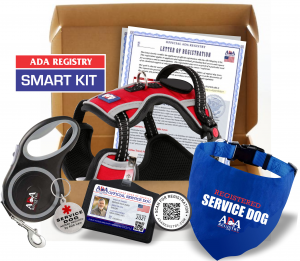
Complete Kits
USA & CANADA Letters
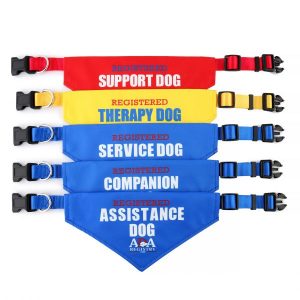
High Quality Bandanas
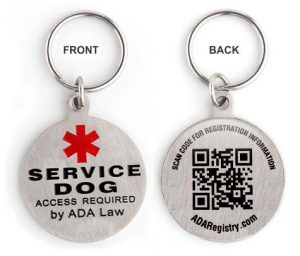
Service Dog Tags
Smart Tags
ESA TAGS