Saint Bernard as a Service Dog
Register Any Breed
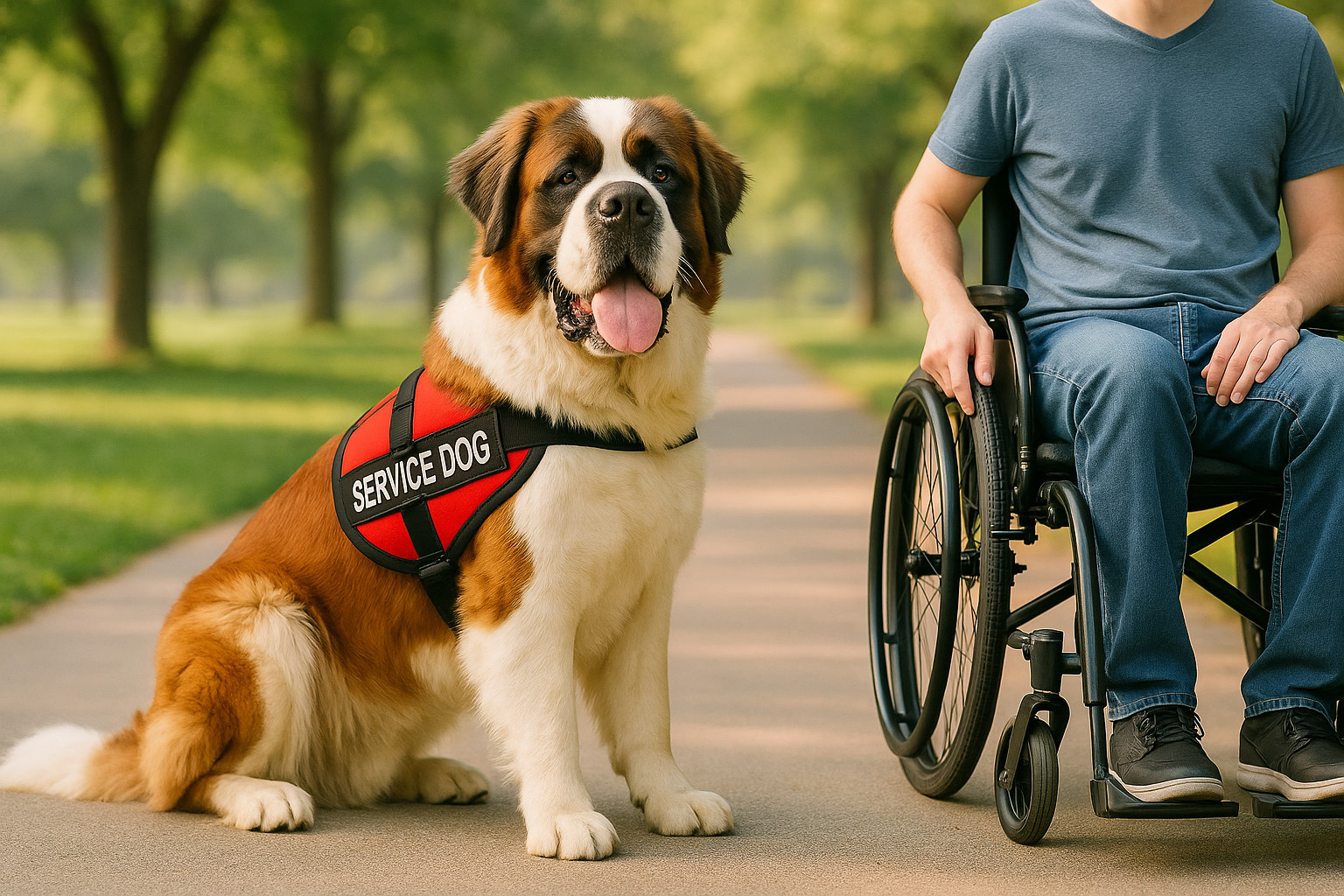
Saint Bernards have long been celebrated for their remarkable rescue abilities in the Swiss Alps, and their husky form is instantly recognizable. As a breed, they possess numerous qualities that align well with the demands of service work, although they also face certain challenges. This article will delve into their suitability for service roles, evaluating their physical characteristics, temperament, types of service work they excel in, relevant health considerations, training potential, and overall suitability.
Saint Bernard Overview
Saint Bernards are known for their gentle giant reputation. These dogs are truly imposing in size yet surprisingly graceful and good-natured. Originating from the Western Alps of Switzerland and Italy, they were initially bred by monks to assist in mountain rescues. Their natural inclination to help humans and keen sense of direction paved the way for their legendary status as mountain rescue dogs.
Physical Characteristics
The Saint Bernard is a large and powerful breed. Typically, an adult Saint Bernard weighs between 120 to 180 pounds, with males often on the larger side. Their strong, muscular build makes them capable of pulling substantial weight, a trait that is potentially useful in certain types of service work, such as mobility assistance.
- Size and Strength: Their size is beneficial for physical support tasks, but it can also be a challenge in smaller environments or for physically weaker handlers.
- Coat and Grooming: They have a dense, water-resistant coat which is essential for outdoor work, although it requires regular grooming to manage shedding and maintain hygiene.
- Energy Levels: Saint Bernards are moderately energetic and generally prefer having a calm disposition, saving energy for necessary tasks rather than constant movement.
The physical attributes of Saint Bernards make them well-suited for environments where strength and endurance are prioritized over speed and agility. However, their size can restrict them from certain activities, particularly those requiring high speed or agility in small spaces.
Temperament and Attitude
Saint Bernards are celebrated for their gentle demeanor and unwavering loyalty. They are naturally affectionate and sociable, making them excellent companions for children and adults alike. These dogs typically exhibit a patient and tolerant attitude, crucial for maintaining composure in public settings or during emergencies.
- Gentle Nature: Their calm and collected nature makes them perfect for handling stressful situations, ensuring they don't get easily startled or aggressive.
- Affection and Loyalty: These traits make them particularly suited for roles that require constant companionship or emotional support.
- Independence vs. Dependency: Although loyal, Saint Bernards can be independent, which means they may require careful training to ensure they execute tasks reliably on command.
In service dog scenarios, the temperament of the Saint Bernard is often an asset. Their innate desire to assist and protect fits well with various service roles, allowing them to form strong bonds with their handlers. However, their independent streak necessitates a thoughtful approach to training.
Types of Service Work
Saint Bernards hold the potential to excel in various types of service dog roles, although certain limitations should be noted based on their size and needs.
Register Any Breed
- Mobility Assistance: Their strength and size are ideal for providing physical support, helping individuals maintain balance or manage other physical disabilities.
- Search and Rescue: Capitalizing on their original purpose, Saint Bernards can be trained for emergency rescue operations, although this is less common today due to their slower pace compared to breeds like the German Shepherd.
- Emotional Support and Therapy: Their gentle disposition makes them unsurpassed as emotional support animals or therapy dogs, providing comfort in stressful or therapeutic environments.
- Medical Alert Assistance: While less frequent, Saint Bernards can be trained for select medical alert tasks, depending on their training and handler's abilities.
These roles highlight the breed’s versatility. Their historical rescue background emphasizes their ability to remain calm in collaborative, high-pressure situations, although their size limits them in tasks requiring agility and speed.
Health Considerations
Saint Bernards, like many large breeds, have specific health considerations that may affect their ability to function effectively in service roles.
- Joint and Bone Issues: Conditions like hip dysplasia are common and can be exacerbated by intense physical activity. Regular vet check-ups and a balanced diet are essential.
- Heart Problems: Due to their large size, they may be predisposed to certain cardiac issues that require management to prevent complications.
- Temperature Sensitivity: Their thick coat, while perfect for cold weather, can predispose them to overheating in warmer climates. Care must be taken to avoid working them too hard in hot conditions.
Awareness and management of these potential health issues are crucial. These considerations need to be factored into any decision making around using a Saint Bernard as a service dog, aligning their roles with environments and activities that minimize stress on their health.
Training and Suitability
Training Saint Bernards for service work requires patience and consistency but can be highly rewarding. Known for their intelligence, they can learn complex tasks, though their independent nature requires a training approach that fosters trust and motivation.
- Positive Reinforcement: Utilizing positive reinforcement techniques works well, encouraging loyalty and eagerness to learn.
- Early Socialization: It is crucial to expose Saint Bernards to a variety of environments, people, and other animals early on to bolster their social adaptability.
- Mental Stimulation: To prevent boredom and behavioral issues, providing ample mental challenges through problem-solving tasks is beneficial.
Their trainability is moderate — their independent thinking can at times appear stubborn. However, with the right approach that emphasizes bond-building and reinforcement, they can become reliable service dogs. Their temperament lends them reliability in tasks that require a composed, consistent demeanor.
Summary of Saint Bernard
When assessing the suitability of a Saint Bernard as a service dog, several factors come into play:
- Strengths:
- Gentle, calm disposition
- Physical strength for mobility tasks
- Loyal and affectionate nature
- Weaknesses:
- Size can limit agility and suitability in small spaces
- Health vulnerabilities, particularly joint and heart issues
- Potential heat sensitivity due to the thick coat
- Ideal Service Roles:
- Mobility assistance
- Emotional support and therapy
Despite certain challenges, Saint Bernards have the capability to be exceptional service dogs in specific contexts. Their robust build, gentle nature, and commitment to their handlers are qualities that when appropriately harnessed, provide substantial support for individuals needing assistance in large, open environments. Adaptations in their care and a dedicated training regimen can maximize their positive impact as service animals.


-
Public Access Kits
$149.00 Learn more This product has multiple variants. The options may be chosen on the product page -
Quick Ship Premium Vests
$48.00 – $82.00 Learn more This product has multiple variants. The options may be chosen on the product page -
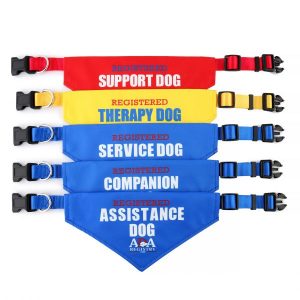
Service Dog Bandana
$39.95 Learn more This product has multiple variants. The options may be chosen on the product page
Custom ID Cards

Custom ID Cards
Custom Service Dog Tags
Official Dog Vests

Smart Vests
Official Public Access Kits
Complete Kits
USA & CANADA Letters

High Quality Bandanas
Service Dog Tags
Smart Tags

ESA TAGS