Saluki as a Service Dog
Register Any Breed
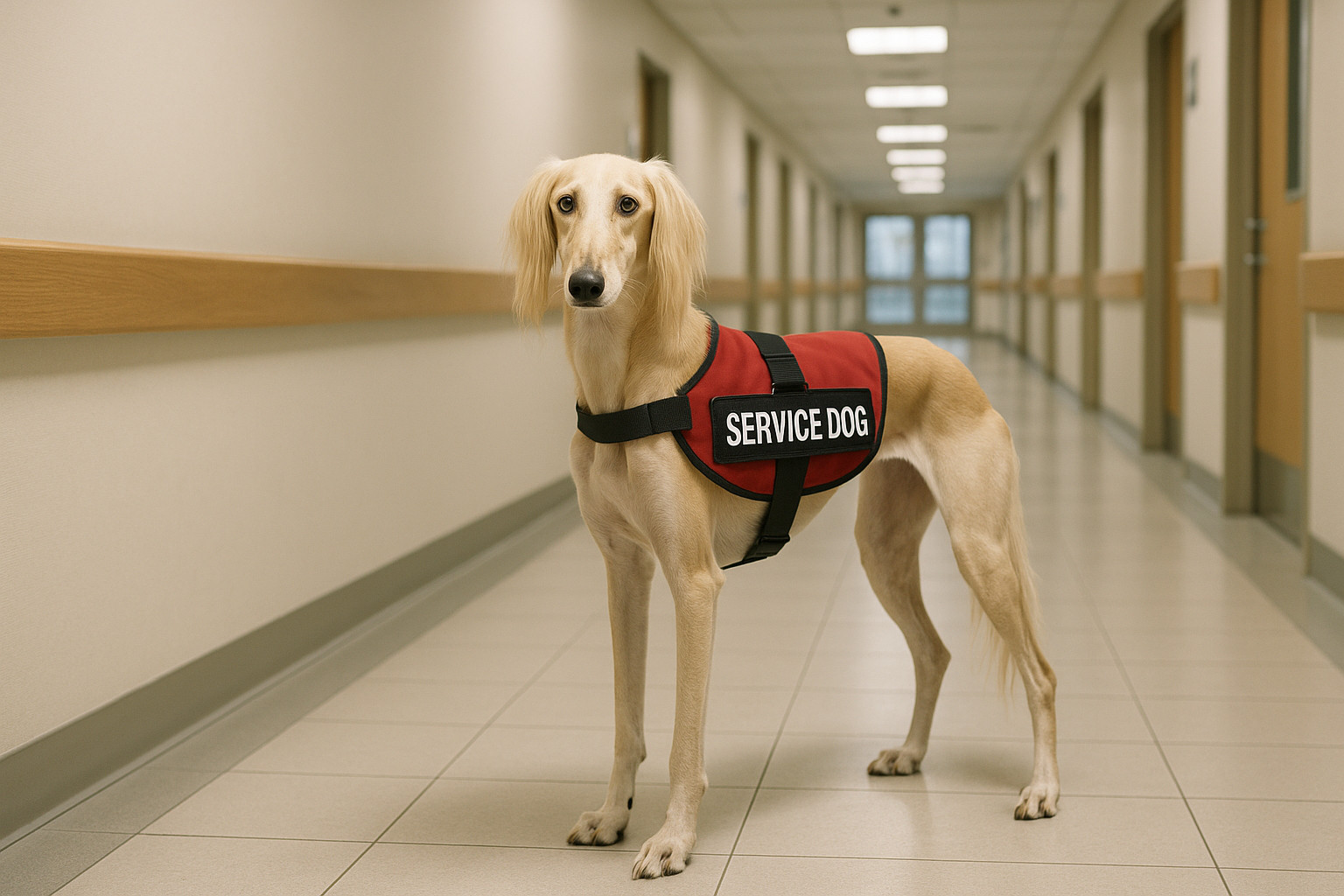
When considering breeds for service dog roles, the Saluki may not be the first breed that comes to mind. However, these elegant and ancient hounds have unique characteristics that could make them a suitable choice for certain service roles. In this comprehensive guide, we will explore the potential of the Saluki as a service dog.
Saluki Overview
The Saluki, renowned for its grace and speed, has a storied history as one of the oldest known breeds, tracing back thousands of years. Originally bred for hunting and known as the Royal Dog of Egypt, the Saluki's heritage is rich and respected. Today, while they are more commonly seen as companions, their unique traits can serve specific service roles effectively.
Physical Characteristics
Salukis are characterized by their slim, yet muscular build, and their impressive agility. They typically weigh between 40 to 60 pounds and stand about 23 to 28 inches at the shoulder. Their long legs and deep chest contribute to their speed and endurance, traits that were highly valued in their historical role as hunting dogs.
- Size and Strength: Suitable for tasks requiring moderate strength and agility but not ideal for heavy mobility assistance.
- Energy Levels: High energy, requiring plenty of physical exercise, which is ideal for active handlers.
- Grooming and Maintenance: Their sleek coat requires minimal grooming, though regular brushing helps manage shedding and maintains their coat's health.
Temperament and Attitude
Known for their dignified and sometimes aloof nature, Salukis can exhibit a unique blend of independence and affection.
- Independence: Their history as hunting dogs means they are capable of making decisions independently, which can be both an asset and a challenge in service roles.
- Affectionate: Despite their independence, Salukis form strong bonds with their handlers, showing deep loyalty and affection.
- Sensitivity: They are sensitive to their environment and require gentle, positive reinforcement during training.
Types of Service Work
Salukis' characteristics make them better suited for specific types of service work, leveraging their strengths and accommodating their limitations.
- Emotional Support: Their sensitivity and ability to bond closely with their handler make them excellent emotional support animals.
- Therapy Work: With their calm disposition, Salukis can serve as therapy dogs, offering comfort in hospitals, schools, and care facilities.
- Light Mobility Tasks: Due to their size and strength, they can assist with tasks such as fetching items or providing light counterbalance support.
Health Considerations
Understanding the health profile of Salukis is crucial when considering them for service roles.
- Genetic Disorders: Salukis are generally healthy, but some may suffer from heart diseases, eye problems, and certain cancers.
- Longevity: With a lifespan of 12 to 14 years, they offer a good duration of service life.
- Diet and Exercise: A balanced diet and regular exercise are vital to maintaining their health, crucial for any active service role.
Training and Suitability
Training a Saluki can be both rewarding and challenging due to their intelligent, yet independent nature.
Register Any Breed
- Intelligence and Independence: They are smart and capable of learning complex tasks but may resist repetitive or monotonous training.
- Training Approach: Positive reinforcement works best; harsh training methods can lead to mistrust and reduced effectiveness.
- Socialization: Early and consistent socialization helps them adjust to various environments and scenarios they might encounter in service work.
Summary of Saluki
In summary, while Salukis possess several desirable traits for service work, they may not suit everyone due to their specific needs and characteristics.
- Strengths:
- High energy and stamina for active service roles
- Ability to bond closely and provide emotional support
- Weaknesses:
- Requires spacious environments and plenty of exercise
- Can be independent and aloof, challenging for obedience training
- Ideal Service Roles:
- Emotional support and therapy work
- Light assistance tasks for mobile individuals
In conclusion, Salukis hold potential as service dogs, but their suitability largely depends on matching their unique traits with the right service tasks and handlers who appreciate their distinctive nature. Their elegance and loyalty can bring a wealth of benefits in the right service setting.


-
Public Access Kits
$149.00 Learn more This product has multiple variants. The options may be chosen on the product page -
Quick Ship Premium Vests
$48.00 – $82.00 Learn more This product has multiple variants. The options may be chosen on the product page -
Service Dog Bandana
$39.95 Learn more This product has multiple variants. The options may be chosen on the product page
Custom ID Cards

Custom ID Cards
Custom Service Dog Tags
Official Dog Vests

Smart Vests
Official Public Access Kits
Complete Kits
USA & CANADA Letters
High Quality Bandanas
Service Dog Tags
Smart Tags

ESA TAGS