Scottish Deerhound as a Service Dog
Register Any Breed
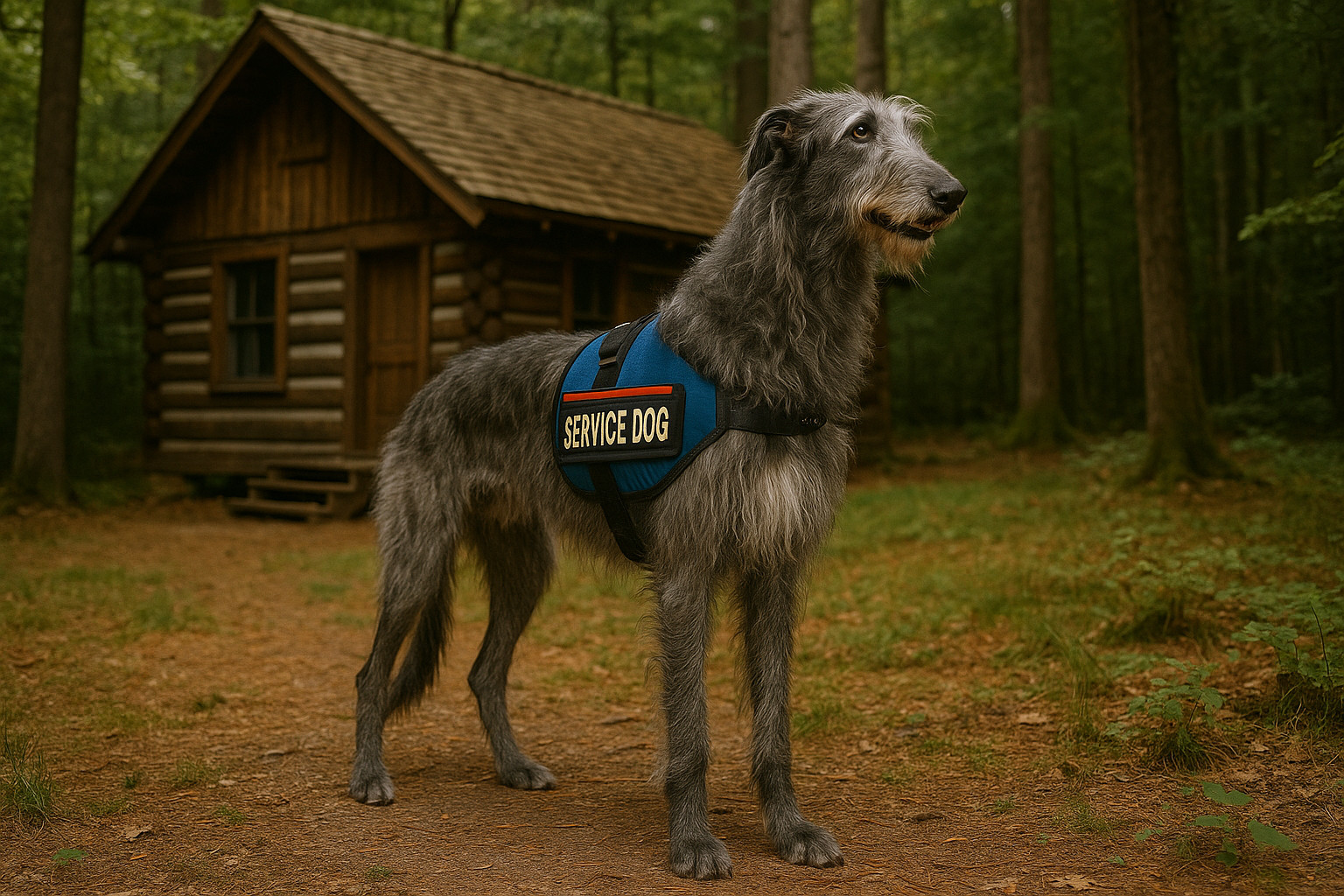
The Scottish Deerhound, known for its regal appearance and gentle disposition, presents an intriguing option for service work. Originally bred for deer hunting, these dogs exude elegance and grace, which, combined with their loving temperament, could suggest a potential for service duties. However, when considering a breed for service work, it's crucial to analyze both physical and mental attributes, health factors, and overall suitability for various service roles. In this article, we will delve into the nuanced characteristics of the Scottish Deerhound and evaluate its potential as a service dog.
Scottish Deerhound Overview
The Scottish Deerhound, often referred to as the "Royal Dog of Scotland," boasts an impressive historical lineage. Its majestic presence is matched by a loyal and amiable nature, making it a beloved companion for many dog enthusiasts. Though not commonly seen in service roles compared to breeds like Labrador Retrievers or German Shepherds, the Scottish Deerhound's unique characteristics warrant an individual examination for its service potential.
Physical Characteristics
The Scottish Deerhound is a sighthound, bred for speed, agility, and endurance. Physically, they have:
- Height and Weight: Standing approximately 28-32 inches tall and weighing between 70-110 pounds, their large and sturdy structure could be advantageous for certain types of service work requiring strength.
- Coat and Grooming: Their wiry coat, varying from blue-gray to brindle, requires regular grooming but is relatively low-maintenance. This is a benefit as it reduces the allergen load compared to heavier or double-coated breeds.
- Eyes and Ears: Their expressive eyes and keen ears aid their alertness and responsiveness, which are vital features for any service role.
Size plays a crucial role in their suitability. Their large stature makes them a prime candidate for mobility assistance, but it may also be a limitation in environments that require compact, agile dogs.
Temperament and Attitude
The temperament of a Scottish Deerhound is one of laid-back elegance. They are known to be:
- Gentle and Friendly: They have a naturally gentle disposition that makes them good companions in calm settings, although they may not exhibit the high drive of traditional service dog breeds.
- Sensitive and Affectionate: Although they are very affectionate with their family, their sensitivity can sometimes make them shy in unfamiliar settings, which could impact their confidence in high-pressure service scenarios.
- Quiet and Reserved: Deerhounds are not known for barking excessively, offering a calm presence in public and residential settings.
This temperament suggests they may excel in roles that require calm and composed demeanor but may need additional socialization to boost confidence in busy or stressful environments.
Types of Service Work
When evaluating the Scottish Deerhound for specific service roles, several factors must be considered:
Register Any Breed
- Mobility Assistance: Their size and strength are advantageous for mobility support roles, such as helping individuals maintain balance or fetch items, but their energy levels may require careful management.
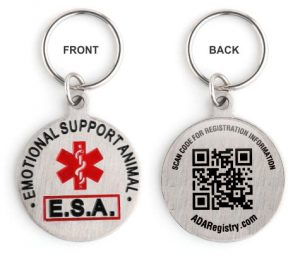
- Emotional Support: Their affectionate and gentle nature positions them well for roles as emotional support animals, offering comfort and companionship to individuals with mental health needs.
- Medical Alert: While not typically associated with medical alert capabilities, with the right training, their sensitivity could be harnessed for specific alerting tasks.
- Psychiatric Support: Their calming presence can support individuals with anxiety or PTSD, though intensive training would be essential to ensure responsiveness in all necessary scenarios.
Health Considerations
Scottish Deerhounds are generally healthy dogs but are prone to certain genetic health conditions that may affect their service work:
- Bloat: Like many deep-chested breeds, they are susceptible to bloat, a life-threatening condition that requires immediate veterinary attention.
- Cardiovascular Issues: They may have a predisposition to heart conditions, which could limit their endurance for vigorous activities.
- Joint Problems: Given their size, Deerhounds can encounter hip dysplasia or arthritis, which could hinder mobility, making regular veterinary checks essential.
Potential handlers must prepare for these conditions, considering factors that might lessen their reliability or endurance in demanding service roles.
Training and Suitability
Training a Scottish Deerhound for service work requires understanding their independent nature:
- Trainability: They are intelligent and capable of learning complex commands but may display an independent streak that poses a challenge in advanced training scenarios.
- Socialization: Early and consistent socialization is crucial to build confidence, especially for those intended to serve in busy environments.
- Motivation: Positive reinforcement techniques, combined with patience and persistence, are vital due to their sensitive nature.
A successful training regime should account for their unique combination of intelligence and independence, ensuring reliability and responsiveness in diverse service scenarios.
Summary of Scottish Deerhound
In evaluating the Scottish Deerhound for service work, several key strengths and limitations emerge:
- Strengths:
- Tall stature and strength offer potential in mobility support roles.
- Gentle and affectionate nature benefits emotional and psychiatric support roles.
- Weaknesses:
- Prone to specific health issues that may impact their long-term service capabilities.
- Sensitive and sometimes shy, needing dedicated socialization and confidence-building.
- Ideal Service Roles:
- Mobility assistance, provided exercise and training requirements are met.
- Emotional support, leveraging their calm and loving disposition.
- Psychiatric support, with extensive training to ensure reliability in assisting individuals with mental health needs.
In conclusion, while the Scottish Deerhound may not fit the mold of a traditional service dog, its individual traits do present opportunities for specific roles. Prospective handlers must carefully weigh its strengths and challenges to determine if this regal breed aligns with their personal or professional service needs.


-
Public Access Kits
$149.00 Learn more This product has multiple variants. The options may be chosen on the product page -
Quick Ship Premium Vests
$48.00 – $82.00 Learn more This product has multiple variants. The options may be chosen on the product page -
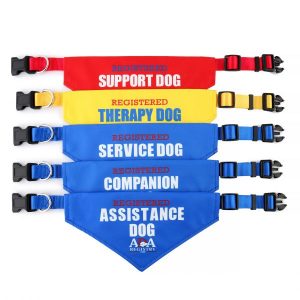
Service Dog Bandana
$39.95 Learn more This product has multiple variants. The options may be chosen on the product page
Custom ID Cards

Custom ID Cards
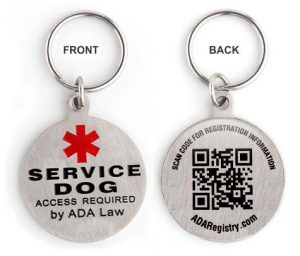
Custom Service Dog Tags
Official Dog Vests
Smart Vests
Official Public Access Kits
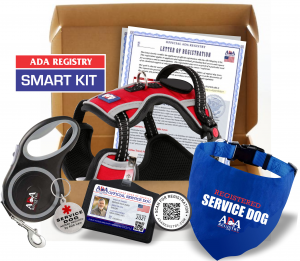
Complete Kits
USA & CANADA Letters
High Quality Bandanas
Service Dog Tags
Smart Tags

ESA TAGS