Siberian Husky as a Service Dog
Register Any Breed
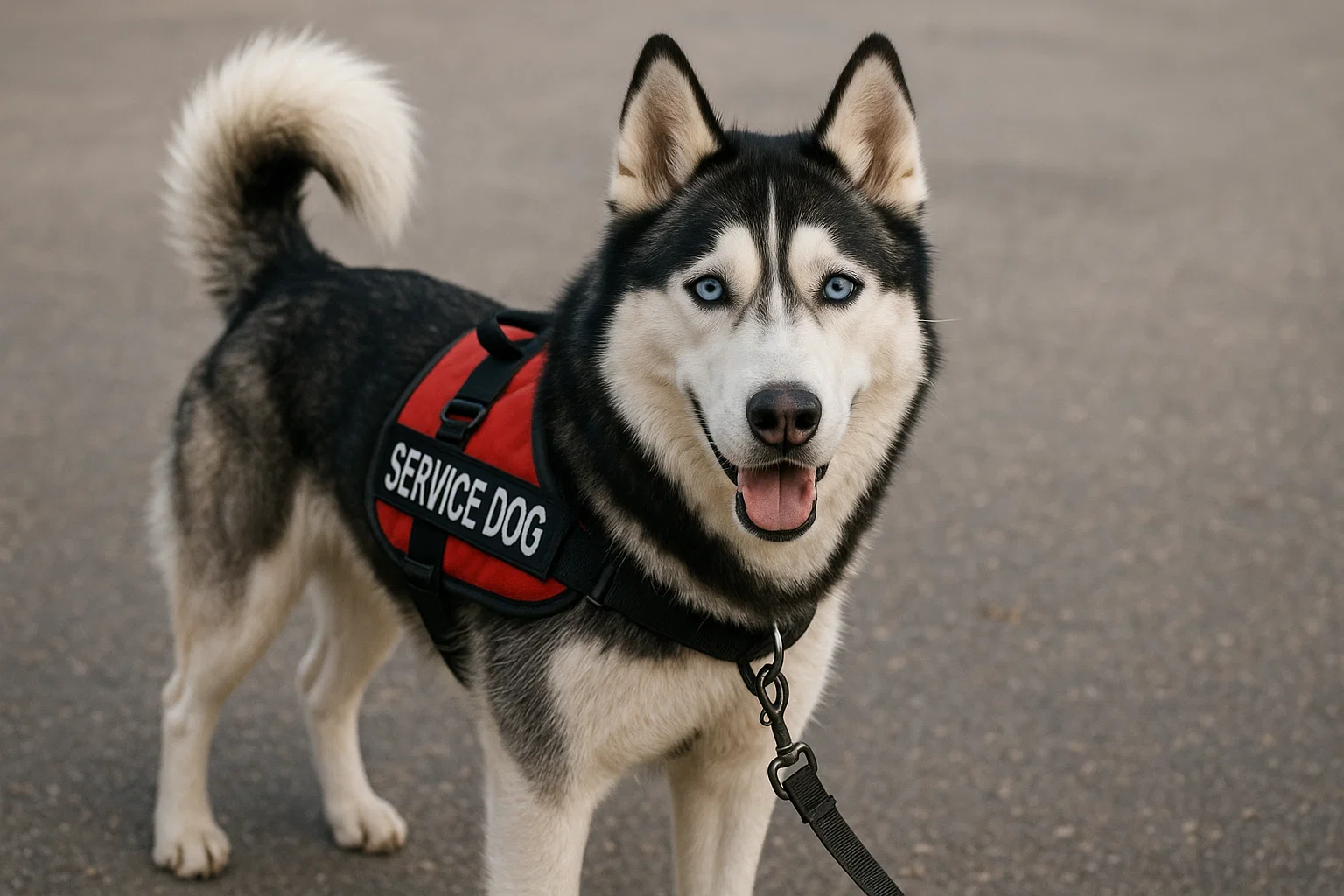
Siberian Huskies are renowned for their striking appearance and incredible endurance, often associated with sled pulling in arctic conditions. As working dogs, they captivate the imagination, but their suitability as service dogs is a topic of nuanced discussion. This article delves into the Siberian Husky's potential role as a service dog, analyzing their physical traits, temperament, and health, alongside their training needs and service suitability.
Siberian Husky Overview
The Siberian Husky, a native of the Siberian Arctic, is celebrated for its endurance, loyalty, and intelligence. Originating from the Chukchi people, these dogs were bred for sled pulling in harsh climates, involving long distances and heavy hauling. Despite their historical roots, today's Huskies are often family companions rather than working dogs. When considering them for service roles, their physical and behavioral traits are crucial aspects to evaluate.
Physical Characteristics
Siberian Huskies are medium-sized dogs, standing 20 to 23.5 inches tall and weighing between 35 to 60 pounds. Their thick double coat is an adaptation to cold weather, and their striking blue or heterochromatic eyes are characteristic features. These physical characteristics contribute positively and negatively to their role as service dogs.
- Size and Strength: Their robust build makes them suitable for tasks requiring significant physical strength, such as pulling or mobility assistance. However, their size might be less ideal for small, confined environments.
- Energy Levels: Siberian Huskies have high energy and require substantial physical exercise, which can be both a blessing and a curse. While active handlers can harness this energy for rigorous tasks, it can also be challenging for those needing a calm and sedentary service dog.
- Physical Stamina: Their endurance is unparalleled, making them excellent for roles that demand extended physical activity, such as search and rescue. However, their need for mental and physical stimulation cannot be overlooked.
Temperament and Attitude
Huskies are known for their independent and sometimes stubborn nature. They are intelligent but require an experienced handler to guide their focus and abilities.
- Intelligence and Independence: While intelligent, their willful independence can pose training challenges. They thrive when engaged in activities that stimulate their mind and align with their instincts, such as tracking.
- Social Behavior: Siberian Huskies are typically friendly and good-natured, often excellent with families and children. Their sociable and welcoming demeanor, however, may not suit roles needing high levels of protective behavior.
- Public Behavior: In public or stressful environments, Huskies are generally non-aggressive and composed. However, their curiosity can sometimes lead to distraction if not properly managed by a knowledgeable trainer.
Types of Service Work
Although not traditionally used as service dogs, Siberian Huskies can excel in specific roles where their strengths are well-suited.
- Search and Rescue: Their endurance and keen sense of smell make them exceptional in search and rescue missions, particularly in cold or rough terrain.
- Emotional Support: With their friendly disposition, they make excellent emotional support animals, offering comfort and companionship.
- Mobility Assistance: For handlers needing strength and endurance, Huskies can assist in mobility tasks, provided their training accommodates their natural instincts.
Health Considerations
Like all breeds, Siberian Huskies are predisposed to specific health issues that can influence their effectiveness as service dogs. Regular check-ups and proactive healthcare can mitigate many of these problems.
- Hip Dysplasia: A common concern in medium-to-large breeds, hip dysplasia can affect their ability to perform physical tasks if not managed properly.
- Eye Conditions: Siberian Huskies are prone to conditions like cataracts, which could impair their functionality in vision-reliant tasks.
- Zinc Deficiency: Unique to this breed is their susceptibility to zinc deficiency, impacting their coat and overall health if untreated.
Training and Suitability
Training a Siberian Husky as a service dog requires patience, consistency, and an understanding of their intrinsic behavior.
Register Any Breed
- Trainability: While Huskies are intelligent, their independence demands creative and engaging training methods. Positive reinforcement and consistency are essential strategies.
- Working Instincts: Harnessing their natural instincts for work-related tasks, such as pulling or guiding, can enhance their training outcomes.
- Challenges: Potential challenges include their tendency to escape and their high prey drive, which requires careful management in environments with small animals.
Summary of Siberian Husky
Siberian Huskies, with their unique blend of physical and character traits, offer both strengths and challenges as service dogs. Here's a concise summary to aid in understanding their potential roles:
- Strengths:
- Impressive physical endurance and strength
- Friendly and social temperament, great with groups
- Capable of excelling in search and rescue
- Suitable for emotional support roles
- Weaknesses:
- High energy levels requiring regular exercise
- Strong independence and occasional stubbornness
- Health considerations like hip dysplasia and zinc deficiency
- Ideal Roles:
- Search and rescue, especially in colder climates
- Emotional support for handlers requiring a friendly companion
- Mobility assistance, where physical strength is advantageous
By evaluating these factors, one can decide whether a Siberian Husky could serve effectively in their specific service dog requirements. While they may not fit all traditional service roles, their potential in specialized capacities remains significant.


-
Public Access Kits
$149.00 Learn more This product has multiple variants. The options may be chosen on the product page -
Quick Ship Premium Vests
$48.00 – $82.00 Learn more This product has multiple variants. The options may be chosen on the product page -
Service Dog Bandana
$39.95 Learn more This product has multiple variants. The options may be chosen on the product page
Custom ID Cards

Custom ID Cards
Custom Service Dog Tags
Official Dog Vests

Smart Vests
Official Public Access Kits
Complete Kits
USA & CANADA Letters

High Quality Bandanas
Service Dog Tags
Smart Tags

ESA TAGS