Yorkshire Terrier as a Service Dog
Register Any Breed
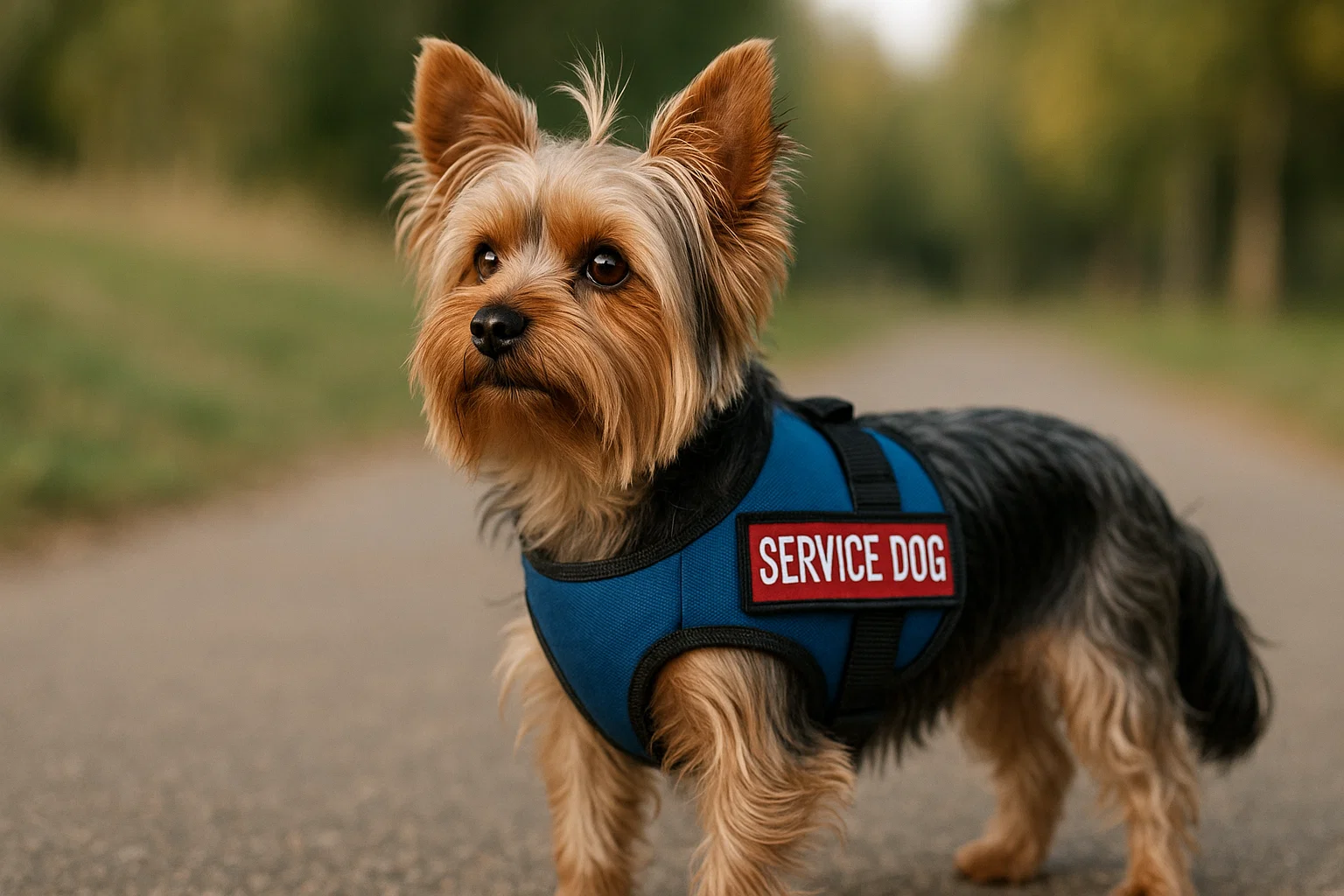
The role of a service dog is invaluable, offering crucial assistance to individuals with disabilities. While several breeds are traditionally associated with service work, such as the Labrador Retriever or German Shepherd, the Yorkshire Terrier might not be the first breed that comes to mind. However, this miniature bundle of energy and intelligence has proven to be surprisingly effective in specific types of service work. This article outlines the capabilities of Yorkshire Terriers as service dogs, focusing on their physical attributes, temperament, and areas where they excel.
Yorkshire Terrier as a Service Dog Overview
The Yorkshire Terrier, affectionately known as the Yorkie, is a small breed with a huge personality. Originally bred to catch rats in textile mills in the early 19th century, the Yorkie’s rich history reveals a lot about its characteristics that can be beneficial in the context of service work.
Physical Characteristics
The Yorkshire Terrier is a toy-sized dog, typically weighing between 4 to 7 pounds and standing 7 to 8 inches tall. This compact size can be advantageous and disadvantageous for service work.
- Advantages:
- Portability: Their small stature makes them easy to carry in public spaces, including transportation modes where larger dogs may not fit comfortably.
- Apartment Friendly: Ideal for environments where space is limited.
- Disadvantages:
- Strength Limitations: Their size limits them from performing tasks requiring physical strength, such as mobility support or heavy pulling duties.
- Visibility: Due to their size, they can be easily overlooked in a crowded environment, which can pose safety concerns.
Temperament and Attitude
Yorkshire Terriers are known for their spirited and tomboyish attitude. Despite their small size, they are confident and tend to express their opinions with enthusiasm.
- Positive Traits:
- Alertness: Yorkies are highly alert and can be quick to respond to their handler’s needs, making them suitable for alert-specific tasks.
- Affectionate Nature: They bond closely with their owners, which can be beneficial for emotional support and therapeutic companionship.
- Challenges:
- Independence: While intelligent, they are also known for their independent streak. Training requires patience and consistency.
- Vocal Nature: Yorkies have a tendency to be vocal, which might be challenging in environments that require silence or discretion.
Types of Service Work
The Yorkshire Terrier’s size and temperament make them particularly well-suited to specific types of service work.
- Medical Alert Dogs: Yorkies excel in roles where alertness is crucial. Their keen sense of smell and attentive nature allow them to detect changes in a person’s physiological state, making them excellent candidates for diabetic alert roles.
- Psychiatric Service Dogs: They provide significant support for individuals with psychiatric conditions. Their small size allows them to comfortably remain close to their handlers, offering a calming presence during stress episodes.
- Emotional Support Animals (ESAs): While not classified as service dogs, their affectionate and loyal nature make Yorkshire Terriers wonderful emotional support animals, providing comfort and companionship.
Health Considerations
Like any breed, the Yorkshire Terrier has its own set of health considerations which can affect their suitability as a service dog.
- Dental Issues: Yorkies are prone to dental problems. Regular dental care is essential to prevent issues that could impact their ability to perform service tasks effectively.
- Luxating Patella: This breed is susceptible to knee joint problems, which could affect mobility and longevity in service work.
- Portosystemic Shunt: A liver condition more common in Yorkies. Regular veterinary checkups can help monitor and manage potential health issues.
Training and Suitability
Training a Yorkshire Terrier for service work involves dedication and consistency. While they are intelligent, their independence means they require a particular approach.
Register Any Breed
- Trainability:
- Smart and Quick Learners: Yorkies are motivated by positive reinforcement and can learn tasks rapidly if trained effectively.
- Consistency is Key: Regular, consistent training sessions are necessary to keep them focused and to reinforce commands.
- Suitability for Service Work:
- Appropriate Environments: Ideal for settings where their small size is a benefit rather than a hindrance.
- Specialized Tasks: Yorkies are most successful in roles where their natural traits, such as their alertness, can be utilized fully.
Summary of Yorkshire Terrier
- Strengths:
- Highly alert and attentive
- Affectionate and loyal
- Easily portable due to small size
- Weaknesses:
- Limited physical strength
- Prone to specific health issues
- Independent and sometimes vocal
- Ideal Service Roles:
- Medical alert tasks
- Psychiatric support
- Emotional support scenarios
In conclusion, while Yorkshire Terriers may not fit the traditional image of a service dog due to their size, they bring unique advantages to specific service roles. With the right training and care, Yorkies can offer significant support and companionship to their handlers, validating their place as capable and devoted service dogs.


-
Public Access Kits
$149.00 Learn more This product has multiple variants. The options may be chosen on the product page -
Quick Ship Premium Vests
$48.00 – $82.00 Learn more This product has multiple variants. The options may be chosen on the product page -
Service Dog Bandana
$39.95 Learn more This product has multiple variants. The options may be chosen on the product page
Custom ID Cards

Custom ID Cards
Custom Service Dog Tags
Official Dog Vests

Smart Vests
Official Public Access Kits
Complete Kits
USA & CANADA Letters
High Quality Bandanas
Service Dog Tags
Smart Tags

ESA TAGS