Greyhound as an Emotional Support Dog
Register Any Breed
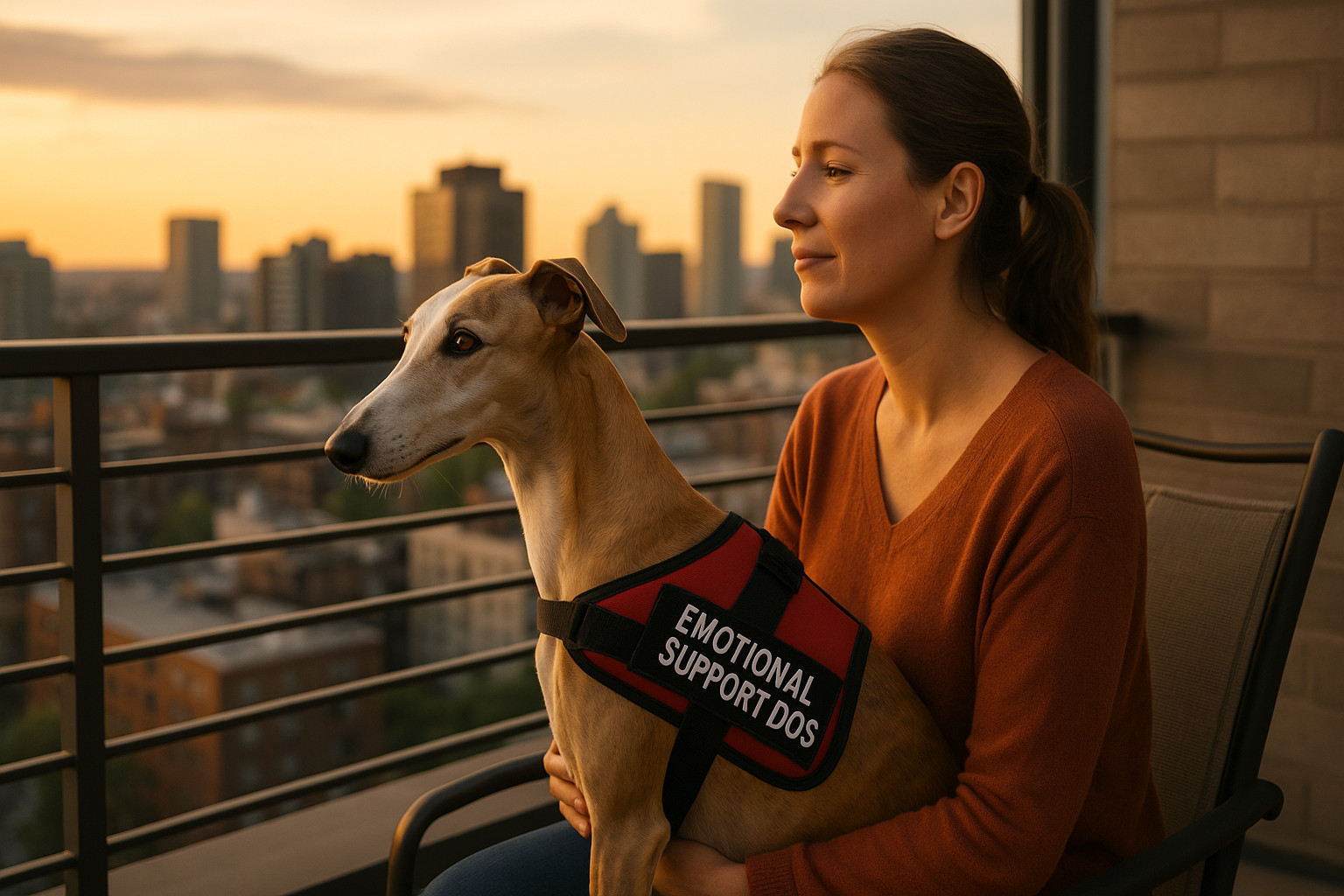
Owning a pet goes beyond companionship; it can significantly impact our emotional well-being. Among various breeds, the elegant and graceful Greyhound stands out as a potential emotional support dog, offering unique traits that make it ideal for many needing emotional assistance.
Understanding the Emotional Support Role
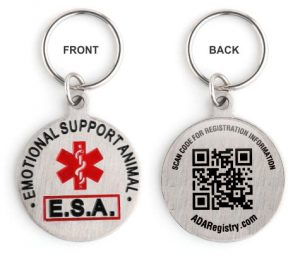
Emotional support animals (ESAs) provide comfort and stress relief to individuals suffering from anxiety, depression, PTSD, and other emotional or mental health conditions. Unlike service dogs, ESAs do not require specialized training to perform tasks; their primary role is to offer companionship and emotional stability through their presence and behavior.
Greyhound Overview
The Greyhound is renowned for its sleek physique, historically bred for speed and agility. However, beyond their racing reputation, Greyhounds are gentle and compassionate, making them excellent companions. With a typically docile nature, Greyhounds are well-suited to being emotional support animals. Their calm demeanor often translates into a peaceful presence, which can be profoundly soothing for individuals experiencing stress or anxiety.
Temperament and Emotional Connection
Greyhounds possess a unique temperament that enhances their capability as emotional support dogs. They’re known for being gentle and friendly, with a marked affection for their human companions. This breed tends to form strong emotional bonds quickly and stays connected to their handler’s emotional state. Their keen ability to read subtle human emotions makes them responsive companions during times of emotional distress.
Adaptability and Daily Behavior
One of the exceptional traits of Greyhounds is their adaptability. They can adjust to various living environments, whether in a small apartment or a sprawling house, without significant changes in their demeanor. Daily, Greyhounds tend to have moderate energy levels, which are manageable for most people seeking an ESA. While short bursts of exercise, like a daily walk or brief play session, are essential, they primarily enjoy lounging, providing a comforting presence.
Situations Where Greyhound Provides Strong Support
Greyhounds excel in situations that demand calmness and tempered energy. They’re particularly supportive in:
- Stressful environments, where their composure can help ease anxiety.
- Providing company during solitude, owing to their gentle companionship.
- Being attentive listeners, aiding those who benefit from non-judgmental companionship.
Ideal Living Environments
Greyhounds may not require large spaces, but they do thrive in environments that uphold a sense of tranquility. They are well-suited to:
Register Any Breed
- Urban apartments with accessible outdoor spaces or pet-friendly parks.
- Family homes with designated rest areas for the dog.
- Assisted living facilities, providing solace to residents through their serene presence.
Bonds with Different Types of People
Greyhounds are versatile in the bonds they form, complementing various human needs:
- Single individuals seeking a loyal, non-intrusive companion.
- Families where their gentle nature is a good match for children.
- Elderly individuals who enjoy a quiet, loving presence without demanding physical engagement.
Health, Care, and Wellbeing
Common Health Considerations
While Greyhounds are generally healthy, some considerations may affect their capability as an emotional support animal:
- They are prone to certain genetic conditions like hip dysplasia or bloat.
- Greyhounds have a narrow range of acceptable body fat, needing careful dietary management.
Grooming, Comfort, and Maintenance Needs
With their short, smooth coat, Greyhounds require minimal grooming, usually limited to regular brushing to manage shedding. Given their low body fat, they might need extra insulation in colder climates to maintain comfort and warmth. These grooming and comfort needs ensure they remain well-groomed and ready to offer emotional assistance without undue stress.
Preparing a Greyhound for Emotional Support Work
Transitioning a Greyhound into an effective emotional support animal involves several key steps:
Socialization and Responsiveness
Early socialization is imperative. Exposure to diverse environments and people enhances their adaptable nature, making them responsive to a wide array of emotional cues. Structured positive reinforcement training enhances their ability to respond supportively to human emotions.
Managing Stress and Emotional Cues
Guiding a Greyhound to manage its stress helps ensure they remain effective emotional companions. Recognizing signs of stress in the dog, such as restlessness or vocalizations, allows handlers to address their needs promptly, ensuring the dog maintains its comforting presence.
Strengths, Challenges, and Ideal Homes for Greyhound
Strengths:
- Intuitive emotional connectivity, naturally gravitating towards providing comfort.
- A presence that is calming and grounded, ideal for reducing stress and anxiety.
Challenges:
- Some Greyhounds may experience separation anxiety, requiring gradual acclimatization to being alone.
- Their sensitivity means they might also absorb stress from their handlers, necessitating self-care for both parties.
Final Thoughts
In conclusion, Greyhounds excel as emotional support animals due to their gentle, adaptive disposition and genuine affinity for human connection. Their unique blend of qualities, paired with attentiveness to emotional cues, makes them powerful allies for those seeking emotional support.
Key Takeaways for the Greyhound as an Emotional Support Dog
- Best suited for: Individuals needing a stable, calming presence, in environments ranging from urban apartments to family homes.
- Not ideal for: Those unable to provide regular companionship due to potential separation anxiety.
- Emotional traits: Gentle, empathetic, adaptable, and affectionate.
- Care and health notes: Regular grooming, attention to warmth in cooler climates, and monitoring for common health issues.
- Environments where they provide the most comfort: Quiet, stable environments, such as apartments and assisted living facilities, alongside attentive handlers.


-
Public Access Kits
$149.00 Learn more This product has multiple variants. The options may be chosen on the product page -
Quick Ship Premium Vests
$48.00 – $82.00 Learn more This product has multiple variants. The options may be chosen on the product page -
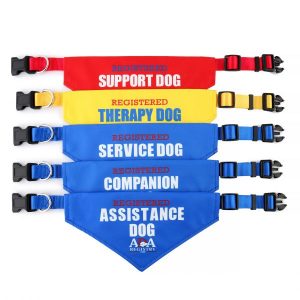
Service Dog Bandana
$39.95 Learn more This product has multiple variants. The options may be chosen on the product page
Custom ID Cards

Custom ID Cards
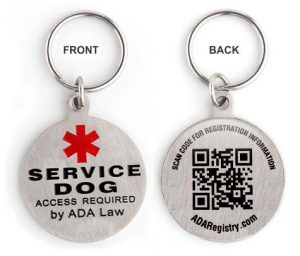
Custom Service Dog Tags
Official Dog Vests

Smart Vests
Official Public Access Kits
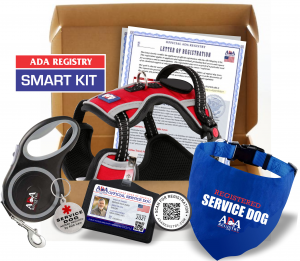
Complete Kits
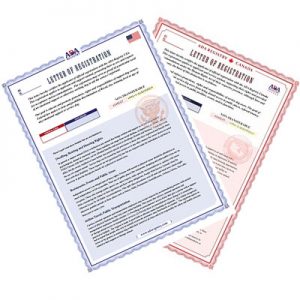
USA & CANADA Letters
High Quality Bandanas
Service Dog Tags
Smart Tags

ESA TAGS