Pomeranian as an Emotional Support Dog
Register Any Breed
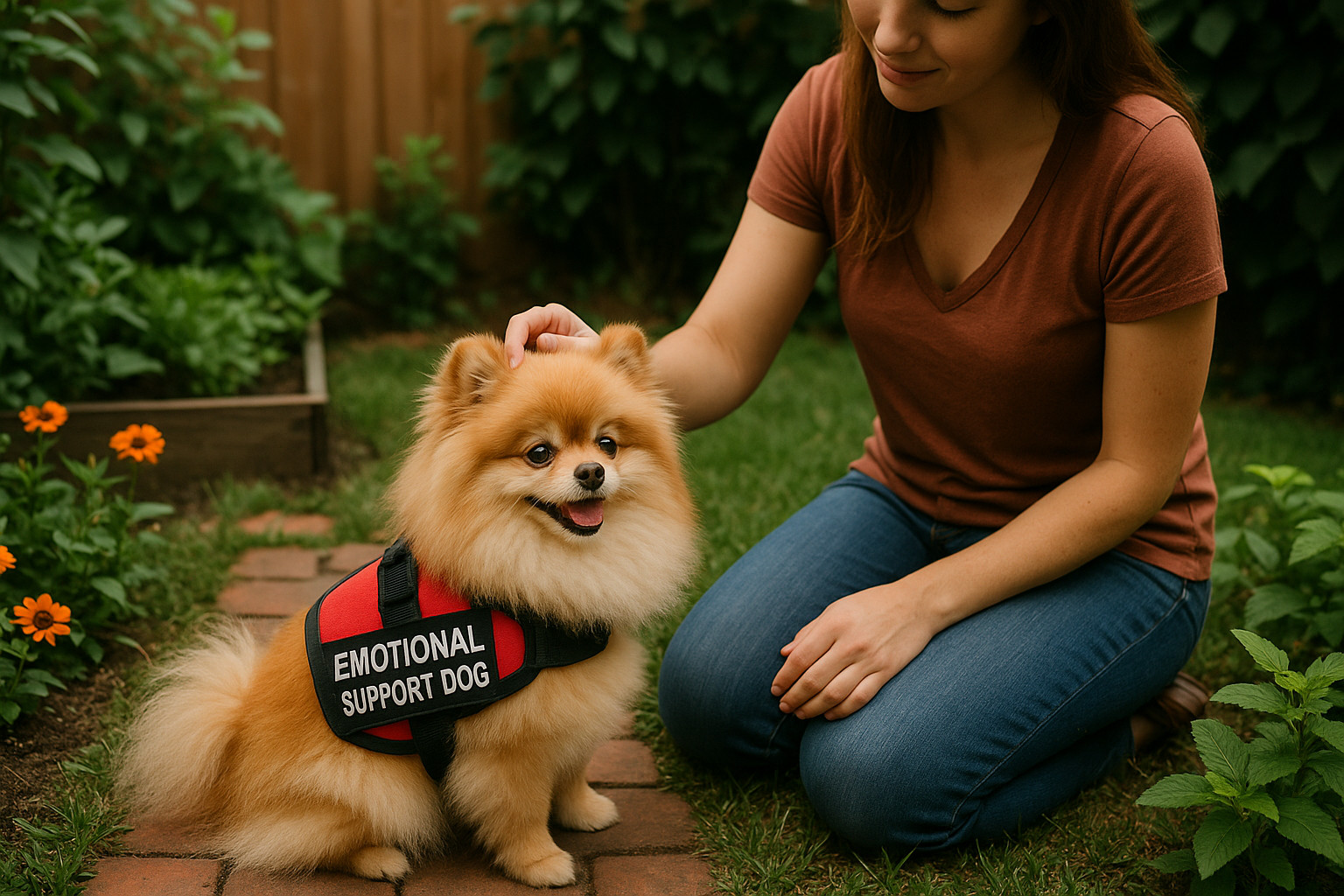
The Pomeranian, with its lively personality and affectionate nature, has increasingly become a popular choice for individuals seeking an emotional support animal (ESA). Below, we'll explore their suitability for this role, considering aspects such as temperament, adaptability, and necessary care.
Understanding the Emotional Support Role
Emotional support animals provide companionship and support to individuals experiencing emotional or psychological challenges. Unlike service animals, they do not need specific training to perform tasks, but their presence alone brings significant emotional benefits. The Pomeranian, known for its affectionate and friendly demeanor, is particularly well-suited to fulfilling the emotional needs of those seeking comfort and companionship.
Pomeranian Overview
Pomeranians are small, lively dogs, part of the Spitz family. Weighing between 3 to 7 pounds, their compact size allows them to adapt easily to various living situations. Although small, Pomeranians exude a larger-than-life presence, characterized by their bold and curious nature. They are highly intelligent dogs, making them quick to pick up on human emotional cues.
Temperament and Emotional Connection
Pomeranians are known for their vivacious temperament and ability to form strong bonds with their owners. These bonds are deeply emotional, making the Pomeranian a perfect candidate for emotional support roles. Their innate curiosity and intelligence often lead them to be highly attentive to their owner’s mood and actions. The Pomeranian's eager-to-please attitude ensures they are often in tune with emotional changes, providing comfort through their steadfast presence and warm cuddles.
Adaptability and Daily Behavior
The adaptability of Pomeranians is one of their greatest strengths. Whether living in a bustling urban environment or a quiet rural home, they adjust with relative ease. Their curious and alert nature keeps them engaged with their surroundings, yet they are exceptionally attuned to their owner's emotional needs.
- Energy Levels: Pomeranians possess moderate energy levels and appreciate opportunities for play and short walks, helping reduce stress for both themselves and their owners.
- Comfort Routine: Their love for human bonding often means they enjoy being close, sitting on laps, or lying beside their owners, providing effortless emotional support.
Situations Where Pomeranian Provides Strong Support
Pomeranians are particularly effective in circumstances where consistent companionship is needed. Their small size makes them ideal for individuals living in apartments or assisted living spaces, where a larger breed might be impractical.
- Alleviating Loneliness: They thrive in situations where their presence can relieve loneliness, offering an affectionate demeanor that makes one feel loved and valued.
- Stress Reduction: Their playful antics and happy-go-lucky nature have been shown to lower stress levels, making them perfect for high-anxiety situations.
Ideal Living Environments
Pomeranians are adaptable to various living environments but excel in spaces where they can maintain close proximity to their owners. Their small stature is suitable for apartments, smaller homes, and assisted living facilities. However, they also enjoy ample playtime outdoors if a backyard is available.
Register Any Breed
Bonds with Different Types of People
Pomeranians can form strong bonds with diverse individuals, from young children to elderly folks. Their loyal nature means they can become a child's steadfast playmate or provide the gentle companionship needed by older adults.
- Children: Pomeranians are playful and engaging, often forming unique bonds with children due to their affectionate personality.
- Elderly: Their steady presence and less demanding physical needs make them suitable for older adults requiring emotional support.
Health, Care, and Wellbeing
The overall health and wellbeing of a Pomeranian are crucial for them to effectively fulfill their role as an ESA. Regular veterinary check-ups and a proper diet tailored to their size and energy needs ensure they remain in peak condition to offer emotional support.
Common Health Considerations
Pomeranians, while generally healthy, can be prone to specific health issues common to small breeds. These include luxating patellas, dental problems, and tracheal collapse. Early detection through regular vet visits and proactive care can mitigate these challenges.
Grooming, Comfort, and Maintenance Needs
Pomeranians have a distinctive, fluffy coat requiring regular maintenance to prevent matting and tangling. Grooming is also a bonding opportunity that can enhance their emotional support role.
- Brushing: Regular brushing keeps their coat healthy and can be a soothing routine for both dog and owner.
- Bathing: Routine baths every few weeks maintain cleanliness and comfort, ensuring a fresh presence.
Preparing a Pomeranian for Emotional Support Work
Preparation for emotional support involves focusing on socialization, stress management, and ensuring the dog is comfortable with various stimuli.
Socialization and Responsiveness
Socialization is key for a Pomeranian to effectively support their owner without becoming anxious or over-stimulated in new environments. Positive experiences with different people and environments during early development can enhance their emotional support capabilities.
Managing Stress and Emotional Cues
Pomeranians are sensitive animals capable of detecting stress or sadness in their owners. Training them to respond appropriately to emotional cues can bolster their effectiveness as support animals.
- Calm Environments: Keeping a calm, stable environment helps the Pomeranian perform optimally. Overexposure to stressful situations should be managed carefully to prevent anxiety.
Strengths, Challenges, and Ideal Homes for Pomeranians
While Pomeranians are strong candidates for emotional support roles due to their empathy and playful demeanor, they do have challenges. Their vocal tendencies might not suit individuals needing a silent companion or in environments with strict noise ordinances.
- Strengths: Intelligence, affection, and adaptability are strengths that make them excellent emotional support animals.
- Challenges: Managing their vocal tendencies and ensuring regular grooming are essential considerations.
Final Thoughts
Pomeranians present an ideal blend of intelligence, affection, and adaptability, creating a companion capable of providing substantial emotional support. Their unique size, combined with a vibrant personality, makes them suitable for a range of living conditions and emotional support needs.
Key Takeaways for the Pomeranian as an Emotional Support Dog
- Best suited for: Individuals seeking affectionate and alert companionship in varied living situations.
- Not ideal for: Environments requiring silence; individuals unable to commit to regular grooming.
- Emotional traits: Highly empathetic, attentive, and playful, capable of building strong emotional bonds.
- Care and health notes: Regular grooming required; attention needed for potential small breed health issues.
- Environments where they provide the most comfort: Apartments, family homes, assisted living, where close human interaction is possible.
In conclusion, the Pomeranian stands out as a compassionate, adaptable breed, ideal for those seeking emotional support, adhering to a lifestyle where companionship and emotional intelligence are paramount.


-
Public Access Kits
$149.00 Learn more This product has multiple variants. The options may be chosen on the product page -
Quick Ship Premium Vests
$48.00 – $82.00 Learn more This product has multiple variants. The options may be chosen on the product page -
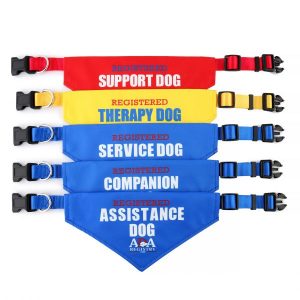
Service Dog Bandana
$39.95 Learn more This product has multiple variants. The options may be chosen on the product page
Custom ID Cards
Custom ID Cards
Custom Service Dog Tags
Official Dog Vests

Smart Vests
Official Public Access Kits
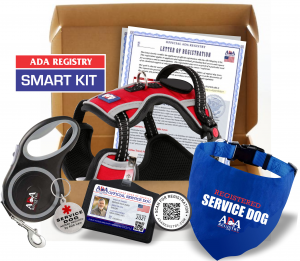
Complete Kits
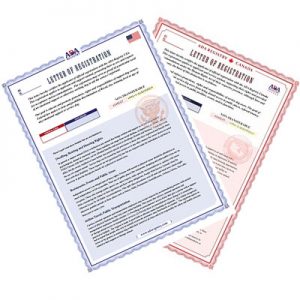
USA & CANADA Letters
High Quality Bandanas
Service Dog Tags
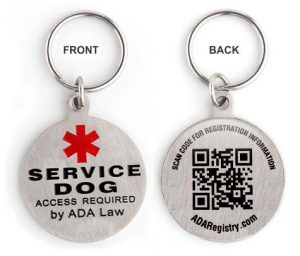
Smart Tags

ESA TAGS