Service Dog: Visual Assistance Dogs
Not Registered Yet?,,
What Are Visual Assistance Dogs?
Visual assistance dogs are highly trained service animals that guide individuals who are blind or partially sighted. Their purpose is to help their handler move safely and confidently through both familiar and unfamiliar environments.
These dogs are commonly referred to as guide dogs or leader dogs. Their reliability and calm temperament make them essential partners for those with visual impairments.
What Visual Assistance Dogs Do
These service dogs perform a wide range of tasks designed to help their handler navigate daily life. They may:
- Guide around obstacles
- Stop at curbs or steps
- Identify changes in elevation
- Avoid hazards in the environment
- Lead their handler along safe walking routes
- Help locate doors, seats, crosswalk buttons, or specific destinations
Their training allows them to think independently and make decisions that support safety.
Who Uses Visual Assistance Dogs?
Handlers may or may not show visible signs of disability. A person using one of these dogs may:
- Be completely blind
- Have partial or progressive vision loss
- Experience low vision that affects daily navigation
These dogs offer stability, confidence, and the freedom to travel independently.
Gear and Identification for Visual Assistance Dogs
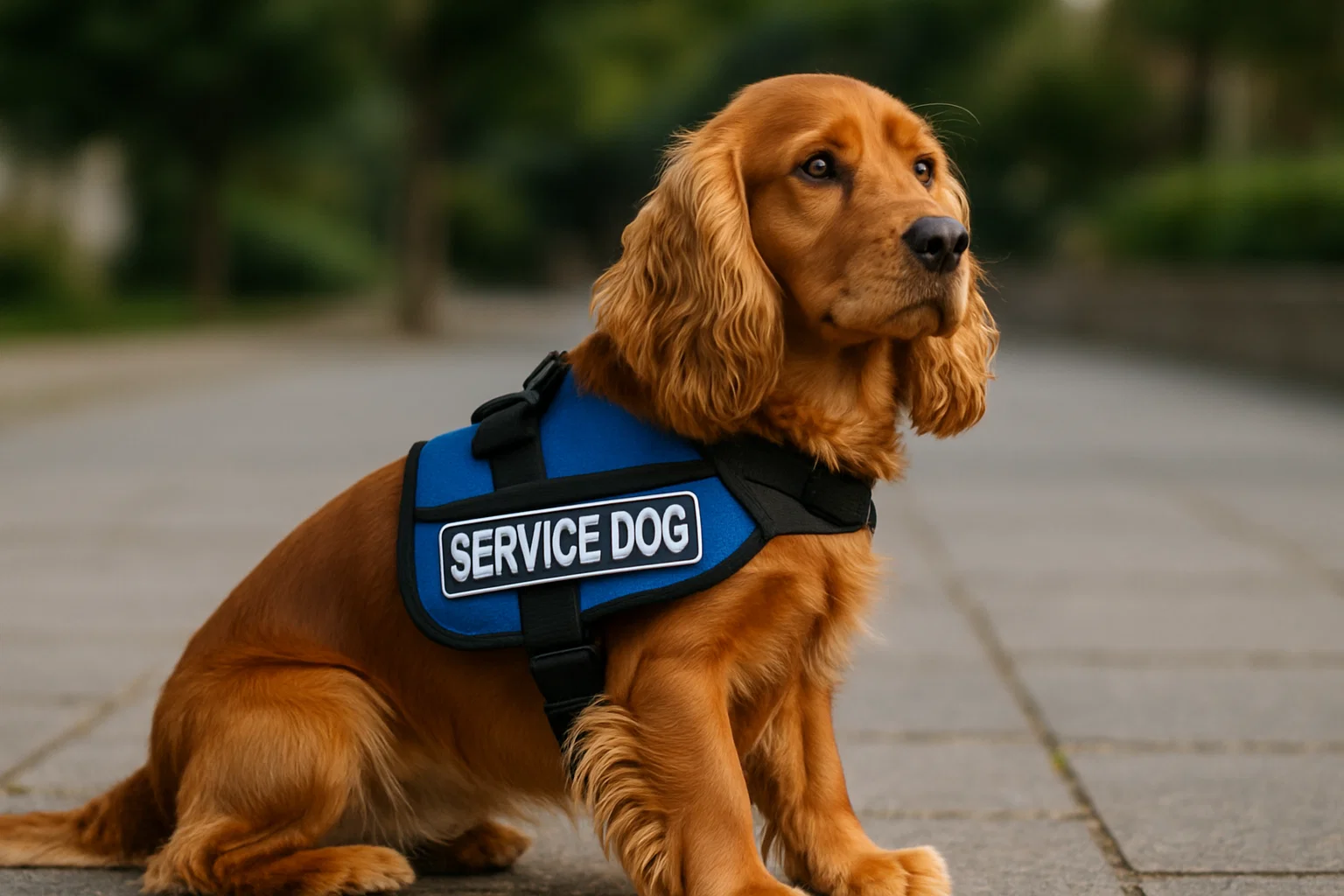
Visual assistance dogs wear a guide dog harness, which typically includes:
Not Registered Yet?,,
- A rigid handle for communication with the handler
- Straps designed for safety and comfort
- White coloring on part of the harness—white being a protected indicator of guide dog work
The color white is legally associated with visual assistance and is reserved for individuals who are blind or visually impaired and for the dogs who guide them.
Although Labs, Golden Retrievers, and German Shepherds are most common, any sturdy, even-tempered medium or large breed may be trained for this work.
Why Visual Assistance Dogs Are Highly Effective
These service dogs support independence in many ways:
- Helping handlers move safely through public environments
- Providing orientation when visibility is limited
- Reducing the risk of accidents
- Offering confidence during travel
- Assisting in unfamiliar surroundings
Beyond mobility, they also provide companionship and emotional reassurance.
Training Requirements for Visual Assistance Dogs
Training is extensive and focuses on:
- Obedience
- Intelligent disobedience (choosing safety over commands)
- Environmental awareness
- Navigating complex or crowded spaces
- Remaining calm under pressure
Their ability to interpret signals from their harness and their environment makes them uniquely qualified for this type of work.
Conclusion
Visual assistance dogs play a vital role in helping individuals with visual impairments navigate the world with safety and independence. Through advanced training, specialized gear, and steady temperament, these guide dogs allow their handlers to travel with confidence and freedom. Whether called guide dogs, leader dogs, or visual assistance dogs, their impact on daily life is profound and life-changing.


-
Public Access Kits
$149.00 Learn more This product has multiple variants. The options may be chosen on the product page -
Quick Ship Premium Vests
$48.00 – $82.00 Learn more This product has multiple variants. The options may be chosen on the product page -
Service Dog Bandana
$39.95 Learn more This product has multiple variants. The options may be chosen on the product page
Custom ID Cards

Custom ID Cards
Custom Service Dog Tags
Official Dog Vests
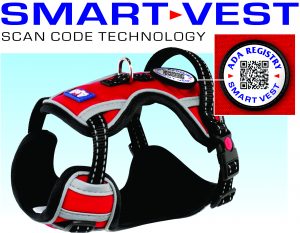
Smart Vests
Official Public Access Kits
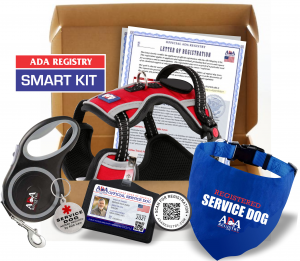
Complete Kits
USA & CANADA Letters
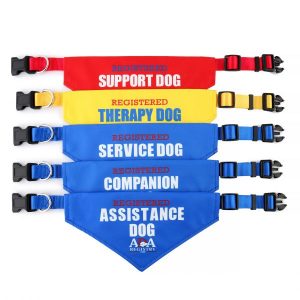
High Quality Bandanas
Service Dog Tags
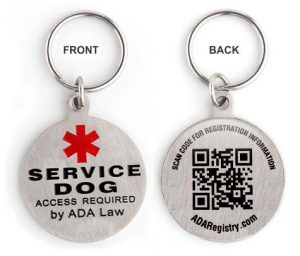
Smart Tags
ESA TAGS