Can I Deduct My Dog On My Taxes?
Can I Deduct My Service Dog on My Taxes?
Yes, certain expenses for a qualifying service animal may be deductible as medical expenses under federal tax rules.
The IRS specifically recognizes expenses for buying, training, and maintaining a guide dog or other service animal that assists a person with a visual impairment, hearing impairment, or other physical disability.
According to IRS Publication 502, eligible maintenance expenses can include costs such as:
- Food
- Grooming
- Veterinary care
- Training
- Other expenses necessary to maintain the health and vitality of the service animal so it can perform its duties
The IRS also identifies the cost of caring for a guide dog or other animal aiding a person with a physical disability as a potentially deductible medical expense.
How Does the Service Dog Tax Deduction Work?
Qualifying service-animal expenses are generally treated as medical expenses.
For taxpayers who itemize deductions, the IRS currently allows only the portion of qualifying medical and dental expenses that exceeds 7.5% of adjusted gross income (AGI) to be deducted on Schedule A of Form 1040.
Example
Suppose your AGI is $60,000.
7.5% of $60,000 is $4,500.
If you have $7,000 in qualifying unreimbursed medical expenses for the year, the amount potentially deductible under the medical-expense rules would be the amount above the $4,500 threshold, or $2,500.
Your actual deduction can depend on your complete tax situation.
What Service Dog Expenses May Qualify?
The IRS specifically lists expenses associated with purchasing, training, and maintaining a qualifying guide dog or service animal.
Potentially qualifying expenses may include:
Purchasing the Service Animal
The cost of acquiring a qualifying service animal may be included as a medical expense.
Training
Expenses associated with training the animal to perform its duties may qualify.
Food
The IRS specifically identifies food as an example of a maintenance expense.
Grooming
Grooming necessary to maintain the service animal may qualify.
Veterinary Care
Veterinary expenses necessary to maintain the animal’s health may qualify.
Other Necessary Maintenance
Other expenses necessary to maintain the animal’s health and ability to perform its duties may also qualify.
What About a Service Dog Registration or ID Card?
A private service dog registration or personalized ID card should not automatically be treated as a tax-deductible medical expense.
Whether a particular expense qualifies depends on the facts and applicable tax rules. The IRS guidance specifically discusses the costs of purchasing, training, and maintaining a qualifying service animal; it does not state that private registration or identification cards are automatically deductible.
If you are considering claiming an expense, keep your receipts and supporting records and discuss the expense with a qualified tax professional.
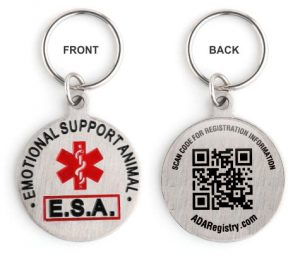
What About an Emotional Support Dog?
The IRS guidance on service animals should not be interpreted as saying that the ordinary costs of owning a pet or emotional support animal are automatically deductible.
The tax treatment depends on whether the animal and the expense meet the applicable medical-expense requirements.
An emotional support animal should not automatically be treated the same as a qualifying service animal simply because it provides emotional support.
Do I Have to Itemize?
Generally, yes, for the medical-expense deduction discussed here.
The IRS states that medical and dental expenses are claimed as an itemized deduction on Schedule A (Form 1040), and only the amount exceeding 7.5% of AGI is deductible under this rule.
Keep Your Records
If you believe your service-animal expenses may qualify, keep documentation such as:
- Purchase receipts
- Training invoices
- Veterinary bills
- Food and maintenance receipts
- Grooming receipts
- Other relevant expense records
- Documentation explaining the animal’s role and purpose
Good recordkeeping can make it easier to substantiate expenses if questions arise.
Important Tax Information
Tax laws and IRS guidance can change. The information on this page is provided for general educational purposes and is not tax advice.
The IRS’s current Publication 502 is the best source for determining how medical expenses are treated for federal income-tax purposes.
For advice about your individual circumstances, consult a qualified tax professional.
IRS Source
IRS Publication 502 — Medical and Dental Expenses

Custom ID Cards

Custom ID Cards
Custom Service Dog Tags

Official Dog Vests

Smart Vests
Official Public Access Kits

Complete Kits
USA & CANADA Letters

High Quality Bandanas

Service Dog Tags
Smart Tags

ESA TAGS