List of Service Dog Qualifying Disabilities
List of Disabilities That May Qualify for a Service Dog
Do You Have a Disability That May Benefit From a Service Dog?
Register Your Dog
Service dogs can assist people with a wide range of physical, sensory, medical and psychiatric disabilities.
The Americans with Disabilities Act (ADA) does not limit service dogs to people who are blind, deaf or have a particular medical diagnosis. A person with a qualifying disability may use a service dog when the dog is individually trained to perform work or tasks directly related to the person’s disability.
Disabilities can affect people in many different ways and can range from mild to severe. Some disabilities may affect a person continuously, while others may cause symptoms or limitations only at certain times.
Examples can include seizures, blood-sugar changes, balance problems, mobility limitations, psychiatric episodes, panic attacks and other disability-related conditions.
Physical & Medical Disabilities
Examples of physical or medical conditions that may be associated with service-dog assistance include:
- Asthma and other breathing conditions
- Blindness or visual impairment
- Deafness or hearing impairment
- Diabetes
- Cancer
- Dizziness and balance difficulties
- Epilepsy
- Hearing difficulties
- Mobility impairments
- Neurological conditions
- Paralysis
- Physical weakness
- Speech-related disabilities
- Seizure disorders
- Cardiovascular conditions
- Other physical or medical impairments
A service dog may be trained to perform specific tasks related to the person’s disability.
For example, a dog may be trained to alert to a medical condition, retrieve medication, provide mobility assistance, retrieve objects or obtain help.
Psychiatric & Mental Health Disabilities
Psychiatric service dogs may assist people with a variety of psychiatric or mental health disabilities.
Examples may include:
- Post-traumatic stress disorder (PTSD)
- Depression
- Bipolar disorder
- Anxiety disorders
- Panic disorder
- Social anxiety
- Phobias
- Dissociative disorders
- Autism
- Neurodevelopmental disabilities
- Certain neurological or cognitive impairments
- Other psychiatric disabilities
A psychiatric service dog may be trained to perform tasks such as interrupting a disability-related behavior, guiding a disoriented handler, retrieving medication, alerting to specific sounds or obtaining assistance.
Other Disabilities and Conditions
The ADA does not provide a complete list of qualifying disabilities.
This is important because disabilities can take many forms, and the same diagnosis can affect different people in different ways.
Examples of additional conditions that may involve disability-related limitations include:
- Age-related cognitive impairments
- Dyslexia and other learning disabilities
- Communication impairments
- Neurological disorders
- Cognitive impairments
- Conditions affecting concentration or memory
- Conditions affecting mobility or coordination
- Conditions causing episodic symptoms
- Other physical or mental impairments
The important question is not simply whether a particular diagnosis appears on a list.
The individual’s impairment and how it substantially limits major life activities are important considerations under the ADA.
ADA Definition of Disability
The ADA defines an individual with a disability as a person who:
- Has a physical or mental impairment that substantially limits one or more major life activities;
- Has a record of such an impairment; or
- Is regarded as having such an impairment.
The ADA recognizes a broad range of physical and mental impairments.
Physical Impairments
Physical impairments can include physiological disorders, conditions, anatomical loss or other impairments affecting body systems such as:
- Neurological
- Musculoskeletal
- Respiratory
- Cardiovascular
- Endocrine
- Digestive
- Genitourinary
- Hemic and lymphatic
- Skin
- Special sensory organs
- Other bodily systems
Mental Impairments
Mental impairments can include mental, psychological, neurological, emotional and learning-related conditions.
The ADA does not attempt to provide an exhaustive list of every disease, disorder or condition that may constitute an impairment.
Major Life Activities
Major life activities can include many ordinary activities of daily living.
Examples include:
- Walking
- Seeing
- Hearing
- Speaking
- Breathing
- Eating
- Sleeping
- Learning
- Reading
- Concentrating
- Thinking
- Communicating
- Working
- Caring for oneself
- Performing manual tasks
Major bodily functions are also included under the ADA’s broader definition of major life activities.
Disabilities Can Be Episodic
A disability does not necessarily have to affect a person every minute of every day.
Some impairments are episodic, meaning symptoms may occur periodically rather than continuously.
Examples can include:
- Seizures
- Panic attacks
- Migraine episodes
- Blood-sugar events
- Psychiatric episodes
- Periodic balance problems
- Other recurring disability-related symptoms
When an impairment is episodic, it may still be considered a disability when active.
Does a Diagnosis Automatically Qualify Me for a Service Dog?
Not necessarily.
Having a particular diagnosis does not automatically mean that a person qualifies for a service dog under the ADA.
The ADA’s disability definition focuses on the individual’s impairment and whether it substantially limits one or more major life activities.
In addition, for a dog to qualify as a service animal under the ADA, the dog must be individually trained to perform work or tasks that are directly related to the person’s disability.
Does My Dog Need to Perform a Task?
Yes.
A service dog must be trained to perform work or tasks directly related to the person’s disability.
Examples include:
- Alerting to a medical condition
- Retrieving medication
- Retrieving important objects
- Guiding a person with a visual impairment
- Providing trained mobility assistance
- Alerting to sounds
- Interrupting a disability-related behavior
- Guiding a disoriented handler
- Getting assistance
- Performing other individually trained disability-related tasks
Simply providing comfort or companionship does not by itself make a dog a service animal under the ADA.
Service Dogs Can Help With Many Different Disabilities
There is no single type of service dog.
A dog may be trained as a:
Psychiatric Service Dog
For individuals with qualifying psychiatric disabilities.
Medical Alert Dog
Trained to alert to specific medical conditions or changes.
Diabetic Alert Dog
Trained to respond to specific changes associated with diabetes.
Mobility Assistance Dog
Provides trained assistance with mobility-related disabilities.
Hearing Assistance Dog
Alerts the handler to specific sounds.
Guide Dog
Assists a person who is blind or has a significant visual impairment.
Seizure Assistance Dog
Performs trained responses associated with seizures.
Autism Assistance Dog
Performs individualized tasks related to an autism-related disability.
PTSD Assistance Dog
Performs trained tasks related to PTSD symptoms.
And many other specialized service-dog roles are possible.
Service Dog Identification & Registration
Once you have a service dog, keeping your information organized can be convenient.
Many handlers choose to carry personalized identification and keep their service-dog records together.
Your service-dog information package can include:
✓ Personalized Service Dog ID Card
✓ Service Dog Registration
✓ Dog Photograph
✓ Handler Information
✓ Animal Identification Information
✓ Registration Number
✓ Digital Profile
✓ QR Code
✓ Important Records
Create Your Service Dog ID & Registration
Carry your dog’s information in a convenient wallet-size ID card and keep your registration information organized.
Register Your Service Dog Today →
Frequently Asked Questions
What disabilities can a service dog assist with?
Service dogs can assist people with many different physical, sensory, medical and psychiatric disabilities. The specific tasks depend on the individual’s disability and the dog’s training.
Do I have to be blind or deaf to have a service dog?
No. Service dogs assist people with many different types of disabilities, including physical, medical and psychiatric disabilities.
Can a psychiatric disability qualify for a service dog?
Yes. A person with a qualifying psychiatric disability may use a psychiatric service dog when the dog is individually trained to perform disability-related work or tasks.
Can anxiety qualify for a service dog?
Anxiety can be associated with a qualifying disability, depending on the individual’s circumstances and the extent to which the impairment substantially limits major life activities. The dog must also be trained to perform disability-related work or tasks.
Can PTSD qualify for a service dog?
PTSD can qualify as a disability under the ADA when the applicable disability criteria are met. A psychiatric service dog may be trained to perform specific tasks related to PTSD.
Can diabetes qualify for a service dog?
Diabetes may qualify as a disability under applicable law. A service dog may be trained to perform specific tasks related to diabetes or its effects.
Do I need a specific diagnosis to have a service dog?
A specific diagnosis is not the only consideration under the ADA. The ADA focuses on whether the person has a qualifying physical or mental impairment and whether it substantially limits major life activities.
Is there an official list of every qualifying disability?
No. The ADA does not provide an exhaustive list of every condition that can constitute a disability.
Find Out More About Service Dogs
Understanding your disability, the assistance you need and the tasks your dog can perform is an important part of determining whether a service dog may be appropriate for you.
Explore Service Dog Types & Tasks
View Different Types of Assistance Dogs →
View Possible Psychiatric Service Dog Tasks →
Get Your Service Dog ID Card & Registration
Keep Your Service Dog Information Organized
Create your personalized service dog registration and ID card.
Service Dog Registration
Personalized Service Dog ID Card
Digital Profile
QR Code
Dog Photo & Information
Register Your Dog
Custom ID Cards
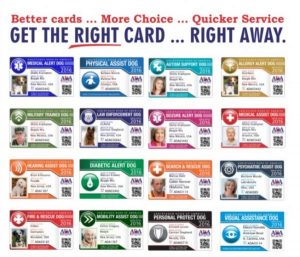
Custom ID Cards
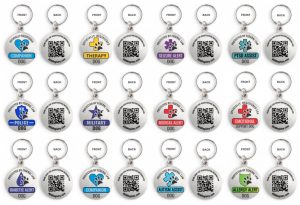
Custom Service Dog Tags
Official Dog Vests

Smart Vests
Official Public Access Kits
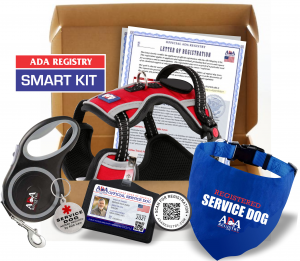
Complete Kits
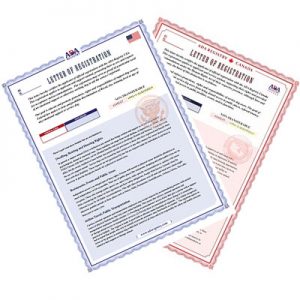
USA & CANADA Letters
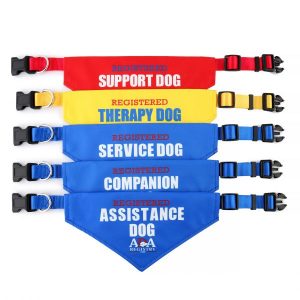
High Quality Bandanas
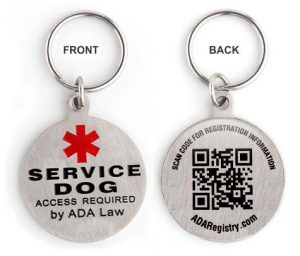
Service Dog Tags
Smart Tags
ESA TAGS