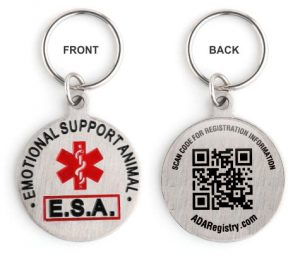
Service Dog ESA DOG Travel Laws And Rules
Understanding the Air Carrier Access Act
14 CFR Part 382 — Nondiscrimination on the Basis of Disability in Air Travel
The Air Carrier Access Act (ACAA) is a federal law that prohibits discrimination against qualified individuals with disabilities in air transportation.
The U.S. Department of Transportation (DOT) enforces the ACAA through regulations contained in 14 CFR Part 382, Nondiscrimination on the Basis of Disability in Air Travel.
The ACAA establishes requirements for airlines concerning passengers with disabilities, including requirements concerning accessibility, accommodations, communication, seating, and qualifying service animals.
The ACAA applies to covered air transportation operated by U.S. air carriers and, under specified circumstances, foreign air carriers providing transportation to or from the United States.
The protections of the ACAA are not limited to U.S. citizens.
Who Is a Person With a Disability?
For purposes of the ACAA, an individual with a disability is generally a person who has a physical or mental impairment that substantially limits one or more major life activities, has a record of such an impairment, or is regarded as having such an impairment.
Disabilities can include physical disabilities, sensory disabilities, and certain mental or psychological impairments.
Examples can include, depending upon the individual’s circumstances:
- Visual impairments
- Hearing impairments
- Mobility impairments
- Neurological conditions
- Epilepsy and seizure disorders
- Diabetes
- Cerebral palsy
- Multiple sclerosis
- Muscular dystrophy
- Certain psychiatric disabilities
- Other physical or mental impairments that meet the applicable legal definition
A diagnosis by itself does not automatically establish eligibility for every accommodation under the ACAA. The applicable legal requirements depend upon the accommodation being requested.
What Is a Service Animal Under the ACAA?
The current DOT regulations use a narrower definition of service animal for air transportation than the historical rules contained in older DOT guidance.
Under the current federal airline rules, a service animal is generally a dog, regardless of breed or type, that is individually trained to do work or perform tasks for the benefit of a qualified individual with a disability.
A psychiatric service dog may qualify when it has been individually trained to perform work or tasks directly related to a person’s psychiatric disability.
Examples of disability-related tasks can include:
- Retrieving medication
- Alerting a person to certain sounds
- Providing trained mobility assistance
- Retrieving necessary objects
- Interrupting certain disability-related behaviors
- Alerting or responding to a medical condition
- Performing other specific tasks directly related to a person’s disability
The dog does not have to be trained by a professional service-dog organization. An owner may train a service dog, provided the dog meets the applicable requirements.
Emotional Support Animals and Air Travel
It is important to distinguish an emotional support animal (ESA) from a service dog.
Under the current DOT rules, an emotional support animal is not considered a service animal for purposes of the ACAA merely because the animal provides comfort, companionship, or emotional support.
The federal airline service-animal definition requires a dog to be individually trained to perform work or tasks for the benefit of a qualified individual with a disability.
This is a significant change from the older DOT rules.
The historical DOT guidance contained in the 2008 material described emotional support animals as potentially qualifying for air travel with documentation from a licensed mental-health professional. That historical policy should not be represented as the current federal airline rule.
Psychiatric Service Dogs
A psychiatric service dog is different from an emotional support dog.
A psychiatric service dog can qualify as a service animal when it has been individually trained to perform specific work or tasks directly related to a person’s disability.
For example, a psychiatric service dog might be trained to:
- Interrupt a disability-related behavior
- Retrieve medication
- Alert the handler to a particular condition
- Create physical space around the handler as a trained task
- Respond to a psychiatric episode
- Perform another specific disability-related task
Simply providing comfort, companionship, or emotional support does not by itself satisfy the federal service-animal definition.
Does a Service Dog Need a Doctor’s Letter?
Generally, no.
The ACAA does not require a service dog to have a doctor’s letter, registration certificate, or government-issued service-dog certification simply to establish service-animal status.
A healthcare professional may document a person’s disability or medical circumstances in situations where documentation is otherwise appropriate, but a doctor’s letter does not itself turn a dog into a service animal.
The dog’s qualification depends upon the applicable legal requirements, including individual training to perform disability-related work or tasks.
Does a Service Dog Need to Be Certified?
No federal service-dog certification is required.
A qualifying service dog does not become a service animal because it has been:
- Registered online
- Issued an ID card
- Given a certificate
- Provided with a vest
- Given a special tag
- Registered with a private organization
Likewise, the absence of these items does not automatically mean that a dog is not a service animal.
An identification card or other informational product may be useful for personal identification or convenience, but it does not create legal service-animal status.
Can an Airline Ask for Documentation?
Current DOT rules permit airlines to require certain DOT service-animal forms in specified circumstances.
These forms address matters such as the animal’s:
- Health
- Vaccination status
- Behavior
- Training
- Ability to safely travel
For flights scheduled to last eight hours or longer, an airline may also require a relief-attestation form concerning the service animal’s ability to relieve itself during the flight without creating a health or sanitation issue.
Passengers should check the current DOT requirements and their airline’s procedures before traveling.
Service Animal Training
A service dog must be individually trained to perform work or tasks for the benefit of a person with a disability.
The training does not necessarily have to come from a professional organization.
An owner may train the dog, or the dog may be trained by another individual or organization.
However, an emotional support dog that has not been trained to perform disability-related work or tasks does not become a service dog simply because its owner has a disability or possesses an ESA letter.
Public Behavior
A service dog must be appropriately behaved in public.
A service dog should generally remain under the handler’s control and should not:
- Repeatedly bark or growl at people
- Run freely through the aircraft
- Jump on passengers
- Bite or threaten people
- Create significant disruption
- Relieve itself inappropriately
- Otherwise behave in a manner inconsistent with safe public access
An airline may take appropriate action when a service dog presents a legitimate safety concern or significantly disrupts cabin operations.
Breed of Service Dog
The current DOT service-animal regulations define a service animal as a dog, regardless of breed or type.
An airline may not simply reject a qualifying service dog because of its breed.
However, the airline may consider legitimate safety and operational concerns involving the individual animal, including behavior and whether the animal presents a direct threat or significant disruption.
Size and Seating
A service dog generally travels in the cabin with the passenger rather than being treated as ordinary checked baggage.
The animal must be able to fit within the passenger’s foot space or otherwise be accommodated safely in accordance with applicable airline and FAA safety requirements.
A passenger should notify the airline in advance when a service dog is particularly large or when special seating arrangements may be necessary.
Airlines are not required to provide a passenger with a second seat free of charge solely because a service dog requires additional space.
Passengers should contact the airline before traveling if they believe their dog may create a seating or space issue.
Service Dogs and Airline Fees
Airlines generally may not impose a separate charge simply for transporting a qualifying service dog as an accommodation required by the ACAA.
This does not mean that every animal traveling in an aircraft cabin is free of charge.
An emotional support animal traveling under an airline’s ordinary pet policy may be subject to the airline’s applicable pet fees and requirements.
A passenger may also be responsible for damage caused by a service animal when the airline has a policy of charging passengers for comparable damage.
Advance Notice
Passengers with disabilities generally should not assume that they must provide 24-hour or 48-hour notice simply because they are traveling with a service dog.
DOT permits airlines to require advance notice in certain circumstances and permits airlines to require DOT forms under specified conditions.
Because requirements can depend upon the nature of the accommodation, flight length, route, and circumstances, passengers should check with their airline before traveling.
Providing information to the airline well in advance can also help avoid problems with seating and documentation.
Service Dogs in Training
A service dog that is still being trained does not automatically qualify as a service animal under the ACAA.
The ACAA’s federal definition concerns dogs that have been individually trained to perform work or tasks for a person with a disability.
Airlines may establish their own policies concerning service dogs in training.
Anyone traveling with a dog that is still in training should contact the airline before traveling and determine what rules apply.
Multiple Service Dogs
A passenger may, depending on the circumstances, travel with more than one service dog.
The passenger should notify the airline in advance when multiple service dogs may create seating or space considerations.
Each dog must independently meet the applicable requirements for service animals.
What Happens If an Airline Questions a Service Dog?
Airline personnel may have procedures for determining whether an animal qualifies as a service animal and whether the passenger is entitled to the applicable accommodation.
The airline may consider:
- Whether the passenger is a qualified individual with a disability
- Whether the dog is individually trained to perform disability-related work or tasks
- Whether required DOT forms have been properly completed
- Whether the dog is under control
- Whether the dog presents a legitimate safety concern
- Whether the dog creates a significant disruption to cabin service
If a disability-related accommodation problem occurs, passengers can request assistance from the airline’s Complaint Resolution Official (CRO).
Airlines are required to have a CRO available during specified operating hours to assist with disability-related issues.
What If Another Passenger Has an Allergy?
An airline must consider the rights and needs of passengers with disabilities.
A passenger’s ordinary discomfort, dislike of animals, or non-disabling allergy does not automatically override the rights of a passenger traveling with a qualifying service dog.
Airlines may attempt to accommodate both passengers by using appropriate seating or other measures.
If another passenger has a disability involving a serious allergy, the airline may need to consider both passengers’ disability-related needs.
Can a Service Dog Be Refused?
A qualifying service dog generally must be permitted to accompany the passenger subject to the requirements and limitations of the ACAA.
However, airlines may refuse transportation or take other appropriate action in circumstances permitted by federal law, including situations involving:
- A direct threat to health or safety
- Significant disruption of cabin service
- Failure to comply with applicable requirements
- A dog that is not under control
- Applicable aviation safety requirements
- Other circumstances specifically permitted under DOT regulations
An airline should not deny a service dog simply because another passenger is uncomfortable with dogs.
Service Dog Identification Cards
The federal government does not require a service dog to carry an identification card.
A handler may nevertheless choose to carry an ID card or other informational material.
Such an item may help a handler communicate information about the dog, but it should not be represented as government certification or legal proof of service-animal status.
An ID card does not make a dog a service animal.
Emotional Support Animal Documentation
An ESA letter and service-dog documentation serve different purposes.
An emotional support animal may be relevant to a disability-related accommodation in settings such as housing, where different federal laws and standards apply.
However, an ESA letter does not automatically qualify an animal as a service dog for air travel.
Likewise, an ESA registration, certificate, ID card, vest, or other product does not convert an emotional support animal into a service animal.
Housing Is Different From Air Travel
One of the most important things to understand is that there is no single federal rule governing animals in every situation.
Housing accommodations are governed by different laws and standards than airline travel.
For example:
Housing:
An emotional support animal may qualify as an assistance animal as a reasonable accommodation under applicable fair-housing law.
Air Travel:
Current DOT rules generally recognize trained service dogs rather than emotional support animals as service animals under the ACAA.
Public Accommodations:
The Americans with Disabilities Act (ADA) has its own definition and requirements for service animals.
Because these laws are different, a document that is relevant in one context does not necessarily establish rights in another.
Traveling With an Emotional Support Dog
If your dog is an emotional support animal and does not meet the current federal definition of a service animal, you should contact your airline before traveling.
The airline may allow your dog to travel under its ordinary pet policy.
Depending on the airline, requirements may include:
- A pet carrier
- Size or weight restrictions
- Cabin restrictions
- Pet fees
- Advance reservations
- Health requirements
- Route restrictions
- Other airline-specific requirements
Do not assume that an ESA letter exempts your dog from these requirements.
Traveling With a Psychiatric Service Dog
If your dog has been individually trained to perform specific disability-related tasks, it may qualify as a psychiatric service dog.
Examples of tasks can include retrieving medication, interrupting a disability-related behavior, responding to a psychiatric episode, or performing another specific task directly related to the person’s disability.
A psychiatric service dog is not the same thing as an emotional support dog.
The distinction is based largely on what the dog has been trained to do, rather than simply the diagnosis of the handler or the existence of a letter.
Before Your Flight
Before traveling with a dog, determine which category applies:
Service Dog
A dog individually trained to perform work or tasks for a qualified individual with a disability.
Emotional Support Dog
A dog that provides emotional support or other therapeutic benefit but does not meet the current federal service-animal definition for air travel.
Pet
A dog traveling under the airline’s ordinary pet policies.
Check the current requirements of your airline before purchasing a ticket or arriving at the airport.
Important Information About Identification and Registration
This website may provide identification cards, certificates, documentation resources, and other products for individuals and their animals.
These products are not government-issued service-animal certifications.
Purchasing an identification card, registration, certificate, vest, tag, or other product does not create service-animal status and does not guarantee access to an airplane, housing, business, hotel, restaurant, or other location.
Individuals should never falsely represent a pet or emotional support animal as a trained service animal.
Important Legal Disclaimer
The information provided on this page is for general educational purposes only and is not legal advice.
Federal regulations concerning service animals, emotional support animals, housing, public accommodations, and air transportation can differ substantially.
Airline policies may also change.
Before traveling, passengers should review the current U.S. Department of Transportation requirements and the policies of the specific airline they plan to use.
For questions concerning your individual legal rights or circumstances, consult a qualified attorney or other appropriate professional.
Last Updated: 2026
Custom ID Cards

Custom ID Cards
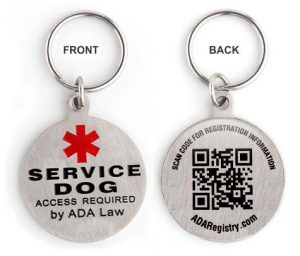
Custom Service Dog Tags
Official Dog Vests

Smart Vests
Official Public Access Kits
Complete Kits
USA & CANADA Letters
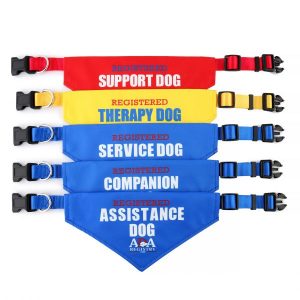
High Quality Bandanas
Service Dog Tags
Smart Tags

ESA TAGS