Black Russian Terrier as a Service Dog

Register Any Breed
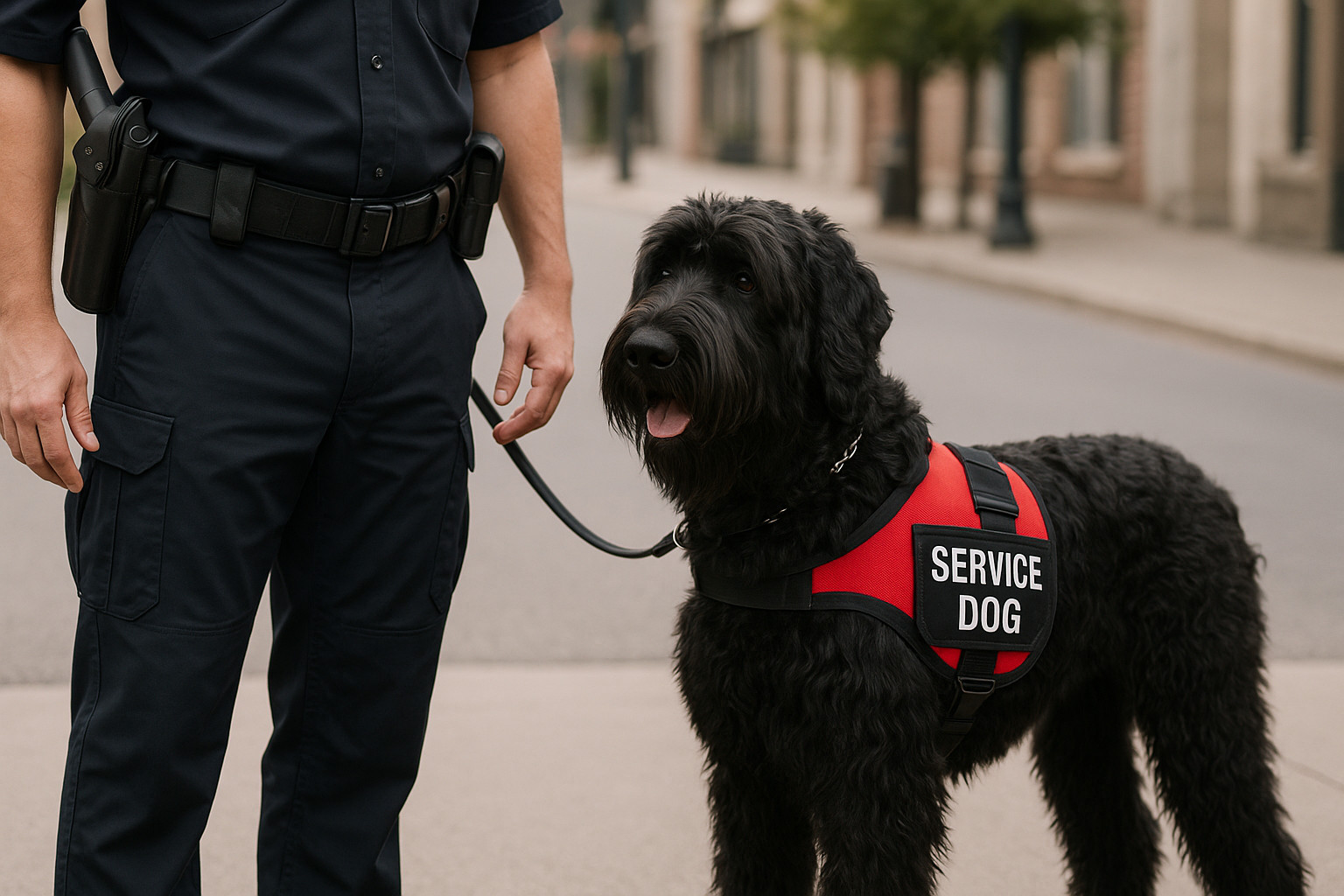
The Black Russian Terrier is an impressive and powerful breed, initially developed for military and working purposes. With their strong physique and loyal temperament, they present unique opportunities and challenges in the realm of service work. This article aims to explore the suitability of Black Russian Terriers as service dogs by examining their physical attributes, temperament, potential roles, health considerations, and trainability.
Black Russian Terrier Overview
The Black Russian Terrier, or BRT, was developed in the mid-20th century by the Soviet Union for use in military and guard work. This breed was engineered by crossing several breeds, including Rottweilers, Giant Schnauzers, and Airedale Terriers. Today, they are known for their intelligence, strength, and protective nature.
Physical Characteristics
The Black Russian Terrier is a large and robust dog. They typically weigh between 80 to 130 pounds and stand 25 to 30 inches at the shoulder. Their solid, muscular build makes them well-suited for tasks requiring strength and endurance.
- Size and Strength: The sheer size and power of the BRT make them ideal candidates for mobility assistance work. They can provide balance support and help with pulling wheelchairs or carrying heavy objects.
- Appearance: With their distinctive black, coarse coat, they may require regular grooming to maintain good hygiene and appearance, a factor important for service dogs who often accompany their handlers in public settings.
- Energy Levels: BRTs possess a moderate to high level of energy. They require daily physical exercise to maintain their health and well-being, which is essential for staying focused and productive during service work.
Temperament and Attitude
The temperament of a Black Russian Terrier is one of its most notable traits. They are known for being loyal, intelligent, and protective, which can greatly influence their suitability for service work.
- Loyalty: BRTs typically form strong bonds with their handlers, which is crucial for any service dog. This loyalty ensures they are attentive and responsive to their owner's needs.
- Protectiveness: While beneficial for security purposes, their natural protectiveness requires extensive training to ensure they remain calm and non-threatening, especially in crowded or stressful environments.
- Intelligence: Their high intelligence allows them to learn complex tasks and commands, making them capable service dogs. However, this intelligence must be coupled with appropriate training to prevent stubbornness or independent decision-making in critical situations.
- Social Behavior: Though generally friendly, early and continuous socialization is essential. BRTs must be comfortable in various environments and around different people and animals.
Types of Service Work
Black Russian Terriers, given their physical and mental attributes, can excel in certain types of service work. However, some tasks better suit their nature and capabilities.
- Mobility Assistance: Their strength and size allow them to assist with balance and stability, helping individuals with mobility impairments. They can learn to perform tasks such as opening doors, fetching objects, and supporting their handler's weight.
- Medical Alert: Their keen senses and ability to focus make them potential candidates for medical alert roles, detecting changes in their handler's condition such as seizures or drops in glucose levels.
- Psychiatric Support: Due to their loyalty and bonding capabilities, BRTs can provide emotional support and comfort to individuals with psychiatric conditions, though they require careful training to minimize protective behaviors.
- Search and Rescue: While not a traditional service role, their historical breeding for work tasks makes them applicable for search and rescue operations, assisting in finding missing persons or items.
Health Considerations
The health of a service dog is pivotal to its performance and longevity in service roles. Black Russian Terriers have some breed-specific health concerns that potential owners and trainers should consider.
- Hip and Elbow Dysplasia: Common in large breeds, these conditions can affect the joints and impair movement, a critical consideration for dogs in physically demanding roles.
- Grooming Needs: Their coat, while protective, requires frequent grooming to prevent mats and skin issues, impacting their hygiene and comfort in public settings.
- Longevity: BRTs have a typical lifespan of about 10 to 12 years. Their health must be proactively managed to ensure a long and functional service career.
- Eye Conditions: Regular eye check-ups are advised as they can be prone to certain genetic eye disorders.
Training and Suitability
Training a Black Russian Terrier for service work demands dedication and expertise, given their unique temperament and physical capabilities.
Register Any Breed
- Trainability: BRTs are intelligent and can learn quickly, but require firm, consistent guidance. Their training must account for their protective instincts and ensure they remain focused and calm in various situations.
- Positive Reinforcement: As with many breeds, they respond well to positive reinforcement techniques, which can help mitigate their natural stubbornness.
- Socialization: Early and continuous socialization is essential to acclimate them to diverse environments, reducing anxiety and aggression toward unfamiliar situations or individuals.
- Consistency and Patience: Trainers must be patient and consistent, as this breed can exhibit independence if not properly guided.
Summary of Black Russian Terrier
The Black Russian Terrier is a fascinating breed with a significant potential for service work, given their strength, intelligence, and loyalty. However, their protective nature, as well as specific health and grooming needs, require dedicated training and care.
Key Highlights:
- Strengths:
- High intelligence and ability to learn complex tasks.
- Strong loyalty and bond with handlers.
- Suitable for physically demanding roles like mobility assistance.
- Weaknesses:
- Require extensive socialization and grooming.
- Protective nature can be challenging in public settings.
- Prone to certain health issues impacting service life.
- Ideal Service Roles:
- Mobility Assistance
- Medical Alert
- Emotional and Psychiatric Support
Overall, while the Black Russian Terrier has the potential to excel as a service dog, they are best suited to handlers who can dedicate the necessary time and resources to their training and care.


-
Public Access Kits
$149.00 Learn more This product has multiple variants. The options may be chosen on the product page -
Quick Ship Premium Vests
$48.00 – $82.00 Learn more This product has multiple variants. The options may be chosen on the product page -
Service Dog Bandana
$39.95 Learn more This product has multiple variants. The options may be chosen on the product page

Custom ID Cards

Custom ID Cards
Custom Service Dog Tags
Official Dog Vests

Smart Vests
Official Public Access Kits
Complete Kits
USA & CANADA Letters
High Quality Bandanas
Service Dog Tags
Smart Tags

ESA TAGS