Brussels Griffon as a Service Dog

Register Any Breed
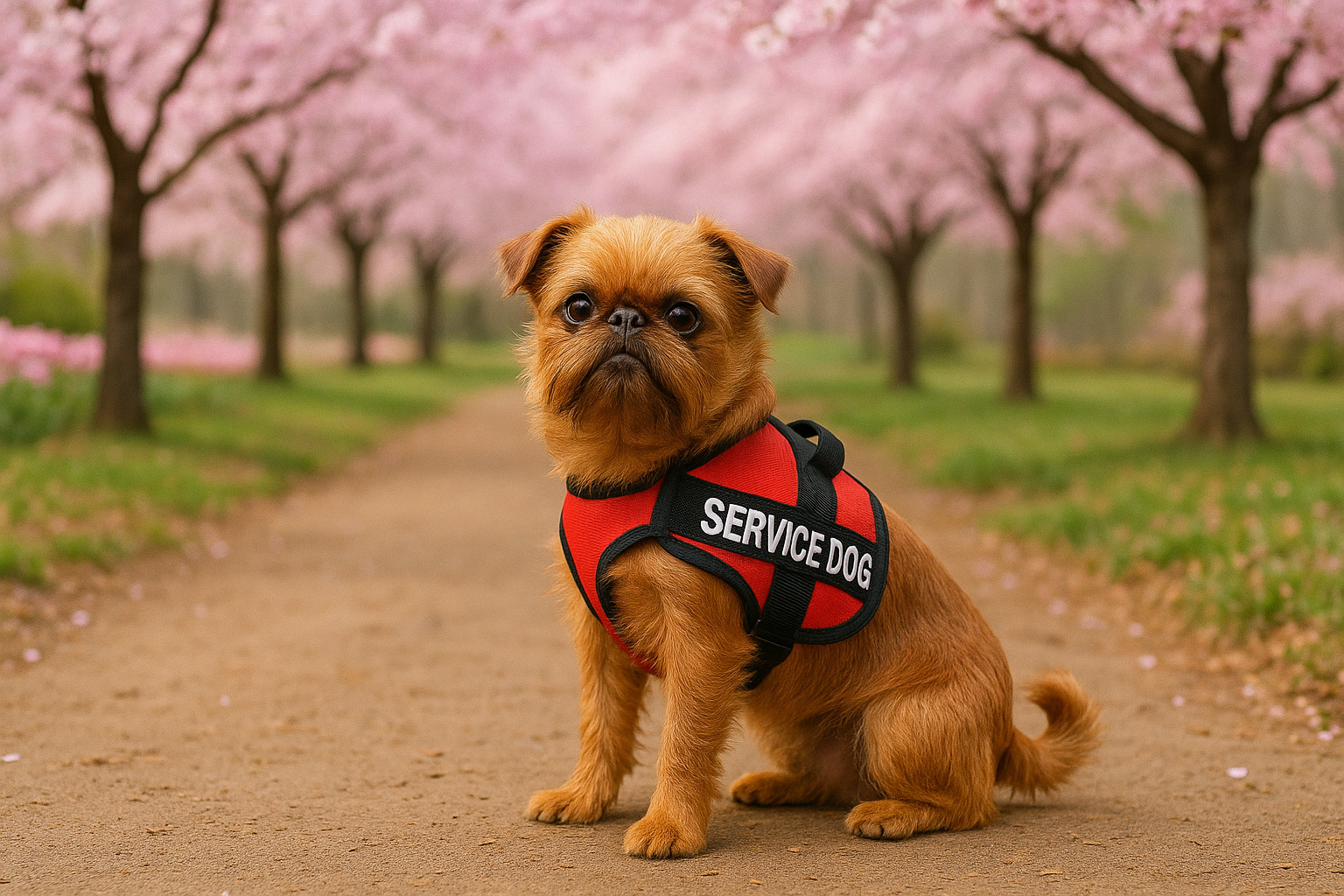
The Brussels Griffon, also affectionately known as the Griffon Bruxellois, stands out for its distinctive appearance and charming personality. While this breed is primarily recognized as a delightful companion, it has also shown potential in the realm of service and support work. In this article, we explore the characteristics, advantages, and challenges of using a Brussels Griffon as a service dog.
Brussels Griffon Overview
The origins of the Brussels Griffon trace back to Brussels, Belgium, where the breed was initially developed for a rather humble task: to hunt and eliminate vermin in stables. Over time, this small but spirited dog gained popularity as a companion animal, eventually capturing the hearts of pet owners across the globe. Although not among the most conventional choices for service work, the Brussels Griffon possesses attributes that make it an intriguing candidate for certain roles.
Physical Characteristics
The Brussels Griffon is a small breed that typically weighs between 8 to 12 pounds and stands about 7 to 10 inches at the shoulder. This compact size offers both advantages and limitations in the realm of service work.
- Size and Mobility: Their small stature allows them to navigate comfortably in tight spaces and public transport, which is ideal for urban living. However, their small size limits their ability to perform tasks that require strength or extensive physical support, such as mobility assistance.
- Physical Appearance: The breed's expressive face, characterized by large round eyes and an almost human-like expression, often draws attention. While this can be endearing, it also means the dog might be a distraction in public settings where focus is necessary.
- Coat Types: There are two coat varieties in the Brussels Griffon—smooth and rough. The rough coat requires regular grooming to maintain its texture, while the smooth coat is easier to manage. Potential handlers should consider the time commitment for grooming when thinking about using a Brussels Griffon as a service dog.
Temperament and Attitude
Renowned for their lively and affectionate nature, Brussels Griffons can form strong bonds with their owners, showcasing loyalty and a desire to be by their side.
- Personality: The breed is known for its alertness and intelligence, making them quick to learn new tasks. They can be quite sensitive, which may be beneficial for certain types of service roles that require emotional responsiveness.
- Social Behavior: Brussels Griffons do well in social situations, often accepting of strangers when properly socialized. However, their sensitivity can sometimes lead to stress in chaotic or overly noisy environments.
- Focus and Attention: While inquisitive, these dogs can be stubborn or willful. Consistent training and positive reinforcement are essential to ensure that a Brussels Griffon remains well-behaved and focused in a professional setting.
Types of Service Work
The Brussels Griffon may not fit the mold for traditional service dog roles, but their unique attributes lend themselves to specific types of supportive work:
- Emotional Support Animal (ESA): Given their affectionate and empathetic nature, Brussels Griffons excel as emotional support animals. Their small size and love for cuddling make them comforting companions for those facing emotional or psychological challenges.
- Psychiatric Service Dog: With proper training, a Brussels Griffon can assist individuals with psychiatric conditions such as anxiety or depression by performing tasks like grounding during panic attacks or fetching medication.
- Medical Alert: Although not as common, some Brussels Griffons have shown potential in medical alert roles, particularly for diabetic individuals. Their keen sense of smell and attentiveness can sometimes detect changes in the handler's body chemistry.
Health Considerations
As with any breed, health is a crucial factor when considering a Brussels Griffon for service work. Like many smaller breeds, they have particular health concerns that may impact their suitability:
- Respiratory Issues: The breed's distinctive face, with its flat muzzle, sometimes leads to brachycephalic airway syndrome, affecting breathing. This can limit their ability to engage in prolonged physical activities.
- Joint and Bone Conditions: Patellar luxation and hip dysplasia, although less common, can occur and may affect the dog's mobility and overall function in a service role.
- Eye Conditions: Their prominent eyes are prone to injuries and conditions such as cataracts, which could impair vision and hinder their effectiveness in a service capacity.
Training and Suitability
Training a Brussels Griffon for service work requires patience and a good understanding of the breed's unique characteristics.
Register Any Breed
- Training Needs: The breed benefits from early socialization and consistent training routines. They respond well to positive reinforcement methods but may be less receptive to harsh corrections.
- Intelligence and Problem-Solving: The Brussels Griffon is intelligent and enjoys problem-solving, traits that make them capable of learning tasks quickly. However, their stubborn streak means they require an experienced handler who can maintain their interest and cooperation.
- Suitability: While versatile in certain roles, their small size and health considerations mean that Brussels Griffons are best suited for tasks that do not require physical strength or extensive outdoor activity.
Summary of Brussels Griffon
The Brussels Griffon, with its distinct appearance and engaging personality, offers some promise as a service dog, particularly in roles where emotional connection and alertness are key.
- Strengths:
- Excellent emotional support and psychiatric service animal due to affectionate nature and intelligence.
- Small size allows for easy transportation and adaptability in urban environments.
- Alert and aware, capable of performing specific tasks with proper training.
- Weaknesses:
- Limited by small size in performing physical or mobility assistance tasks.
- May experience health issues related to respiratory and eye conditions, impacting their service abilities.
- Could require more attention in socialization and training due to sensitivity and occasional stubborn behavior.
- Ideal Service Roles:
- Emotional Support Animal (ESA).
- Psychiatric Service Dog.
- Potential for medical alert roles with selective training.
In conclusion, while the Brussels Griffon might not be the conventional choice for a service dog, their charming demeanor and capacity for certain supportive roles make them a viable option for individuals looking for an emotional or psychiatric support companion. As always, potential handlers should carefully consider their own needs and the specific capabilities of the Brussels Griffon to ensure a successful partnership.


-
Public Access Kits
$149.00 Learn more This product has multiple variants. The options may be chosen on the product page -
Quick Ship Premium Vests
$48.00 – $82.00 Learn more This product has multiple variants. The options may be chosen on the product page -
Service Dog Bandana
$39.95 Learn more This product has multiple variants. The options may be chosen on the product page

Custom ID Cards

Custom ID Cards
Custom Service Dog Tags
Official Dog Vests

Smart Vests
Official Public Access Kits
Complete Kits
USA & CANADA Letters
High Quality Bandanas
Service Dog Tags
Smart Tags

ESA TAGS