Bullmastiffs as a Service Dog

Register Any Breed
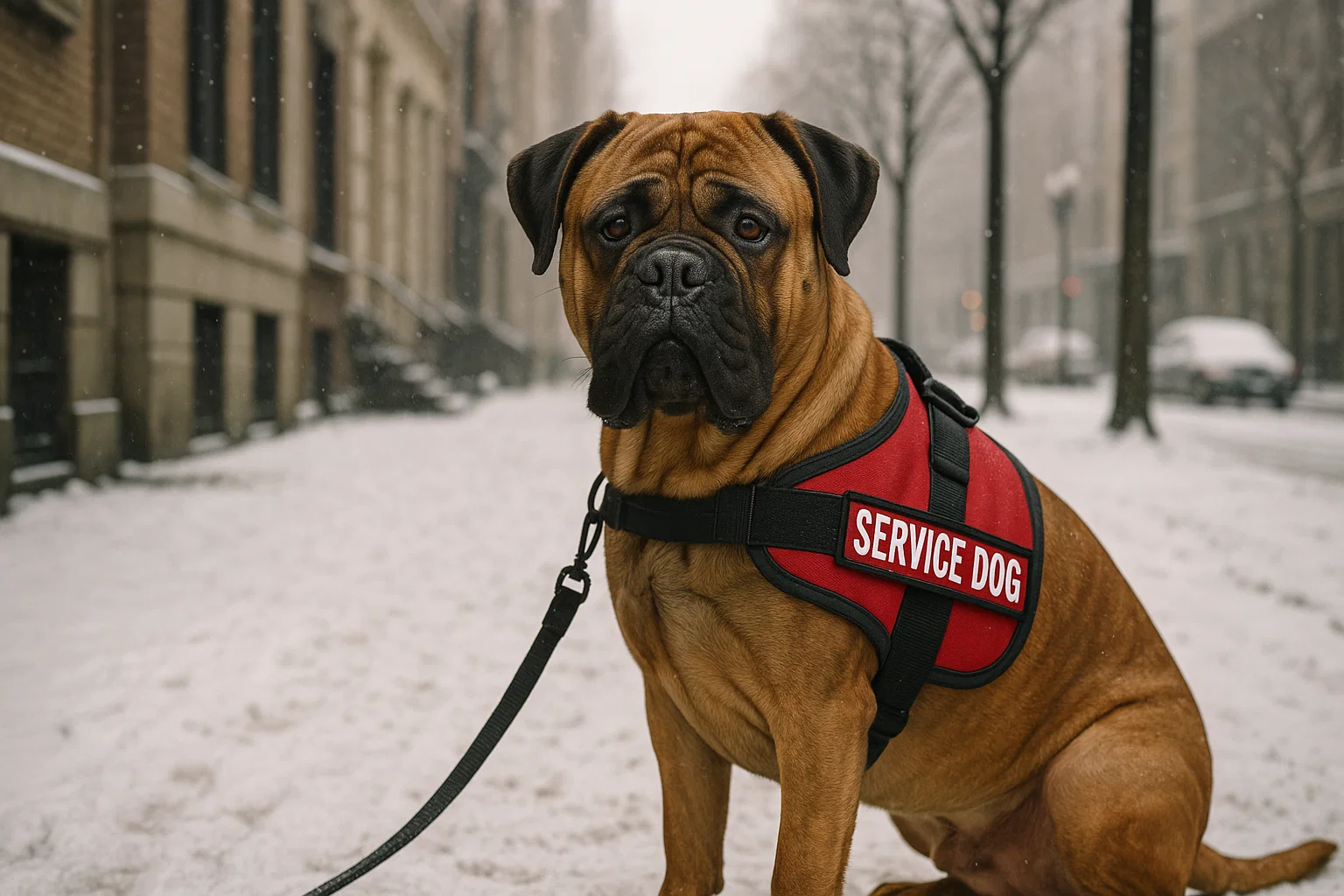
Bullmastiffs, renowned for their loyal and protective nature, are a breed that may not immediately come to mind when considering service dogs. However, their unique physical characteristics and temperament can make them well-suited for specific types of service work, especially in roles requiring strength and calm demeanor. This article delves into the potential of Bullmastiffs as service dogs, exploring their characteristics, suitability for various service tasks, and training considerations.
Bullmastiffs Overview
Bullmastiffs are a powerful and imposing breed, originally developed in the 19th century to guard estates. Their strength and presence can be intimidating, but they are known for their gentle and affectionate nature with the people they trust. Understanding their physical characteristics, temperament, and health considerations is crucial when assessing their potential as service dogs.
Physical Characteristics
Bullmastiffs are large and muscular dogs, typically weighing between 100 to 130 pounds, with a height of 24 to 27 inches at the shoulder. Their physical attributes contribute significantly to their suitability for specific service roles:
- Strength and Stamina: These dogs are incredibly strong, making them ideal for tasks requiring significant pulling or mobility assistance. They can support individuals with balance issues or pull a wheelchair over short distances.
- Size: While their size is advantageous for physical support roles, it can be a drawback in environments lacking space or among individuals who may be intimidated by large dogs.
- Durability: Bullmastiffs have a sturdy build, which means they can handle varying weather conditions and provide assistance consistently over the years, although their lifespan of 7-9 years is shorter than some other breeds.
Temperament and Attitude
The Bullmastiff's temperament is a blend of steadfast loyalty, gentleness with family, and a protective streak developed from years of guarding duties. These traits influence their capability as service animals:
- Calm Demeanor: In public, Bullmastiffs often display a calm and stable demeanor, essential for reducing stress in busy or loud environments. Their tranquil presence can be comforting for individuals with anxiety disorders.
- Protective Nature: While beneficial in personal security, this trait requires careful management during service work to ensure the dog doesn’t become overly protective or misinterpret everyday situations as threats.
- Affectionate and Loyal: These dogs form strong bonds with their handlers, providing emotional support and companionship. They thrive on human interaction and positive reinforcement.
Types of Service Work
Bullmastiffs excel in specific types of service work due to their unique characteristics:
- Mobility Assistance: Their strength and size make them apt for supporting individuals with mobility impairments. They can brace a handler who is unsteady on their feet or pull a wheelchair, though only for short distances due to their bulk.
- Psychiatric Support: With their calming presence, Bullmastiffs can be beneficial for individuals who suffer from PTSD, anxiety disorders, or depression, remaining a steady and reassuring companion in times of distress.
- Emotional Support: Less demanding than other service tasks, their nurturing demeanor makes them excellent emotional support animals, providing comfort and stability in emotionally turbulent times.
Health Considerations
Health is a pivotal factor when considering any breed for service work, and Bullmastiffs' distinct characteristics bring specific concerns:
- Hip and Elbow Dysplasia: Common among large breeds, this condition can affect their ability to perform physically demanding tasks. Regular vet check-ups and a healthy diet can mitigate some risks.
- Bloat or Gastric Torsion: This life-threatening condition requires immediate veterinary attention and is common in deep-chested breeds like the Bullmastiff.
- Life Span: Their shorter lifespan can be a limitation, as service dogs require extensive training and the bond between handler and dog grows over years.
Training and Suitability
Training a Bullmastiff for service involves understanding their intelligence and natural inclinations:
Register Any Breed
- Training Patience: Bullmastiffs may not learn as quickly as some other breeds due to their independent nature. Patience and consistency in training are key.
- Positive Reinforcement: They respond best to kind, reward-based training methods rather than harsh corrections.
- Socialization: Early and consistent socialization is crucial to ensure they remain well-mannered and confident in all types of environments.
Summary of Bullmastiffs
To consider if a Bullmastiff is suitable as a service dog, one must weigh their strengths and potential challenges:
- Strengths:
- Mobility assistance abilities due to size and strength
- Calm and stable temperament suitable for busy or stressful environments
- Loyal and affectionate nature beneficial for psychological support
- Weaknesses:
- Potential health challenges such as hip dysplasia and bloat
- Shorter lifespan compared to other service dog breeds
- Size may be intimidating to some, limiting their effectiveness in public spaces
- Ideal Service Roles:
- Mobility assistance for physically impaired individuals
- Psychiatric and emotional support roles
Bullmastiffs, with their majestic build and gentle souls, can indeed serve as excellent service dogs in the right circumstances. Their suitability heavily relies on the specific needs of the individual and how well the dog's physical and psychological traits match those requirements. With the right training and health considerations, a Bullmastiff can provide invaluable assistance and companionship to their handler.


-
Public Access Kits
$149.00 Learn more This product has multiple variants. The options may be chosen on the product page -
Quick Ship Premium Vests
$48.00 – $82.00 Learn more This product has multiple variants. The options may be chosen on the product page -
Service Dog Bandana
$39.95 Learn more This product has multiple variants. The options may be chosen on the product page
Custom ID Cards

Custom ID Cards
Custom Service Dog Tags
Official Dog Vests
Smart Vests
Official Public Access Kits
Complete Kits
USA & CANADA Letters
High Quality Bandanas
Service Dog Tags
Smart Tags
ESA TAGS