Great Dane as a Therapy Dog
Register Any Breed
Great Dane as a Therapy Dog Overview
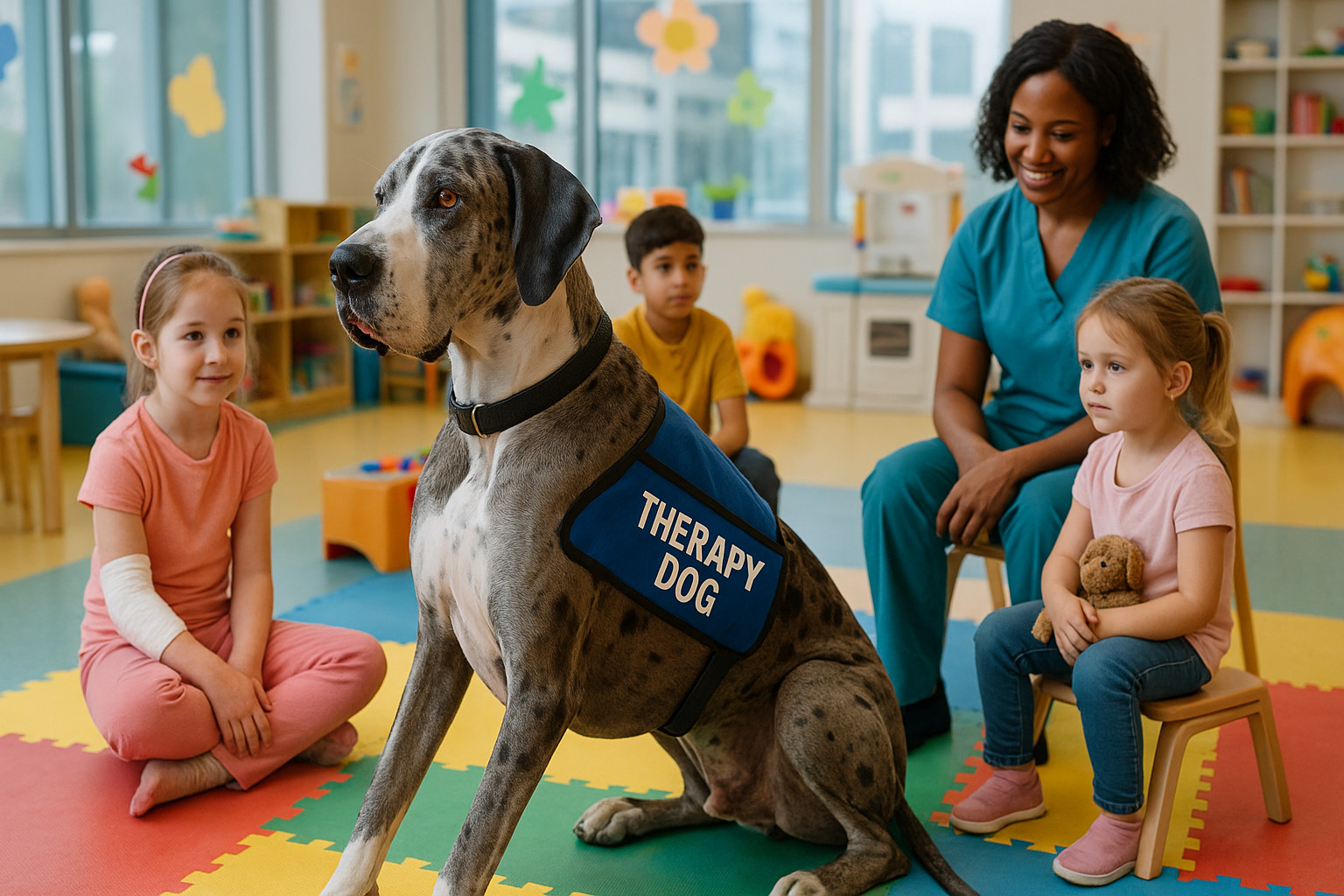
The Great Dane, renowned for its majestic presence and affectionate nature, possesses unique qualities that can make it an exceptional therapy dog. This breed's gentle demeanor and towering stature combine to offer both physical support and emotional solace to those in need. Understanding how Great Danes excel in therapy roles necessitates examining their temperament, behavior, and specific advantages and challenges they present in therapeutic settings.
Understanding the Therapy Dog Role
Therapy dogs provide emotional support and comfort to people in various environments, such as hospitals, schools, and nursing homes. Unlike service dogs, which perform specific tasks for individuals with disabilities, therapy dogs work with numerous people across different situations. Essential traits for therapy dogs include empathy, patience, and adaptability — characteristics that allow them to respond effectively to individuals' emotional and physical needs.
Physical Appearance and Energy Level
Great Danes are known for their imposing size, often referred to as “gentle giants.” Despite their size, they exhibit a moderate energy level, making them approachable for therapy work. Their large presence can have a calming effect, as many find their sturdy frame reassuring. However, their size requires ample space during visits, which can be a limitation in constrained environments.
- Advantages:
- Provides a sense of security and calm
- Large size offers physical support for certain therapy activities
- Limitations:
- Requires adequate space to move safely
- May unintentionally intimidate some individuals due to size
Personality and Emotional Intelligence
Great Danes are celebrated for their affectionate and gentle disposition. They exhibit high emotional intelligence, allowing them to perceive and respond to human emotions effectively. Their calm nature and loving demeanor make them particularly suited to comforting those experiencing stress, anxiety, or loneliness.
- Empathy and sensitivity:
- Easily attuned to emotional shifts in humans
- Provides calming companionship
- Patience:
- Tolerant of diverse environmental stimuli
- Comfortable maintaining presence during extended therapy sessions
Environments Where Great Dane Excels
Great Danes excel in environments where their size and temperament can be an asset. They thrive in situations where their calming presence can be utilized to alleviate stress and promote comfort.
- Hospitals:
- Their presence can reduce anxiety and offer comfort to patients
- Ability to physically support patients during mobility exercises
- Schools:
- Excellent at providing emotional support to children dealing with stress
- Their gentle nature encourages interaction and educational engagement
Common Therapy Settings
Great Danes are adaptable to various therapy settings, including:
- Rehabilitation Centers:
- Assisting patients by providing motivation during physical therapy
- Offering companionship during rehabilitation processes
- Nursing Homes:
- Providing residents with emotional connection and reducing feelings of isolation
- Their gentle demeanor comforts elderly individuals
Interactions with Different Populations
When interacting with diverse populations, Great Danes demonstrate an innate ability to adjust their behavior to suit the emotional needs of individuals. They are known to be particularly gentle with children and the elderly, showing a distinct understanding of the required tenderness.
Register Any Breed
- Children:
- Patient and playful, making them ideal companions for young ones
- Helps in calming children with autism or ADHD
- Elderly:
- Their companionship helps in enriching the lives of seniors
- Serves as a comforting presence for those with Alzheimer's or dementia
Health and Wellness Factors
The health and wellness of a Great Dane are critical to its effectiveness as a therapy dog. Given their short lifespan and susceptibility to certain health issues, regular health checks and a balanced diet are crucial in ensuring their capability to perform therapy work.
Lifespan and Common Health Issues
Great Danes typically have a shorter lifespan compared to other breeds, averaging around 7 to 10 years. They are prone to specific health problems that might affect their therapy performance, such as hip dysplasia and heart disease. Regular veterinary care can help manage these issues, ensuring they remain healthy and comfortable during therapy visits.
- Health considerations:
- Regular health screenings for early detection of issues
- Consistent exercise to maintain mobility without overexertion
Maintenance and Care Needs
The size and coat of a Great Dane require specific maintenance needs. Their short coat requires minimal grooming, but their size necessitates regular upkeep to ensure they remain clean and presentable for therapy sessions. Nail trimming, dental care, and regular check-ups are essential components of their care routine.
Training and Certification Readiness
Great Danes are generally eager to please, making them amenable to training for therapy certification. Their intelligence and willingness to learn allow for straightforward training processes, although their size can pose challenges during initial obedience training.
Learning Style and Responsiveness
Their learning style is typically observant and receptive, thriving on positive reinforcement. Consistent training sessions and early socialization are crucial to harness their innate ability for emotional support.
Handling Social and Emotional Stimuli
Great Danes manage social and emotional stimuli exceptionally well, often mirroring the emotions of those around them and offering calming support. Their ability to process these stimuli allows them to function effectively across a range of therapy settings.
Strengths, Limitations, and Ideal Roles for Great Dane
- Strengths:
- Empathetic and emotionally attuned
- Provides physical and emotional support through size and demeanor
- Limitations:
- Their size can be challenging in restricted spaces
- Shorter lifespan necessitates careful health monitoring
- Ideal Roles:
- Comforting presence in hospitals and schools
- Motivating companions in rehabilitation and senior care facilities
Final Thoughts
The Great Dane’s combination of gentle temperament, emotional intelligence, and calming physical presence makes it an exceptional candidate for therapy work. While their large size can pose challenges, the overall benefits of having a Great Dane in various therapeutic settings often outweigh these limitations. Providing proper health care and consistent training can maximize their impact as therapy dogs.
Key Takeaways for the Great Dane as a Therapy Dog
- Best suited for: Environments requiring calm and comforting support, such as hospitals and schools
- Not ideal for: Restricted or cramped environments due to size
- Temperament highlights: Gentle, empathetic, patient
- Care and health notes: Requires regular health checks and suitable space for movement
- Therapy environments where they shine: Hospitals, rehabilitation centers, and educational settings


-
Public Access Kits
$149.00 Learn more This product has multiple variants. The options may be chosen on the product page -
Quick Ship Premium Vests
$48.00 – $82.00 Learn more This product has multiple variants. The options may be chosen on the product page -
Service Dog Bandana
$39.95 Learn more This product has multiple variants. The options may be chosen on the product page
Custom ID Cards

Custom ID Cards
Custom Service Dog Tags
Official Dog Vests

Smart Vests
Official Public Access Kits
Complete Kits
USA & CANADA Letters
High Quality Bandanas
Service Dog Tags
Smart Tags

ESA TAGS