Arkansas Service Dog Laws
Register Any Breed
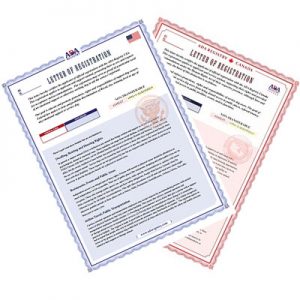
Example Cards Available In USA And Canada
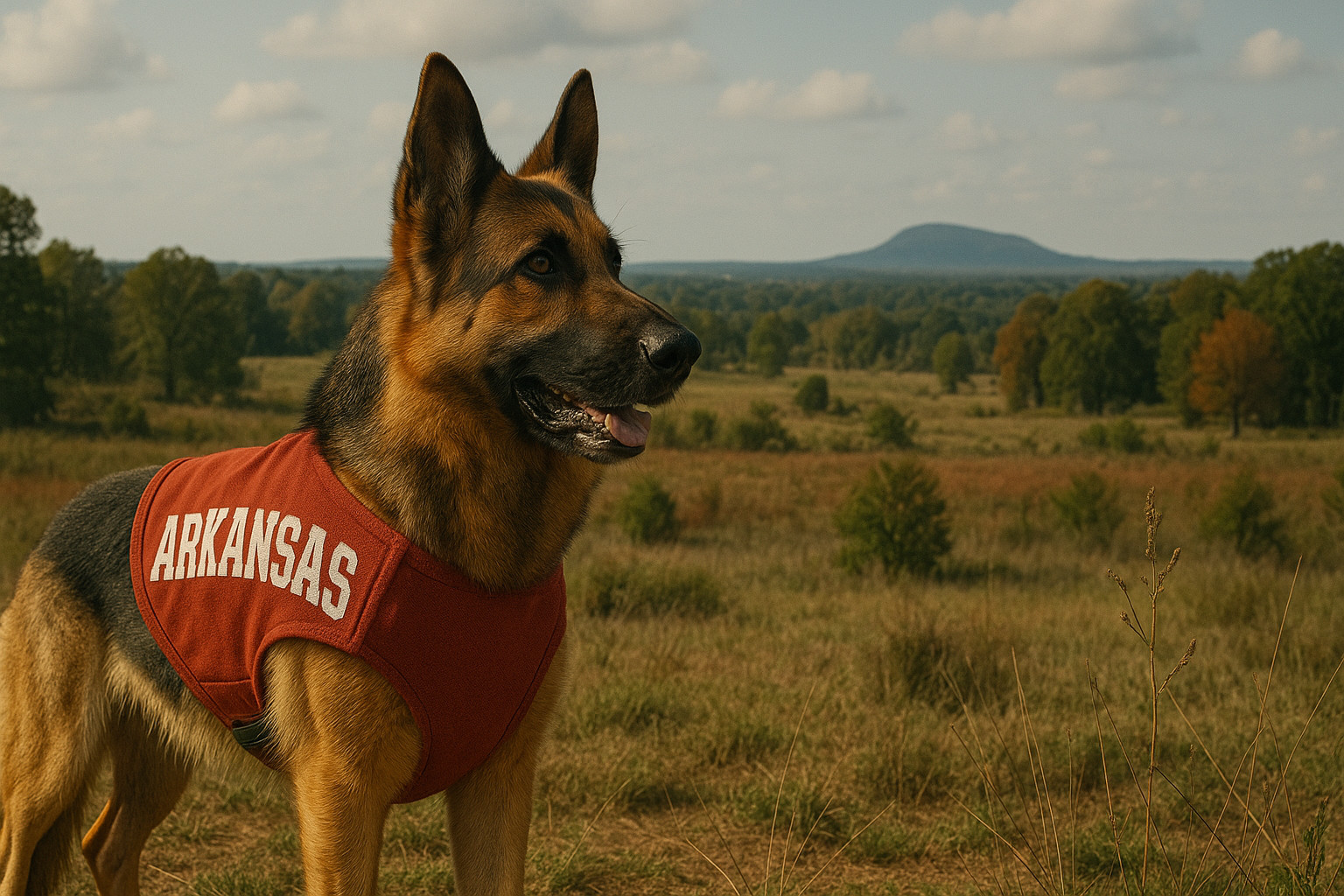
Overview of Service Dog and Legal Definitions in Arkansas
What is a Service Dog?
A service dog is specially trained to perform tasks for individuals with disabilities, including physical, sensory, psychiatric, intellectual, or other mental disabilities. The tasks a service dog performs must be directly related to the handler’s disability. In the context of Arkansas law, the definition aligns closely with the federal Americans with Disabilities Act (ADA). It’s crucial to distinguish service dogs from pets or emotional support animals, as the former has specific and legally recognized roles in providing assistance.
How Service Dogs Differ from Other Types of Assistance Animals
While service dogs are trained to perform specific tasks related to a person’s disability, other assistance animals, such as emotional support animals (ESAs), offer passive support through their presence. ESAs do not have federally mandated access rights and are not recognized under ADA as service dogs. They primarily provide comfort and relief from symptoms of emotional or psychological conditions, unlike service dogs, whose functions are more task-oriented and critical to the handler’s independence.
Key Federal Laws Affecting Service Dogs
Several federal laws ensure the rights of service dog handlers:
- Americans with Disabilities Act (ADA): This law provides the framework for service dog rights in public spaces. It mandates that users of service dogs must have equal access to public facilities, businesses, and government entities.
- Fair Housing Act (FHA): The FHA protects individuals against discrimination and requires “reasonable accommodations” for service animals in housing, overriding pet policies.
- Air Carrier Access Act (ACAA): This law governs travel access, allowing service dogs to accompany their handlers traveling on commercial airlines without additional fees or restrictions typically applied to pets.
State-Specific Service Dog Laws in Arkansas
Housing Rights and Responsibilities
In Arkansas, under the federal FHA, individuals with service dogs are entitled to reasonable accommodations in housing environments. This includes an exemption from pet policies and fees, provided the service animal is verified, and its role is essential to the handler’s well-being. Subject only to minimal verification processes, landlords must respect these accommodations unless specific issues like safety concern arise.
Public Access and Accommodation
Arkansas honors ADA mandates, whereby service dogs can accompany their handlers in any public space. These access rights extend to retail establishments, restaurants, recreational areas, and public transportation. Business owners are generally only allowed to inquire if a dog is required for a disability and what tasks it performs. They cannot request documentation or identification cards for the dog.
Transportation and Travel Rules
Service dog handlers can traverse Arkansas facilities and services linked to public and private transportation without paying additional fees. Under the ACAA, commercial airlines operating in and out of Arkansas must allow service dogs to ride in the cabin with their handlers. Identification documentation is not required by law, though airlines may ask about the dog’s requirements or training specifics.
Employment and Workplace Considerations
Employers in Arkansas must comply with ADA workplace provisions offering reasonable accommodations for service dogs. Employers may ask about the necessity but are prohibited from inquiring about the specifics of the employee’s disability. A service dog should be allowed in the workplace if it aids the employee in conducting job functions effectively and does not cause an undue burden on the operation.
Register Any Breed
Example Cards Available In USA And Canada
Documentation, Requirements, and Processes in Arkansas
Service Dog Documentation and Who Can Issue It
Service dog handlers in Arkansas are not required to produce formal documentation or identification cards for their animals. The ADA supports this by focusing on the functional requirements of the service dog rather than the paperwork. Organizations that train service animals typically issue certificates upon the completion of training, but these are for the handler’s assurance rather than legal necessity.
Landlord, Business, and Provider Verification Rules
While businesses and landlords may seek assurance, they are legally limited in their queries. It’s legal to ask if the animal is a service animal required because of a disability, and what work or task the animal has been trained to perform. However, overly invasive questioning and demands for certification or demonstration of tasks are not allowed under the ADA, both federally and within Arkansas.
Rights, Limitations, and Legal Risks
Rights Service Dog Handlers Have in Arkansas
- Equal access to public spaces, housing, and employment opportunities
- Transportation rights and accommodations without additional fees
- The ability to lodge complaints against discrimination under ADA protections
Limits on Service Dog Protections and Common Restrictions
- Service dogs in training are not always granted the same public access in Arkansas as fully trained service animals.
- Certain environments, such as sterile environments in hospitals, may legally restrict access due to health and safety regulations.
Penalties for Fraud or Misrepresentation
Misrepresenting a pet as a service dog is illegal and subject to significant penalties in Arkansas. Offenders may face fines, community service, and the tarnishing of their credibility. Misrepresentation undermines the legitimate needs of service dog handlers and complicates genuine access rights.
Practical Guidance for Service Dog Handlers in Arkansas
How to Qualify for a Service Dog Legitimately
Qualification begins with the individual having a disability recognized by the ADA. Assessment by a health professional can determine the need for a service dog, and upon receiving a recommendation, the individual may contact accredited service dog training organizations.
How to Talk to Landlords, Airlines, and Employers
Be prepared to explain your service dog’s role succinctly:
- Emphasize the critical tasks the dog performs related to your disability.
- Understand what entities can legally ask and cannot ask.
- Keep a calm, clear line of communication to address any concerns about accommodations without divulging unnecessary personal health information.
Summary of Service Dog Laws in Arkansas
- Definition and recognition: Service dogs are trained for specific assistance related to disabilities.
- Federal vs. state laws: The ADA, FHA, and ACAA provide broad protections that are upheld in Arkansas.
- Access rights: Emphasize equal access, nondiscrimination, and reasonable accommodations in housing, public settings, transportation, and employment.
- Limitations: Recognition only extends to service dogs, potentially restricting those in training or other assistance animals.
- Documentation is minimal: While certification is not required, understanding verification rules and answering inquiries is important.
- Legal ramifications for fraud: Understanding the seriousness of misrepresentation helps protect service dog legitimacy.
In conclusion, maintaining educational awareness of rights, knowing how to address verification questions, and distinguishing genuine service needs from misrepresentation are key to successful service dog ownership in Arkansas.


-
Public Access Kits
$149.00 Learn more This product has multiple variants. The options may be chosen on the product page -
Quick Ship Premium Vests
$48.00 – $82.00 Learn more This product has multiple variants. The options may be chosen on the product page -
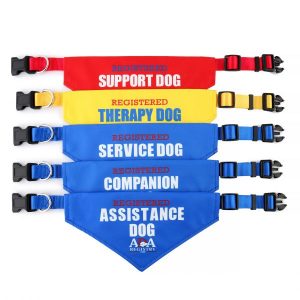
Service Dog Bandana
$39.95 Learn more This product has multiple variants. The options may be chosen on the product page
Custom ID Cards

Custom ID Cards
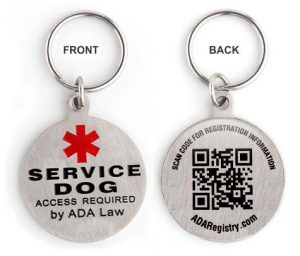
Custom Service Dog Tags
Official Dog Vests

Smart Vests
Official Public Access Kits
Complete Kits
USA & CANADA Letters
High Quality Bandanas
Service Dog Tags
Smart Tags
ESA TAGS