Basset Hound as a Service Dog
Register Any Breed
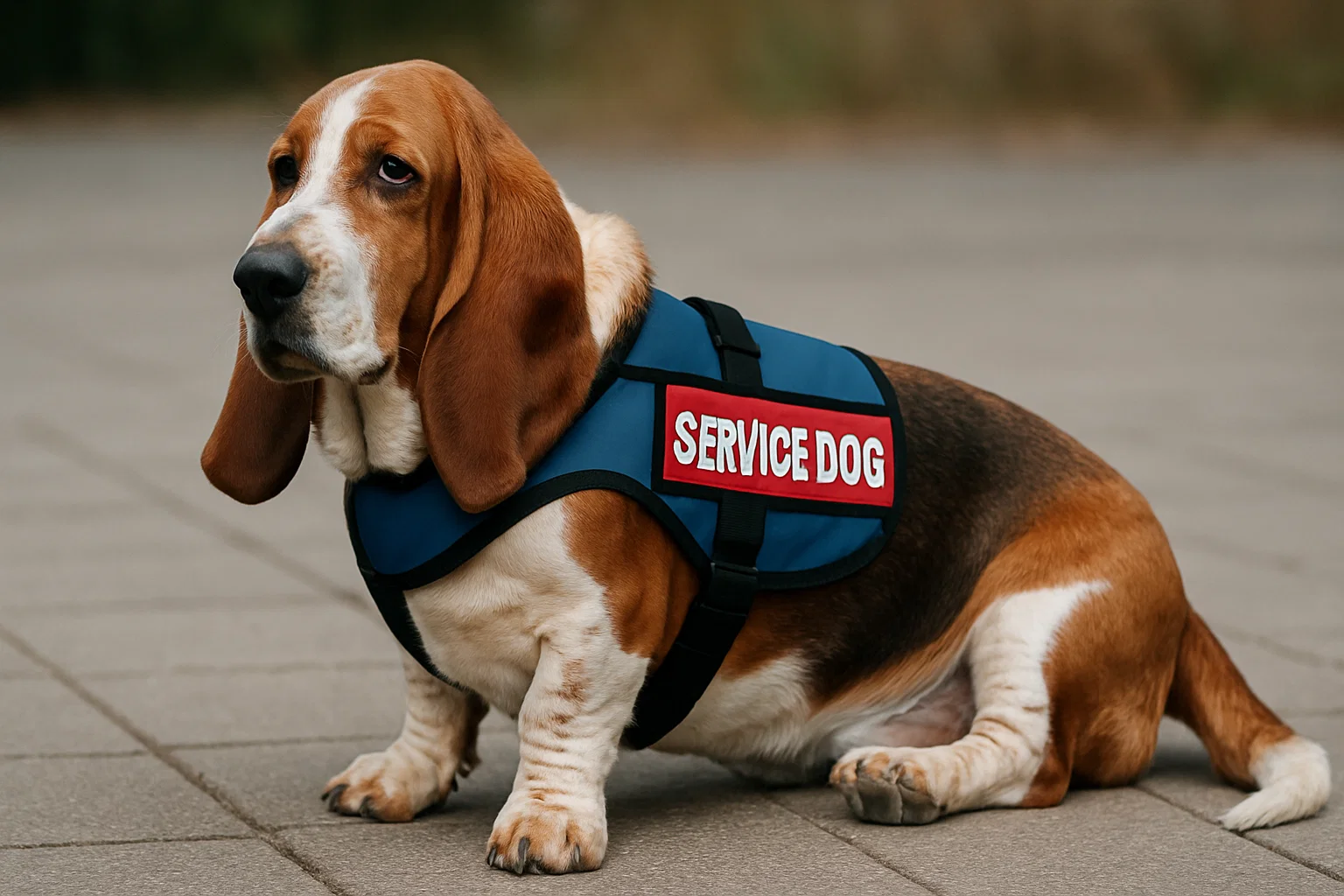
The Basset Hound, known for its signature long body and droopy ears, is a scent hound originally bred for hunting small game. While not traditionally recognized as a quintessential service dog breed, Basset Hounds have talents and traits that could be beneficial in certain service roles. This article explores the potential of Basset Hounds as service dogs by examining their physical characteristics, temperament, types of service work they are suited for, health considerations, and training suitability.
Basset Hound Overview
Basset Hounds are instantly recognizable thanks to their unique physique and soulful expressions. Originating from France, they were bred to track hare and rabbit. Their powerful sense of smell, second only to the Bloodhound, makes them excellent at tracking scents.
Physical Characteristics
Basset Hounds are medium-sized dogs with a long, low-set body. Their most notable features include:
- Height and Weight: They typically stand around 15 inches tall at the shoulder and weigh between 40-65 pounds.
- Build: Despite their short stature, Basset Hounds are quite sturdy and strong, with heavy bone structures.
- Ears: Their long, droopy ears aid in trapping scents, enhancing their olfactory perception.
- Coat: They have a short, smooth coat that is easy to maintain.
The physical traits of Basset Hounds can influence their suitability as service dogs. Their size and weight make them less ideal for work involving physical support, such as mobility assistance. However, their excellent scent-tracking ability could suit roles in detection work.
Temperament and Attitude
Basset Hounds possess a gentle and placid nature, which is beneficial in roles that require calmness and patience. Key temperament traits include:
- Affectionate and Loyal: They are typically very loyal to their family and enjoy human companionship.
- Gentle and Patient: Known for their easy-going attitude, they are tolerant and less prone to aggression.
- Stubborn and Independent: While this independence can be an advantage in some service roles, it might pose challenges in training them for complex tasks that require strict compliance.
Their temperament is ideally suited for therapeutic and emotional support roles, where a calm and steadfast presence can be comforting.
Types of Service Work
Basset Hounds can be suited for various types of service work due to their unique traits. However, some areas are more aligned with their capabilities:
Register Any Breed
- Scent Detection: Given their extraordinary sense of smell, Basset Hounds could excel in roles that require tracking or detection, such as bomb detection or search and rescue operations.
- Emotional Support: Their gentle and affectionate nature makes them excellent emotional support animals, providing comfort and companionship.
- Therapy Work: Basset Hounds' calming presence can be beneficial in therapeutic settings, such as hospitals or nursing homes, providing emotional comfort to patients.
Basset Hounds may not be well-suited for tasks requiring high energy levels or physical assistance due to their slower pace and independent nature.
Health Considerations
Basset Hounds are prone to certain health issues, which can affect their performance as service dogs:
- Orthopedic Issues: Their long back and short legs can lead to spinal problems and joint issues, which can limit their physical capabilities.
- Ear Infections: Their long ears can trap dirt and moisture, leading to frequent ear infections.
- Obesity: Basset Hounds are prone to obesity, which can exacerbate other health problems and affect their stamina and overall performance.
These health considerations should be taken into account when assessing their potential as service dogs, as frequent vet visits and early detection of issues are vital to maintaining their health.
Training and Suitability
Training a Basset Hound for service work requires patience and consistency due to their stubborn nature. Their trainability aspects include:
- Intelligence and Problem-Solving: Basset Hounds are intelligent but can be selective in their listening. This trait requires creative training methods that engage their interest.
- Motivation: They respond well to positive reinforcement, but distractions from scents can sometimes impact their focus.
- Patience Required: Their training requires higher levels of patience and consistency compared to more traditionally trainable breeds, like Labradors or Golden Retrievers.
While they can learn many skills needed for service and therapy roles, trainers must be prepared for a longer and potentially more challenging training process.
Summary of Basset Hound
In summary, the Basset Hound is a breed with specific traits that can either contribute to or limit its effectiveness as a service dog. Here is a recap of their strengths and weaknesses:
- Strengths:
- Extraordinary sense of smell suitable for scent detection work.
- Gentle and affectionate nature ideal for emotional support and therapy roles.
- Sturdy build and moderate size for activities that do not require high physical prowess.
- Weaknesses:
- Prone to health issues that may affect longevity and service capabilities.
- Stubbornness which can complicate training compared to other service breeds.
- Low energy and slower pace may make them unsuitable for high-energy tasks.
In conclusion, while the Basset Hound may not be the first choice for many traditional service dog roles, their unique qualities can be harnessed effectively in specific service and support roles. Selecting this breed for service work requires careful consideration of their physical and behavioral characteristics, potential health challenges, and the intended service tasks.


-
Public Access Kits
$149.00 Learn more This product has multiple variants. The options may be chosen on the product page -
Quick Ship Premium Vests
$48.00 – $82.00 Learn more This product has multiple variants. The options may be chosen on the product page -
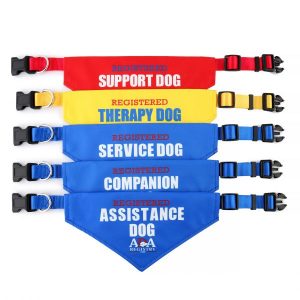
Service Dog Bandana
$39.95 Learn more This product has multiple variants. The options may be chosen on the product page
Custom ID Cards

Custom ID Cards
All States
Canada Cards
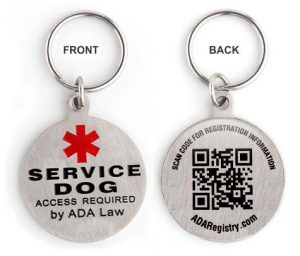
Custom Service Dog Tags
Official Dog Vests
Smart Vests
Official Public Access Kits
Complete Kits
USA & CANADA Letters
High Quality Bandanas
Service Dog Tags
Smart Tags
ESA TAGS