Bernese Mountain Dog as a Service Dog
Register Any Breed
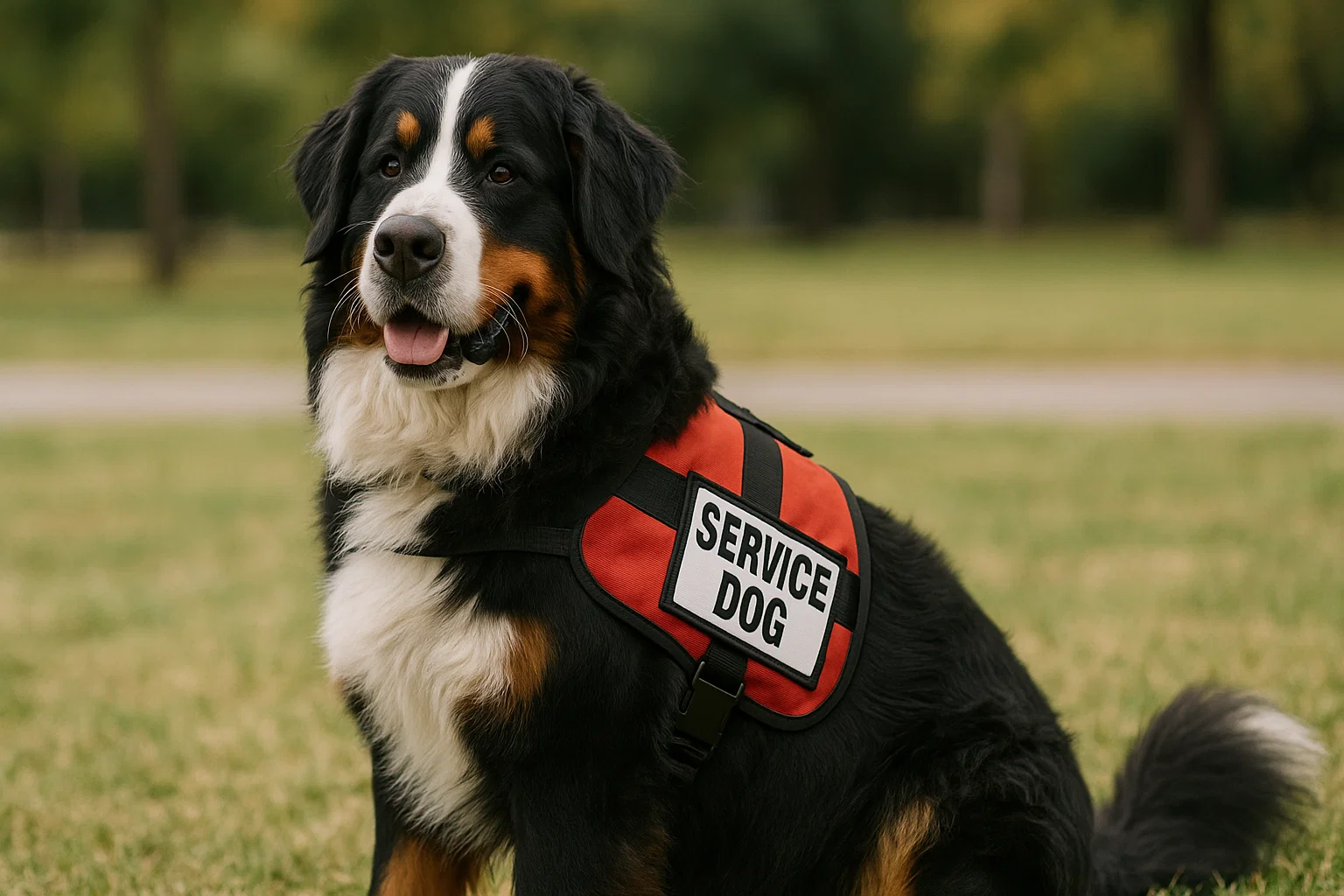
The Bernese Mountain Dog, renowned for its striking tricolor coat and gentle disposition, is gaining recognition in the realm of service dogs. With admirable physical attributes and a temperament well-suited for various service roles, this breed presents both strengths and challenges unique to its characteristics. Below, we delve into the specifics of the Bernese Mountain Dog as a service dog, examining their suitability through physical traits, temperament, service roles, health considerations, and training.
Bernese Mountain Dog Overview
Originating from the Swiss Alps, the Bernese Mountain Dog was originally bred for farm work, including pulling carts and serving as a reliable companion to farmers. Their sturdy build and amiable personality have transitioned well from agricultural aide to service dog, providing support in a range of environments.
Physical Characteristics
The Bernese Mountain Dog is notable for its robust physique:
- Size and Strength: Standing 23-28 inches at the shoulder and weighing between 70-115 pounds, this breed’s size is beneficial for tasks requiring physical strength, like mobility assistance.
- Energy Levels: Despite their large size, Bernese Mountain Dogs have balanced energy levels, making them ideal for service work that demands periods of both activity and repose.
- Appearance: With their thick, weather-resistant coat, they thrive in cooler climates, though this may require adaptation strategies in warmer regions.
Overall, their physical traits make them well-suited for specific service roles, though their size can pose challenges in confined spaces or for smaller handlers.
Temperament and Attitude
Bernese Mountain Dogs are celebrated for their gentle and affectionate nature:
- Calm and Gentle: These dogs possess a naturally calm demeanor, crucial for maintaining composure in stressful or crowded environments.
- Sensitivity: Their sensitivity to human emotions makes them excellent companions for psychiatric and emotional support roles.
- Sociability: Bernese Mountain Dogs generally get along well with people and other animals, though early socialization is essential to cultivate this trait fully.
Their temperament renders them a fit choice for many service dog roles, providing stability and reassurance to their handlers. However, their sensitive nature requires a gentle training approach to ensure their well-being and effectiveness.
Types of Service Work
The service capabilities of the Bernese Mountain Dog are broad, thanks to their physical and emotional attributes:
Register Any Breed
- Mobility Assistance: Their size and strength allow them to support handlers with balance and stability needs.
- Emotional Support and Psychiatric Assistance: With their empathetic disposition, they serve effectively in roles requiring emotional attunement and calming presence.
- Medical Alert: While not as commonly known for scent work as some breeds, individual Bernese Mountain Dogs can be trained for specific medical alert tasks, such as detecting changes in blood sugar levels.
Despite their versatility, it’s important to match their strengths with appropriate tasks to optimize their service potential.
Health Considerations
The longevity and health of a Bernese Mountain Dog are critical in evaluating their service capabilities:
- Hip and Elbow Dysplasia: Common in larger breeds, this condition can impact their ability to perform physically demanding tasks over time.
- Cancer Risk: Unfortunately, Bernese Mountain Dogs have a higher than average risk of developing cancer, which can limit their active service lifespan.
- Gastrointestinal Issues: Bloat, a life-threatening condition, requires vigilant monitoring, especially following meals or intense activity.
Prospective handlers must be prepared for these potential health issues, ensuring regular veterinary check-ups to maintain the dog’s health and service readiness.
Training and Suitability
The intelligence and eagerness to please inherent in the Bernese Mountain Dog make them fairly trainable:
- Intelligence: While intelligent, they may possess an independent streak that requires patient training strategies and positive reinforcement.
- Commitment to Training: Timely and consistent training from a young age harnesses their potential and minimizes undesirable behaviors.
- Adaptability: Their adaptable nature aids them in transitioning between environments and tasks, provided they receive proper training.
While highly trainable, Bernese Mountain Dogs benefit from experienced handlers or trainers who understand the nuances of their breed-specific traits.
Summary of Bernese Mountain Dog
In summary, the Bernese Mountain Dog’s physical characteristics, temperament, and adaptability make them a strong candidate for several service dog roles. However, prospective service dog owners should be mindful of their health challenges and the need for tailored, consistent training.
- Strengths: Calmness, physical strength, gentle temperament
- Weaknesses: Health issues (hip dysplasia, cancer), size constraints
- Ideal Service Roles: Mobility assistance, emotional support, psychiatric assistance
In conclusion, with the appropriate care, training, and health monitoring, Bernese Mountain Dogs can excel as devoted service companions, offering both physical support and emotional solace to their handlers.


-
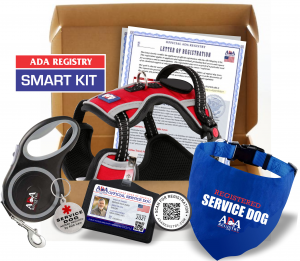
Public Access Kits
$149.00 Learn more This product has multiple variants. The options may be chosen on the product page -
Quick Ship Premium Vests
$48.00 – $82.00 Learn more This product has multiple variants. The options may be chosen on the product page -
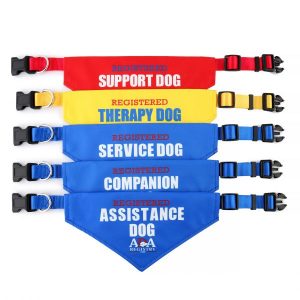
Service Dog Bandana
$39.95 Learn more This product has multiple variants. The options may be chosen on the product page
Custom ID Cards

Custom ID Cards
All States

Canada Cards

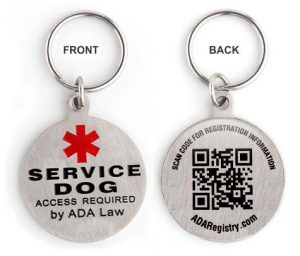
Custom Service Dog Tags
Official Dog Vests
Smart Vests
Official Public Access Kits
Complete Kits
USA & CANADA Letters

High Quality Bandanas
Service Dog Tags
Smart Tags

ESA TAGS