Border Terrier as a Service Dog
Register Any Breed
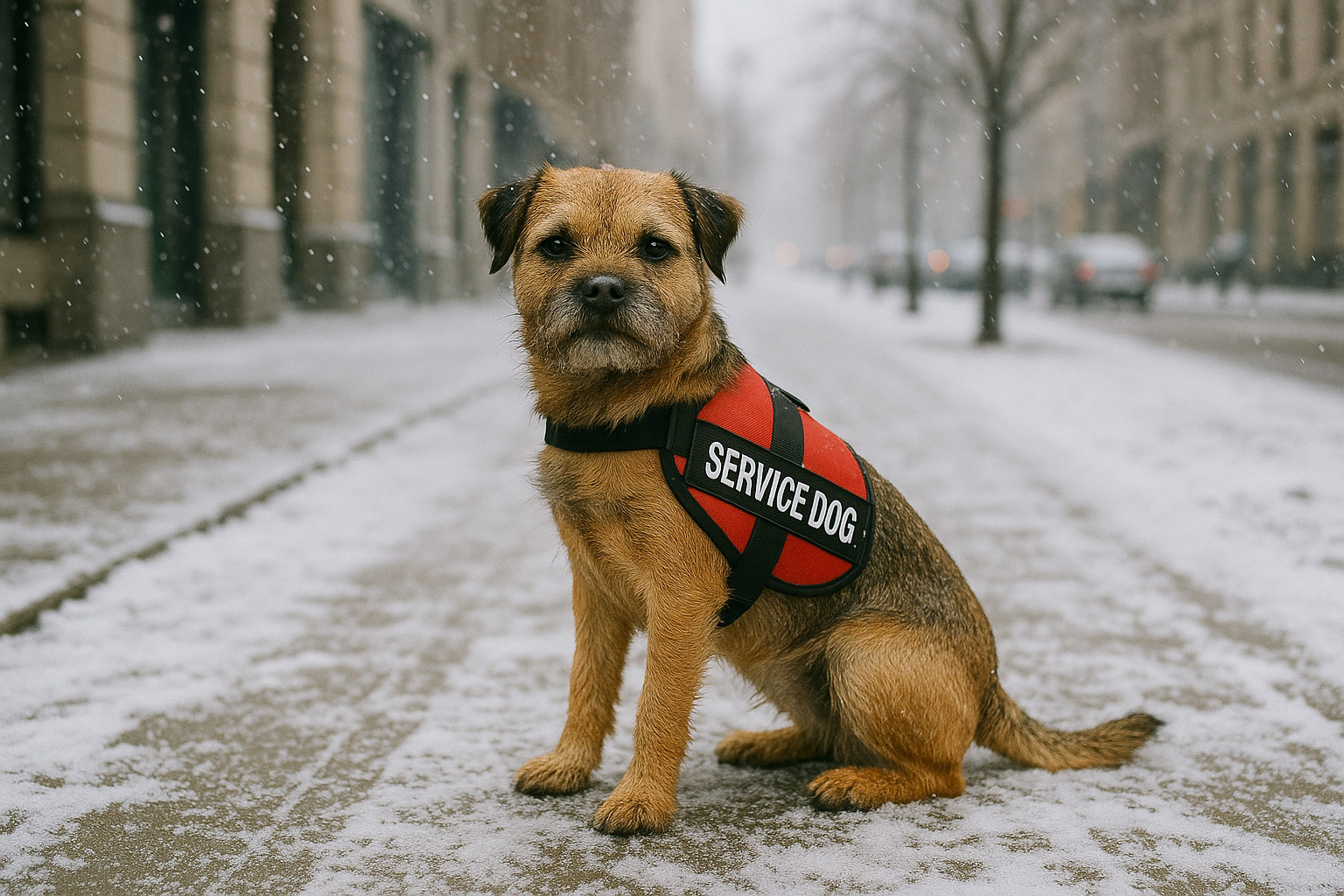
When considering a service dog, many people may overlook smaller breeds like the Border Terrier. However, this robust and energetic breed can offer unique advantages as a service animal. In this detailed exploration, we will examine the Border Terrier's characteristics, suitability for service work, and health considerations to provide a comprehensive view of their potential as service animals.
Border Terrier Overview
The Border Terrier, initially bred for fox hunting, stands out for its intelligence, agility, and tenacity. They are a member of the Terrier group, characterized by their determination and spirit. Despite their small size, these dogs possess significant energy and stamina, making them a candidate for specific types of service work.
Physical Characteristics
Border Terriers are compact and robust, typically weighing between 11.5 to 15.5 pounds and standing about 10 to 11 inches tall. Their small size and agility are beneficial for navigating diverse environments, including crowded urban settings and confined spaces.
- Coat Type: They have a dense, wiry coat that provides protection from weather elements, which can be particularly advantageous for service dogs who accompany their handlers outdoors frequently.
- Energy Levels: Known for their boundless energy, Border Terriers require regular physical activity. Their stamina enables them to keep up during long hours of work, an essential quality for service dogs.
Temperament and Attitude
The Border Terrier's temperament is one of its most defining characteristics. These dogs are known for being affectionate, alert, and intelligent.
- Affectionate and Loyal: While Border Terriers form strong bonds with their handlers, they also exhibit a degree of independence. This balance of traits ensures they remain focused on tasks even in distracting environments.
- Adaptability: Border Terriers are adaptable and usually handle changes in their environment well. This resilience is crucial for service dogs who must remain composed in various settings.
- Social Nature: Generally friendly with people and other animals, Border Terriers are less likely to exhibit aggressive behavior, which is vital for public interactions.
Types of Service Work
Border Terriers may not be the first breed that comes to mind for service work, but they have qualities that make them suitable for specific roles.
- Therapy and Emotional Support: Their friendly and affectionate nature makes them excellent candidates for therapy work, providing comfort and support in hospitals, schools, and nursing homes.
- Medical Alert Dogs: Although their small size limits them from tasks requiring strength, their keen sense of smell and attentiveness can be harnessed to alert their owners to seizures or diabetic fluctuations.
- Psychiatric Service Dogs: Their alertness and ability to sense mood changes make them well-suited for psychiatric service roles, offering critical emotional grounding to individuals with anxiety or PTSD.
Health Considerations
Understanding a breed's health profile is crucial in assessing their viability for service work. Border Terriers are generally healthy but have certain predispositions to be aware of.
- Genetic Conditions: Like many purebred dogs, Border Terriers can be susceptible to genetic conditions such as hip dysplasia and heart defects, which could limit their ability to perform some service tasks.
- Allergies and Skin Conditions: They may suffer from skin allergies that could affect their comfort and ability to work efficiently.
Routine veterinary care and a balanced diet are vital to maintaining their health.
Register Any Breed
Training and Suitability
Training a service dog requires patience and expertise, and not all breeds are equally trainable. Here's how Border Terriers measure up:
- Intelligence and Problem-Solving Skills: Border Terriers are highly intelligent and respond well to positive reinforcement training methods. Their curiosity and desire to learn can be a significant asset.
- Independence: Their independent streak can be both a strength and a challenge. While it enables them to function well independently, it may require additional training to ensure responsiveness at all times.
- Consistency and Commitment: Successful service dogs require rigorous training, and prospective handlers must commit to consistent lessons to shape the Border Terrier's raw potential into service-ready skills.
Summary of Border Terrier
In conclusion, while Border Terriers are not traditionally considered for service roles, they possess unique characteristics making them a viable option for specific tasks. Here are the primary points to consider:
- Strengths:
- Adaptable in various environments
- High energy and stamina
- Affectionate and personable
- Weaknesses:
- Susceptible to genetic health issues
- Small size limits physical service roles
- Ideal Service Roles:
- Therapy and emotional support
- Medical alert for certain conditions
- Psychiatric assistance for anxiety or PTSD
Choosing the right service dog involves matching a breed's inherent traits with an individual’s specific needs. The Border Terrier's intelligence, energy, and adaptability make it an intriguing option for those who require a service dog with a smaller physical presence yet notable capability.
In summary, while not the most traditional choice, Border Terriers offer unique advantages for specific service tasks that, when matched with an appropriate handler, can provide unparalleled support and companionship.


-
Public Access Kits
$149.00 Learn more This product has multiple variants. The options may be chosen on the product page -
Quick Ship Premium Vests
$48.00 – $82.00 Learn more This product has multiple variants. The options may be chosen on the product page -
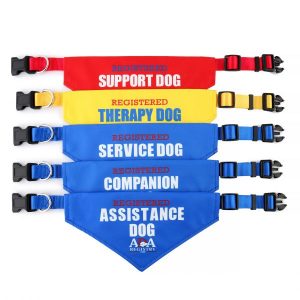
Service Dog Bandana
$39.95 Learn more This product has multiple variants. The options may be chosen on the product page
Custom ID Cards

Custom ID Cards
All States
Canada Cards
Custom Service Dog Tags
Official Dog Vests
Smart Vests
Official Public Access Kits
Complete Kits
USA & CANADA Letters
High Quality Bandanas
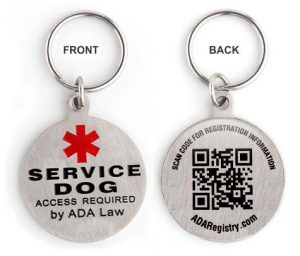
Service Dog Tags
Smart Tags
ESA TAGS