Boxer as a Service Dog
Register Any Breed
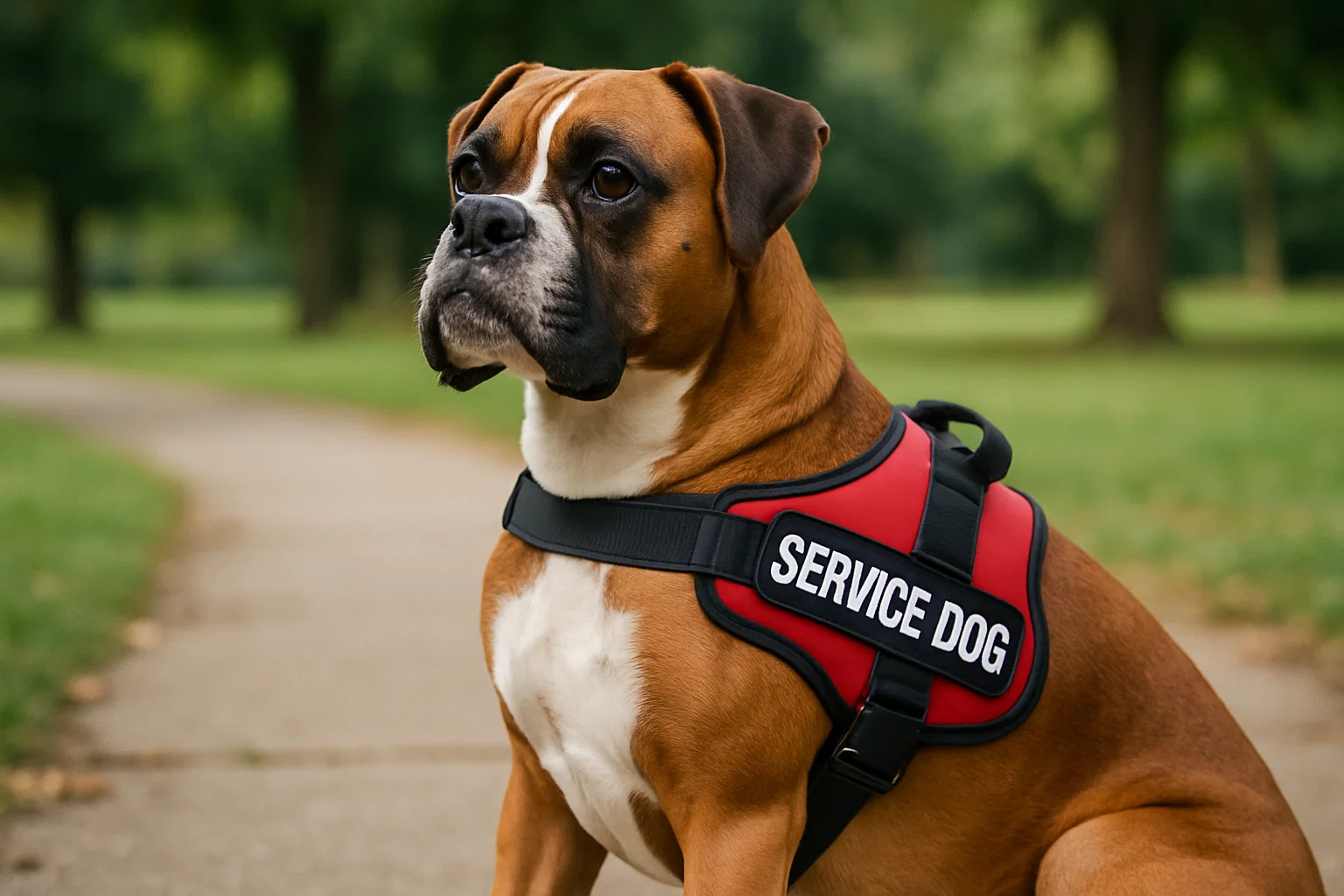
The Boxer dog breed, renowned for its playful demeanor and striking appearance, is a versatile and beloved companion animal for many. However, their potential as service dogs is not as well-documented as that of breeds like the Labrador Retriever or Golden Retriever. This article delves into the characteristics of the Boxer breed, analyzing their suitability as service dogs through a comprehensive examination of their physical attributes, temperament, types of service work they excel in, health considerations, and training potential.
Boxer Overview
The Boxer is a medium to large-sized dog breed that originated in Germany and has become popular worldwide due to its unique blend of strength, agility, and loyalty. The breed is instantly recognizable by its muscular build, expressive face, and short, smooth coat normally seen in fawn, brindle, or white.
Physical Characteristics
Boxers are robust, well-muscled dogs known for their distinctive looks and physical capabilities. Typically, an adult Boxer weighs between 55 to 70 pounds and stands about 21 to 25 inches at the shoulder. Their strength and agility make them potentially excellent candidates for service work that requires physical prowess.
- Size and Strength: Boxers possess a solid build, which can be advantageous in tasks involving mobility assistance, but could be a hindrance in environments requiring delicate maneuvering.
- Energy Levels: Energetic by nature, Boxers require regular exercise to maintain their health and reduce the risk of obesity. Their high energy makes them well-suited for active service roles yet requires handlers ready to invest time in their exercise regimen.
- Lifespan: Boxers typically live 10 to 12 years, aligning with the duration one might expect from many other medium-large breeds. This lifespan ensures a reasonable period of service work with appropriate training and maintenance.
Temperament and Attitude
The Boxer is celebrated for its loyal, affectionate, and protective demeanor, often forming deep bonds with human family members. This temperament makes them both appealing and challenging as service animals.
- Affectionate Nature: Boxers forge strong emotional connections with their handlers, beneficial for emotional support and companionship roles. However, this trait might require them to be closely monitored in public settings to prevent over-excitement or protectiveness.
- Intelligence and Alertness: Boxers are intelligent dogs, capable of learning commands and performing tasks. Their alertness can be advantageous in environments where vigilance is critical, such as service roles involving situational awareness.
- Behavior in Public: Although generally friendly, Boxers may exhibit stubbornness or overprotective tendencies in bustling settings. Proper early socialization and continued behavioral training are crucial for managing these traits.
Types of Service Work
While Boxers are less conventional choices for service work compared to some other breeds, their physical and emotional attributes allow them to excel in specific roles:
- Mobility Assistance: Their strength makes them suitable for tasks such as opening doors or providing physical support to those with mobility challenges.
- Medical Alert Dogs: Boxers can be trained to recognize changes in their handler's physical state, such as seizures or drops in blood sugar for individuals with diabetes.
- Emotional Support Animals (ESA): The Boxer’s natural empathy and affinity for human companionship position them as excellent ESAs, offering comfort to individuals with anxiety, PTSD, or depression.
Health Considerations
Health is a crucial consideration in selecting and training service dogs. Boxers are prone to certain genetic conditions that can affect their suitability and longevity as service animals.
- Heart Conditions: Boxers may be susceptible to heart diseases such as aortic stenosis or cardiomyopathy, necessitating regular veterinary check-ups and possibly influencing their eligibility for high-endurance tasks.
- Cancer Susceptibility: Known to have a predisposition to mast cell tumors and other cancers, it is essential that potential health risks are monitored closely to ensure the dog's well-being and capacity as a service animal.
- Joint Issues: Although generally robust, Boxers can experience hip dysplasia, which may hinder their performance in demanding service roles involving heavy physical activity.
Training and Suitability
Training a Boxer for service work requires dedication, patience, and an understanding of the breed's unique characteristics:
Register Any Breed
- Trainability: Boxers are intelligent and eager to please, yet they may exhibit a stubborn streak. Consistent, positive reinforcement techniques are usually effective in cultivating the desired behaviors in service contexts.
- Socialization and Adaptability: Early socialization is vital to harnessing a Boxer's playful disposition and developing their ability to adapt to a variety of environments that a service role might require.
- Mental Stimulation Requirements: To prevent boredom or destructive behavior, Boxers need mental exercises included in their training regimen, such as agility training or puzzle-solving tasks.
Summary of Boxer
In summary, Boxers possess numerous qualities that can make them suitable service dogs for specific roles, but their upbringing and training require deliberate, informed efforts. Below is a summary of the key aspects that define their suitability:
- Strengths:
- Strong and athletic, ideal for physical support or mobility assistance tasks.
- Highly affectionate and loyal, making them great companions and emotional support animals.
- Weaknesses:
- Susceptible to certain health conditions, including heart disease and cancer, which may limit service duration.
- Can be stubborn and overly protective, necessitating thorough and ongoing training.
- Ideal Service Roles:
- Mobility Assistance
- Medical Alert
- Emotional Support
With the right owner or handler, a Boxer can thrive as a service dog, providing invaluable assistance and companionship. Whether for mobility, medical alert, or emotional support tasks, the Boxer’s intelligence, affection, and physical prowess ensure they have the potential to excel, provided their health and training are meticulously managed.


-
Public Access Kits
$149.00 Learn more This product has multiple variants. The options may be chosen on the product page -
Quick Ship Premium Vests
$48.00 – $82.00 Learn more This product has multiple variants. The options may be chosen on the product page -
Service Dog Bandana
$39.95 Learn more This product has multiple variants. The options may be chosen on the product page
Custom ID Cards

Custom ID Cards
All States

Canada Cards

Custom Service Dog Tags
Official Dog Vests
Smart Vests
Official Public Access Kits
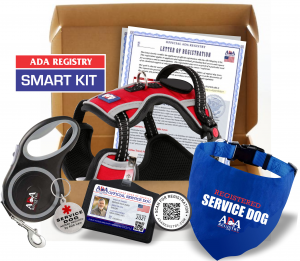
Complete Kits
USA & CANADA Letters
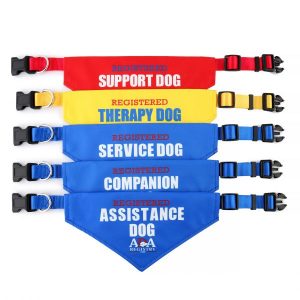
High Quality Bandanas
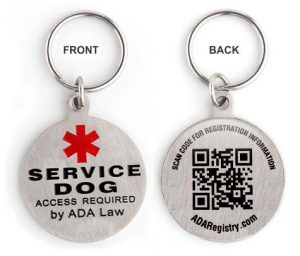
Service Dog Tags
Smart Tags

ESA TAGS