Briard as a Service Dog
Register Any Breed
Briard Overview
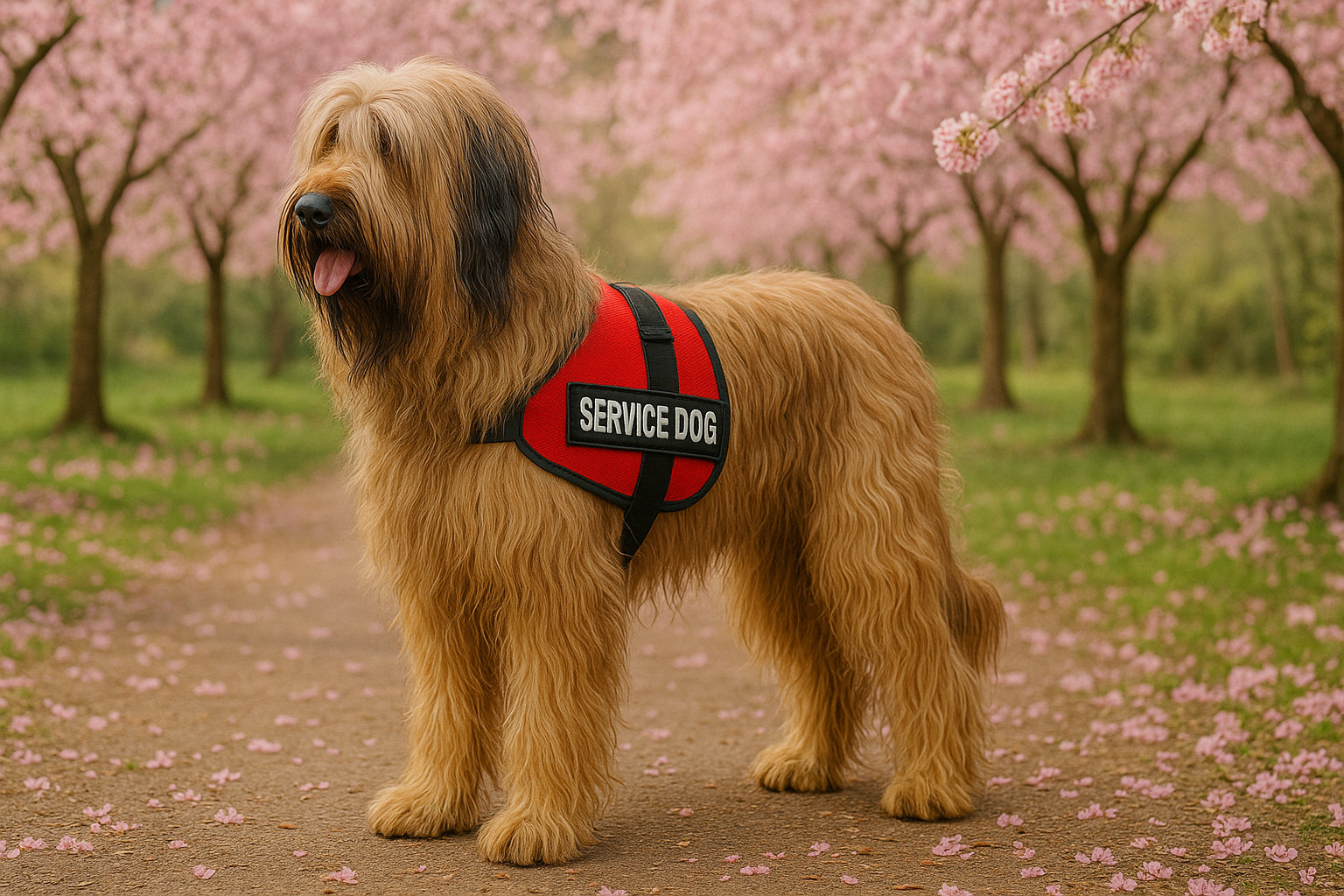
The Briard is a French herding breed known for its distinctive appearance and remarkable intelligence. Historically revered as a versatile farm dog, the Briard has found modern relevance in the role of a service dog. This article explores the unique attributes of the Briard when applied to service work, from their physical traits to temperament, health considerations, and suitability for different types of service roles. With a keen intellect and loyal disposition, the Briard can be an exceptional companion for individuals requiring assistance due to disabilities or medical conditions. Understanding the nuances of this breed will help determine if the Briard is the right choice for specific service tasks.
Physical Characteristics
The Briard is a large and muscular breed, making it a physically capable choice for various service tasks. Their size can be both an asset and a challenge, depending on the type of service work.
- Size and Strength:
- Typical weight ranges from 55 to 100 pounds.
- Height averages between 22 and 27 inches at the shoulder.
- Robust build suitable for mobility and physical assistance tasks.
- Energy and Endurance:
- High energy levels require regular exercise.
- Endurance makes them well-suited for active service roles.
- Coat and Maintenance:
- Double coat with a distinctive wavy appearance.
- Regular grooming is necessary to manage shedding and prevent matting.
The physical characteristics of the Briard make it an excellent choice for duties involving strength and endurance. However, their grooming needs and size should be considered when determining suitability for certain environments or tasks.
Temperament and Attitude
Known for their intelligence and loyalty, the Briard's temperament is a crucial factor in its suitability as a service dog. Their personality traits can significantly influence their effectiveness in various service scenarios.
- Intelligence and Trainability:
- High level of intelligence facilitates advanced training.
- Quick learners capable of mastering complex tasks.
- Loyalty and Bonding:
- Forms strong bonds with handlers.
- Protective and attentive, enhancing their role as alert dogs.
- Social Behavior and Adaptability:
- Can be aloof with strangers but generally well-behaved in public spaces.
- Requires proper socialization to thrive in varied environments.
The Briard's temperament is well-suited for service work, particularly in roles that demand loyalty and quick thinking. Their ability to form deep bonds with their handlers enhances their effectiveness in providing emotional support and stability. However, potential handlers should consider the need for socialization to ensure they remain adaptable in diverse settings.
Types of Service Work
Briards possess a unique blend of physical capability and intellectual aptitude, making them suitable for a diverse range of service roles. Here are some specific types of service work where Briards excel:
- Mobility Assistance:
- Ideal for individuals needing support to navigate physical spaces.
- Capable of tasks such as opening doors and retrieving items.
- Medical Alert:
- Can be trained to detect changes in health, such as seizures or low blood sugar.
- Acts quickly to alert handlers, ensuring timely intervention.
- Psychiatric Support:
- Provides companionship and grounding during anxiety episodes.
- Can serve as a calming presence in stressful situations.
While the Briard's strengths are well-suited for various types of assistance, potential handlers should align the dog's specific capabilities with the required service tasks to ensure optimal performance and safety.
Register Any Breed
Health Considerations
Health is a critical factor in determining the long-term success of a Briard as a service dog. Like any breed, the Briard is prone to certain health issues that may affect its service capabilities.
- Common Health Concerns:
- Hip dysplasia and joint problems due to their larger size.
- Progressive retinal atrophy, affecting vision.
- Preventative Care:
- Regular veterinary check-ups and genetic testing can mitigate some health risks.
- A balanced diet and consistent exercise regime to maintain optimal health.
Understanding these health considerations is vital for anyone considering a Briard as a service dog. Proper preventive care and awareness of breed-specific health issues will help ensure the longevity and effectiveness of the Briard in a service role.
Training and Suitability
The Briard's intelligence and eager-to-please nature generally make them excellent candidates for service dog training. However, successful outcomes depend on a nuanced understanding of their training needs and characteristics.
- Training Techniques:
- Positive reinforcement techniques work best.
- Consistent, clear commands foster quicker learning.
- Challenges in Training:
- Their independent streak requires a firm yet patient approach.
- Early obedience training helps manage their protective instincts.
- Intelligence and Problem-Solving:
- Capable of handling complex tasks that require critical thinking.
- Benefit from stimulating environments that challenge their intellect.
The Briard's trainability is one of its greatest assets as a service dog. By employing appropriate training methods and ensuring their mental and physical needs are met, the Briard can adapt to and excel in a variety of roles.
Summary of Briard
The Briard stands out as a service dog due to its combination of physical prowess, intelligence, and loyal disposition. Here's a summary of its strengths and roles:
- Strengths:
- High intelligence and quick learning.
- Strong and capable of physical tasks.
- Loyal and forms strong bonds with handlers.
- Challenges:
- Requires regular grooming and exercise.
- Prone to specific health issues like hip dysplasia.
- Ideal Service Roles:
- Mobility assistance for those needing physical support.
- Medical alert for detecting health changes.
- Psychiatric support to provide comfort and stability.
Choosing a Briard as a service dog represents a commitment not only to the animal's well-being but also to maintaining an effective partnership that enhances quality of life for those requiring assistance. With diligent care, thorough training, and informed health management, the Briard can be an exemplary service companion.


-
Public Access Kits
$149.00 Learn more This product has multiple variants. The options may be chosen on the product page -
Quick Ship Premium Vests
$48.00 – $82.00 Learn more This product has multiple variants. The options may be chosen on the product page -
Service Dog Bandana
$39.95 Learn more This product has multiple variants. The options may be chosen on the product page
Custom ID Cards

Custom ID Cards
All States

Canada Cards

Custom Service Dog Tags

Official Dog Vests

Smart Vests
Official Public Access Kits

Complete Kits
USA & CANADA Letters

High Quality Bandanas

Service Dog Tags
Smart Tags

ESA TAGS