Bull Terrier as a Therapy Dog
Register Any Breed
Bull Terrier as a Therapy Dog Overview
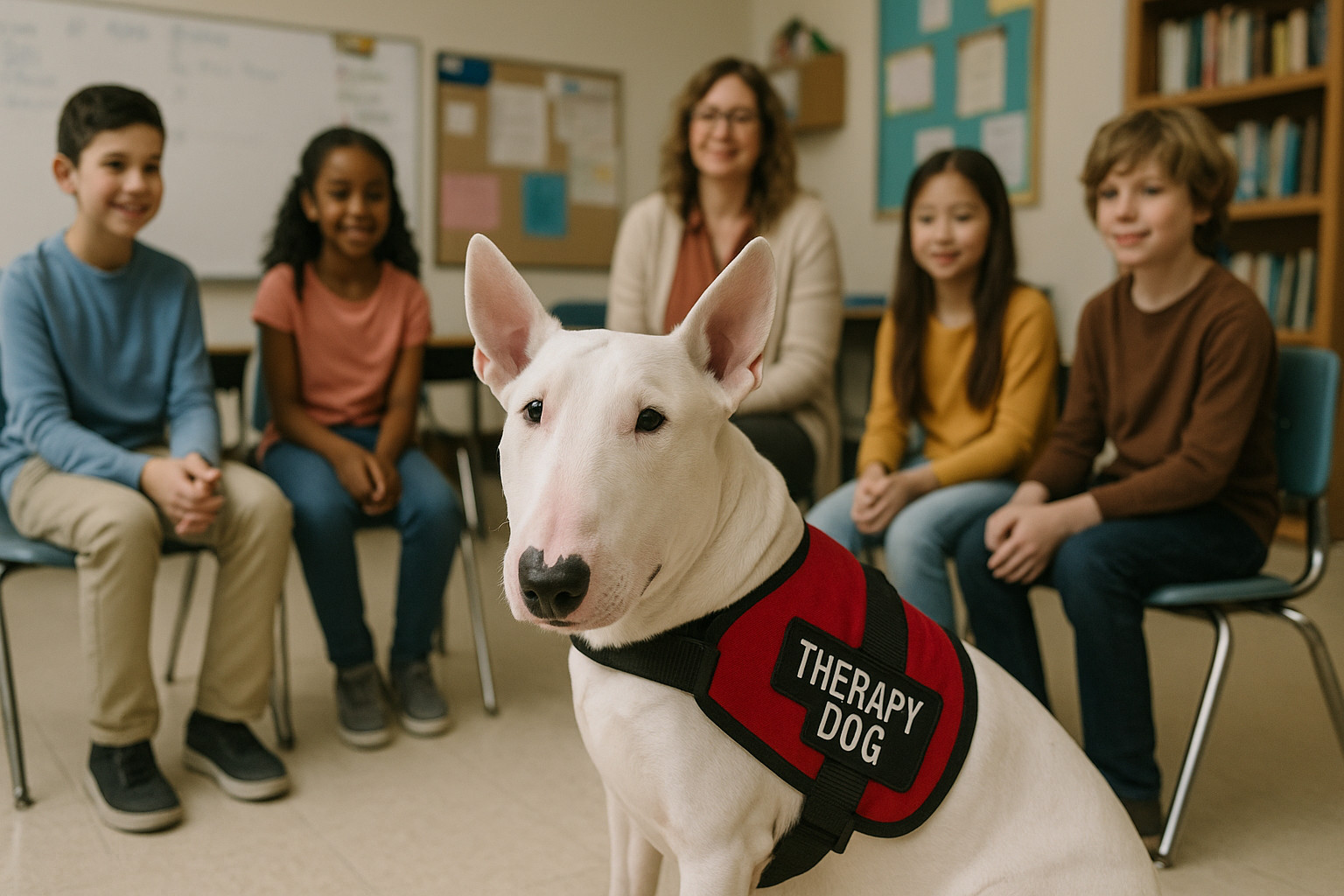
Therapy dogs play a vital role in offering comfort, reducing anxiety, and enhancing the well-being of individuals in various settings. Among the diverse range of breeds that are utilized for this purpose, the Bull Terrier stands out due to its unique blend of physical and emotional characteristics. While commonly recognized for its distinct egg-shaped head and robust physique, the Bull Terrier’s potential as a therapy dog is shaped by a combination of temperament traits, adaptability, and the ability to form strong human connections.
Understanding the Therapy Dog Role
Therapy dogs are trained to provide affection and comfort to people in hospitals, retirement homes, schools, and other settings. Unlike service dogs, their primary job is emotional support through interaction. The success of a Bull Terrier in a therapy role is heavily influenced by its temperament and behavior. With their playful yet keen demeanor, Bull Terriers often display a natural ability to lift spirits and provide companionship that can be both soothing and uplifting for those they visit.
- Empathy and Calmness: Bull Terriers, when properly trained, exhibit patience and attentiveness, making them appealing companions in one-on-one settings.
- Social Interactions: Their social nature aids in building rapport with individuals across different age groups, making them suited for diverse environments.
Physical Appearance and Energy Level
The Bull Terrier’s physical build is characterized by a solid, muscular frame, topped with its iconic convex skull. This striking appearance is often a conversation starter, helping to quickly form connections with individuals.
- Energy Level: They are known for their high energy, which necessitates regular physical exercise to maintain their health. When appropriately exercised, their energy can be harnessed to bring joy and active engagement in therapy sessions.
- Adaptability: Their compact size yet sturdy build allows them to engage with individuals in various physical activities, fostering interactive therapy experiences.
Personality and Emotional Intelligence
Bull Terriers are known for their charismatic personalities and heightened emotional intelligence. These traits contribute significantly to their potential as therapy dogs.
- Expressive Nature: Their expressive faces and body language help in conveying emotions, which can be reassuring and comforting to people in distress.
- Emotional Responsiveness: These dogs often show a strong ability to recognize and respond to the emotional cues of people around them, an essential trait for any therapy dog.
Environments Where Bull Terrier Excels
Bull Terriers thrive in environments where their playful and interactive nature can be fully utilized. Schools and rehabilitation centers are typical settings where they excel, providing both education and emotional support to children and adults.
- Hospital Visits: Their empathy and adaptability align well with the needs of hospital patients, providing a welcome distraction and comfort.
- School Programs: Interactive and educational sessions in schools can benefit from the Bull Terrier’s playful engagement, enhancing learning experiences for children.
Common Therapy Settings
Bull Terriers are versatile in adapting to a wide range of therapy settings due to their energetic and social dispositions.
- Rehabilitation Centers: They stimulate emotional strength and physical activity, aiding in both mental and physical recovery processes.
- Elderly Care Homes: Their adaptability and affectionate nature make them well-suited for visits to residents, offering companionship and reducing feelings of loneliness.
Interactions with Different Populations
Bull Terriers show a remarkable ability to interact effectively with a variety of populations, from children to the elderly.
Register Any Breed
- Children: Their playfulness and energy are especially beneficial in pediatric settings, where they can engage children through play and companionship.
- Elderly: They provide gentle affection and a sense of stability, often becoming a memorable part of an elderly individual’s day through non-intrusive presence.
Health and Wellness Factors
The Bull Terrier’s overall health and wellness are critical components in determining their effectiveness and safety as therapy dogs.
- Regular Health Checks: Routine veterinary visits are crucial to monitor common health issues such as skin conditions and kidney disorders, ensuring they remain healthy and comfortable during visits.
- Grooming Needs: Basic grooming is necessary to maintain a clean and presentable appearance, crucial for visits to healthcare and educational environments.
Lifespan and Common Health Issues
The lifespan of a Bull Terrier is typically between 10 to 14 years. Being aware of potential health issues is vital for maximizing their role as therapy dogs.
- Common Health Concerns: Issues such as deafness and patellar luxation should be monitored, as these can impact their ability to perform in therapy settings.
- Preventative Care: Regular physical checkups and tailored health plans can mitigate many of these issues, maintaining the dog’s overall health and therapy readiness.
Maintenance and Care Needs
Proper maintenance and care routines are essential for Bull Terriers to fulfill their therapy roles successfully.
- Exercise Regiment: A balanced exercise routine helps to manage their high energy levels, preparing them for calm, interactive sessions.
- Diet and Nutrition: A nutritious diet enhances their physical health, supporting active engagement in therapy activities.
Training and Certification Readiness
For Bull Terriers to become effective therapy dogs, focused training and certification are crucial.
- Training Approach: Positive reinforcement methods work best with Bull Terriers, enhancing responsiveness and obedience.
- Certification Programs: Completing recognized therapy dog certification programs ensures they meet the standards required for therapy work.
Learning Style and Responsiveness
Bull Terriers are known for their intelligent and curious nature, which influences their learning style and responsiveness to training.
- Training Adaptability: Their intelligence aids quick learning, although consistency and patience in training are critical to reinforce positive behaviors.
- Engagement in Tasks: Bull Terriers naturally engage in structured tasks, showing high levels of focus and determination when motivated by interactive activities.
Handling Social and Emotional Stimuli
Given their active and social nature, Bull Terriers proficiently handle a variety of social and emotional stimuli.
- Environmental Adaptability: They adjust well to different social settings, contributing empathetically across diverse emotional scenarios.
- Emotionally Supportive: Their ability to connect emotionally makes them effective in providing comfort and reassurance to individuals during therapy.
Strengths, Limitations, and Ideal Roles for Bull Terrier
The Bull Terrier’s unique attributes position them distinctively in therapy roles, although certain limitations should be considered.
- Strengths: High energy and playful nature, paired with emotional intelligence and empathy.
- Limitations: Potential health issues and high energy may require specific management to prevent overwhelming clients in sensitive situations.
- Ideal Roles: Best suited for active therapy programs where their energy and playfulness are required, such as school visits and pediatric therapy sessions.
Final Thoughts
The Bull Terrier, with its charming personality and strong emotional intelligence, holds significant promise as a therapy dog. Successful incorporation into therapy programs hinges on understanding their unique strengths and addressing potential limitations through tailored training and focused care.
Key Takeaways for the Bull Terrier as a Therapy Dog
- Best suited for: Schools, rehabilitation centers, pediatric patient visits.
- Not ideal for: Environments requiring minimal physical activity or very quiet settings.
- Temperament highlights: Playful, empathetic, socially engaging.
- Care and health notes: Requires regular exercise, grooming, and health checkups.
- Therapy environments where they shine: Interactive settings and programs involving children or active rehabilitation.
By leveraging their natural traits with appropriate care and training, Bull Terriers can make exceptional therapy dogs, providing invaluable support and companionship across various therapy settings.


-
Public Access Kits
$149.00 Learn more This product has multiple variants. The options may be chosen on the product page -
Quick Ship Premium Vests
$48.00 – $82.00 Learn more This product has multiple variants. The options may be chosen on the product page -
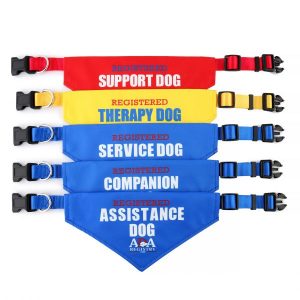
Service Dog Bandana
$39.95 Learn more This product has multiple variants. The options may be chosen on the product page
Custom ID Cards

Custom ID Cards
All States

Canada Cards

Custom Service Dog Tags
Official Dog Vests

Smart Vests
Official Public Access Kits
Complete Kits
USA & CANADA Letters

High Quality Bandanas
Service Dog Tags
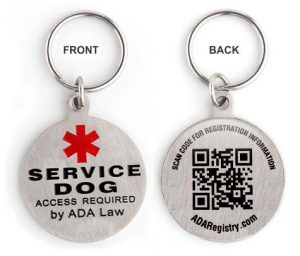
Smart Tags

ESA TAGS