Bulldog as a Service Dog
Register Any Breed
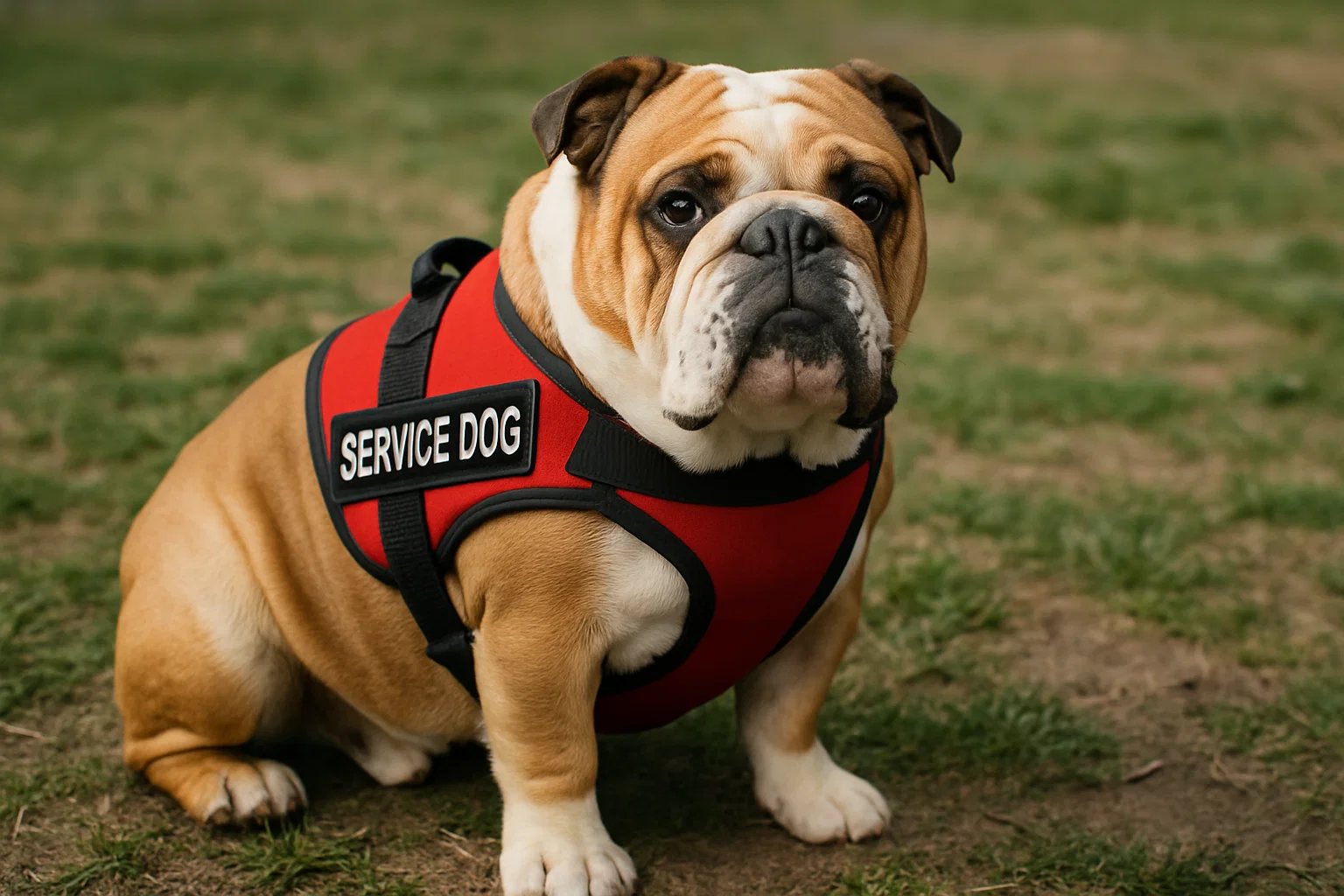
Bulldogs are known for their distinctive appearance and unique personalities. While not traditionally seen as a typical choice for service work, Bulldogs can offer valuable support and companionship to the right individuals. This article explores their potential as service dogs, focusing on their physical attributes, temperament, types of service work suitable for them, health considerations, and their trainability.
Bulldog Overview
Originating in England, Bulldogs have a rich history. Once used for bull-baiting, they’ve evolved into gentle companions over the years. Despite their stout physique, Bulldogs can take on roles that leverage their strengths.
Physical Characteristics
Bulldogs are instantly recognizable with their muscular build, wrinkled face, and distinctive pushed-in nose. Standing at about 14 to 15 inches at the shoulder and weighing between 40 and 50 pounds, they are compact yet sturdy. This breed exhibits a low center of gravity, contributing to their balanced gait. Their skin is loose and wrinkled, with a relaxed facial expression that can be both endearing and reassuring to those they assist.
- Size and Strength: Bulldogs are not large, which makes them unsuitable for tasks requiring lifting or physical support of a person. However, their strength is significant for their size, making them effective for tasks that require a steady, focused presence.
- Energy Levels: Bulldogs possess a lower energy level compared to some other breeds. This could be advantageous for persons who need a calm and consistent companion as opposed to a high-energy dog that requires frequent exercise.
- Endurance: Bulldogs are not prone to prolonged exertion but can handle short bursts of energy required for specific tasks. Their physical characteristics make them better suited to indoor tasks that do not demand high stamina.
Temperament and Attitude
The Bulldog’s demeanor is undoubtedly one of its most compelling attributes. Known for their calm and gentle nature, Bulldogs are typically affectionate and devoted to their families. This characteristic, coupled with a steady temperament, makes them potential candidates for service roles that emphasize emotional support.
- Public Behavior: Bulldogs generally display a placid demeanor in public spaces. Their tolerant nature allows them to maintain composure in bustling or noisy environments, which is a valuable trait for service animals.
- Socialization: Given their historical roles, Bulldogs are inherently attuned to human interaction. Proper socialization from a young age can enhance these traits, making them more adaptable and friendly in various service contexts.
- Stress Response: Bulldogs tend to remain calm under stress. Unlike more reactive breeds, they are less likely to become anxious or overexcited in new situations, an essential trait for ensuring consistent service delivery.
Types of Service Work
While Bulldogs might not fit the typical image of a service dog, they can excel in several roles:
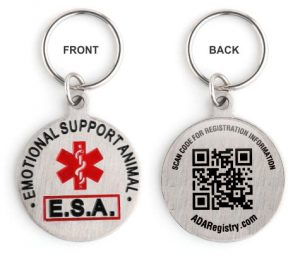
- Emotional Support Animals (ESA): Given their empathetic nature and bond with humans, Bulldogs make excellent emotional support animals. They provide companionship and comfort, proving valuable for individuals with anxiety, depression, or PTSD.
- Therapy Dogs: Bulldogs can serve as therapy dogs in hospitals, nursing homes, or schools. Their gentle personality makes them approachable and comforting, both of which are crucial in therapeutic settings.
- Psychiatric Service Dogs: For individuals with psychiatric disorders, Bulldogs can perform tasks such as creating personal space in crowded areas, which requires a calm and confident presence.
Despite their unsuitability for strenuous physical tasks due to their build, Bulldogs can contribute significantly within these specialized areas.
Health Considerations
Bulldogs come with unique health concerns that could impact their service work capabilities. Owners should be aware of these potential issues:
Register Any Breed
- Respiratory Problems: Due to their brachycephalic face, Bulldogs are prone to breathing difficulties, especially in hot or humid conditions. This necessitates a controlled and comfortable environment for optimal functioning.
- Orthopedic Issues: Their build can lead to hip dysplasia and other joint-related problems, limiting their ability to perform certain physical tasks.
- Heat Sensitivity: Bulldogs cannot regulate their body temperature effectively, making them vulnerable to heat exhaustion or heat stroke.
These considerations highlight the importance of ensuring a suitable environment that mitigates these challenges, both for their health and effectiveness as service dogs.
Training and Suitability
Training a Bulldog for service work requires a specific approach that considers their inherent traits:
- Trainability: Bulldogs possess a reputation for stubbornness. Training requires patience and consistency. Positive reinforcement methods work best, emphasizing rewards-based learning rather than punitive measures.
- Intelligence: While not the most instinctively obedient, Bulldogs can learn commands and routines well if engaged correctly. Their intelligence level is suitable for tasks that do not involve complex sequences or decisions.
- Independence: Bulldogs are not highly independent, which means they require guidance for successful training. They thrive on direct interaction and constant reinforcement.
Considering these factors, Bulldogs may be effective service animals for individuals capable of providing dedicated and patient training environments.
Summary of Bulldog
Bulldogs, with their distinctive physical features and gentle nature, can serve admirably in specific service roles. Here’s a summary of their suitability:
- Strengths:
- Calm and non-reactive demeanor
- Affectionate and loyal
- Good for emotional support and therapy roles
- Weaknesses:
- Health concerns like respiratory and orthopedic issues
- Limited to non-physical service tasks
- Require consistent, patient training
- Ideal Service Roles:
- Emotional Support Animal (ESA)
- Therapy Dog
- Psychiatric Service Dog
Despite not fitting every service role due to their physical limitations, Bulldogs have the potential to provide invaluable assistance within specialized areas. Understanding their strengths and limitations ensures they are matched with situations where they can truly excel.


-
Public Access Kits
$149.00 Learn more This product has multiple variants. The options may be chosen on the product page -
Quick Ship Premium Vests
$48.00 – $82.00 Learn more This product has multiple variants. The options may be chosen on the product page -
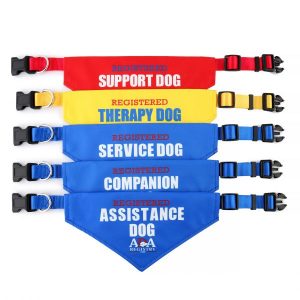
Service Dog Bandana
$39.95 Learn more This product has multiple variants. The options may be chosen on the product page
Custom ID Cards

Custom ID Cards
All States
Canada Cards
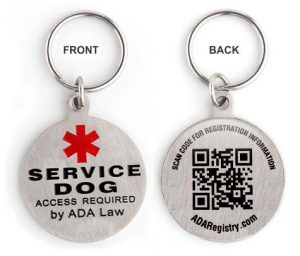
Custom Service Dog Tags
Official Dog Vests
Smart Vests
Official Public Access Kits
Complete Kits
USA & CANADA Letters
High Quality Bandanas
Service Dog Tags
Smart Tags

ESA TAGS