Bulldog as an Emotional Support Dog
Register Any Breed
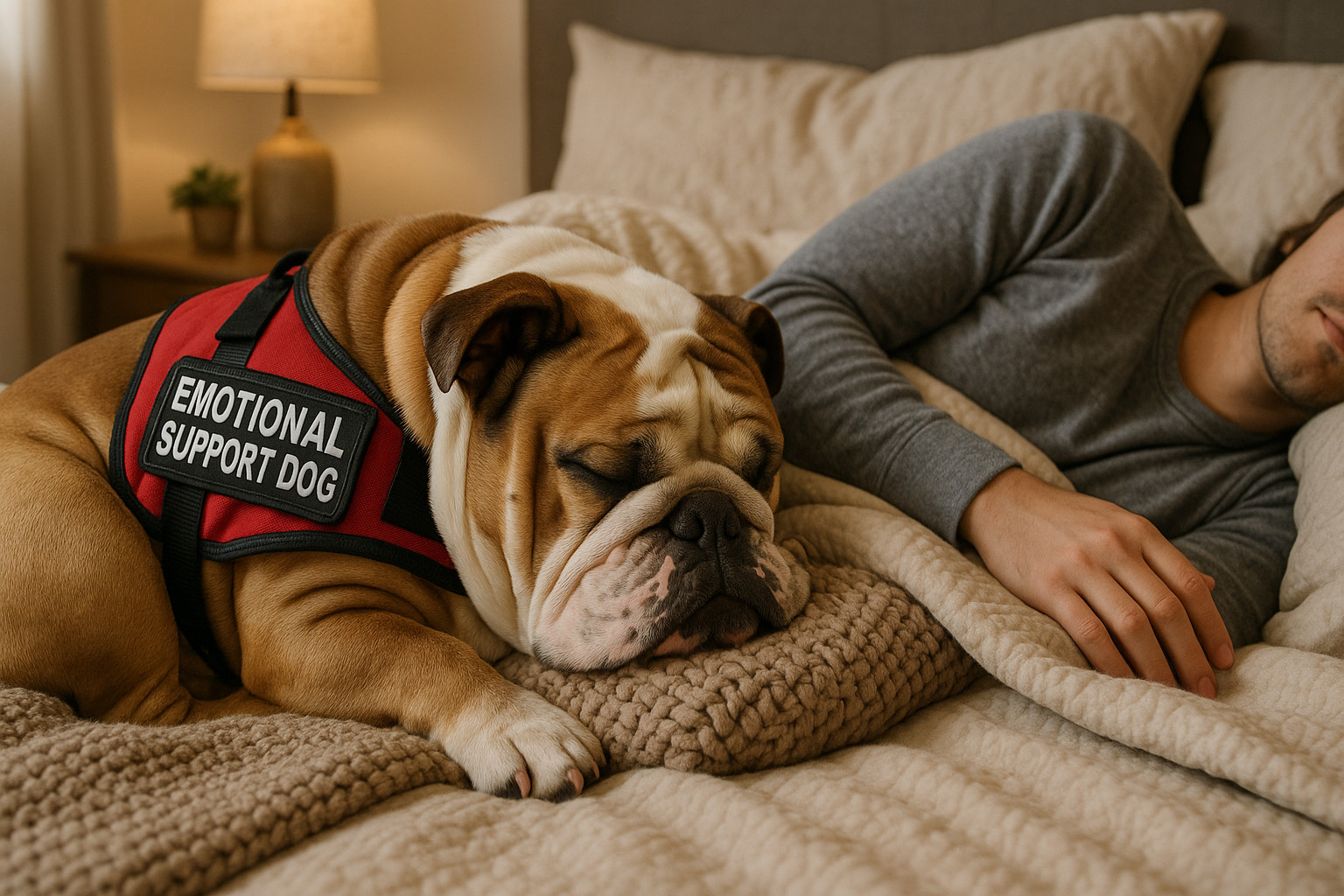
Emotional support animals (ESAs) are essential companions for individuals struggling with mental health challenges. Among these, the Bulldog stands out as a favored choice due to its unique blend of temperament, adaptability, and affectionate nature. This article delves into the Bulldog’s suitability as an emotional support dog and provides insights into how they can enhance emotional well-being.
Understanding the Emotional Support Role
Emotional support dogs offer companionship and comfort rather than performing specific tasks, distinguishing them from service animals. Bulldogs excel in this role due to their natural disposition to form strong emotional bonds with their owners, which can alleviate feelings of anxiety, loneliness, and stress.
Bulldog Overview
The Bulldog, recognized by its distinctive, wrinkled face and muscular frame, is more than just an iconic breed. Despite their tough exterior, Bulldogs are inherently gentle and bonded to their families, making them excellent emotional companions. Their compact size and low energy levels make them particularly suitable for a range of living situations, including urban apartments and small homes.
Temperament and Emotional Connection
Bulldogs are renowned for their steadfast loyalty and affectionate nature. Their ability to form deep emotional connections with their owners stems from their desire for companionship. The breed’s temperament is marked by:
- Stability: Bulldogs maintain a calm demeanor, contributing significantly to reducing anxiety and fostering a sense of peace in their owners.
- Empathy and Sensitivity: Bulldogs exhibit a remarkable ability to pick up on emotional cues, often offering comfort through proximity and gentle interaction.
- Patience: The Bulldog’s easy-going nature allows them to remain composed in various emotional environments, providing reassurance in stressful situations.
Adaptability and Daily Behavior
Bulldogs are incredibly adaptable, thriving in different settings with aplomb. While they enjoy moderate activity, they are mostly content with leisurely walks and plenty of downtime, making them perfect for owners seeking a low-maintenance companion. Their daily behavior aligns well with the needs of individuals requiring consistent emotional presence and support.
Situations Where Bulldog Provides Strong Support
Bulldogs shine in scenarios where steadfast, calming presence is required. They provide formidable support in situations such as:
- Stressful Environments: Their calm demeanor can help diffuse tension and stress in highly charged atmospheres.
- Improving Social Connections: Bulldogs’ friendly nature encourages social interaction, which can be beneficial for owners who struggle with social anxiety or isolation.
- Routine Comfort: Bulldogs thrive on routine, providing structure that can be grounding for individuals with anxiety disorders.
Ideal Living Environments
The Bulldog’s adaptability makes it suitable for various environments. However, they particularly excel in settings that provide consistency and security:
Register Any Breed
- Urban Apartments: With their low energy levels, Bulldogs don’t require a lot of space, thriving even in smaller living areas as long as they receive adequate attention.
- Family Homes: Bulldogs are excellent with children and other pets, making them suitable for family settings where interactions can provide emotional uplift to those in need.
- Assisted Living: Their easy-going nature and limited exercise needs make Bulldogs great companions in assisted living facilities, where their presence can offer immense comfort.
Bonds with Different Types of People
Bulldogs are versatile in forming bonds across diverse demographics:
- Children: Their gentle disposition and patience make Bulldogs great companions for children, helping them understand compassion and responsibility.
- Elderly: Bulldogs provide constant companionship and connection, crucial for older adults facing loneliness.
- Individuals with Anxiety: Their empathetic nature helps individuals feel less isolated, fostering a sense of security.
Health, Care, and Wellbeing
Stability in an emotional support role hinges on the Bulldog’s health and well-being. Proper care, including routine health checks and a balanced diet, is vital in maintaining their ability to offer consistent emotional support.
Common Health Considerations
While Bulldogs are generally healthy, several common health issues may impact their capacity to provide support:
- Breathing Difficulties: Due to their brachycephalic nature, Bulldogs can experience respiratory issues, particularly in hot weather.
- Hip Dysplasia: A genetic condition that can cause discomfort, highlighting the need for regular veterinary check-ups.
- Skin Conditions: Their wrinkles require regular cleaning to prevent infections, necessitating attentive grooming practices.
Grooming, Comfort, and Maintenance Needs
Regular grooming is crucial for Bulldogs, not only for their health but for maintaining comfort levels that allow them to provide effective emotional support:
- Regular Bathing and Wrinkle Cleaning: Frequent baths and cleaning of skin folds prevent discomfort and infection.
- Nail Trimming and Ear Cleaning: Essential for overall health and maintaining a relaxed demeanor.
Preparing a Bulldog for Emotional Support Work
Ensuring that a Bulldog is prepared for emotional support requires dedication to their training and socialization.
Socialization and Responsiveness
- Consistent Exposure: Early and varied exposure to different environments, sounds, and people helps Bulldogs remain calm and unflappable.
- Training: Basic obedience training enhances responsiveness, allowing them to react appropriately to emotional cues from their owners.
Managing Stress and Emotional Cues
Recognizing stress signals in both themselves and their owners enables Bulldogs to be effective support animals:
- Monitoring Stress Levels: Owners should attentively manage any stress in the Bulldog, ensuring they remain healthy and happy.
- Engagement and Feedback: Bulldogs are naturally inclined to engage with distressed individuals, providing feedback that helps owners manage emotions.
Strengths, Challenges, and Ideal Homes for Bulldog
While Bulldogs offer many strengths in emotional support roles, there are considerations to keep in mind:
- Strengths: Gentle nature, loyalty, empathy, adaptability to calm environments.
- Challenges: Potential for health issues, requirement for consistent grooming, limited tolerance for extreme temperatures.
- Ideal Homes: Homes offering stability, routine, and a bond-centric environment.
Final Thoughts
Bulldogs are well-suited for the role of an emotional support dog, offering unparalleled companionship and emotional stability. Their gentle temperament, combined with a strong capacity for emotional connection, makes them ideal for individuals seeking comfort and support.
Key Takeaways for the Bulldog as an Emotional Support Dog
- Best suited for: Individuals or families in need of steady, compassionate companionship.
- Not ideal for: Extremely active owners or those unable to commit to their care needs.
- Emotional traits: Loyal, empathetic, patient, adaptable.
- Care and health notes: Require regular veterinary care, attention to respiratory needs, and consistent grooming.
- Environments where they provide the most comfort: Smaller homes, urban apartments, family settings, and assisted living facilities.
This comprehensive guide aims to provide a deeper understanding of the Bulldog as an emotional support dog, aiding those who seek guidance on choosing the right companion for emotional assistance. The Bulldog’s unique disposition and empathetic nature ensure that they remain an excellent choice for anyone in need of unwavering emotional support.


-
Public Access Kits
$149.00 Learn more This product has multiple variants. The options may be chosen on the product page -
Quick Ship Premium Vests
$48.00 – $82.00 Learn more This product has multiple variants. The options may be chosen on the product page -
Service Dog Bandana
$39.95 Learn more This product has multiple variants. The options may be chosen on the product page
Custom ID Cards

Custom ID Cards
All States

Canada Cards
Custom Service Dog Tags
Official Dog Vests
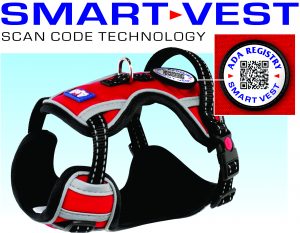
Smart Vests
Official Public Access Kits
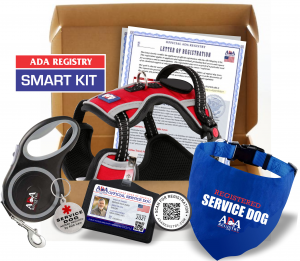
Complete Kits
USA & CANADA Letters
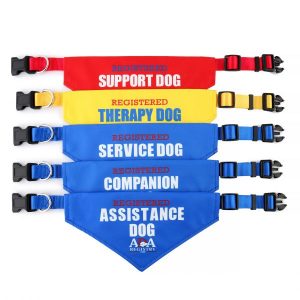
High Quality Bandanas
Service Dog Tags
Smart Tags

ESA TAGS