Chinese Shar-Pei as a Service Dog
Register Any Breed
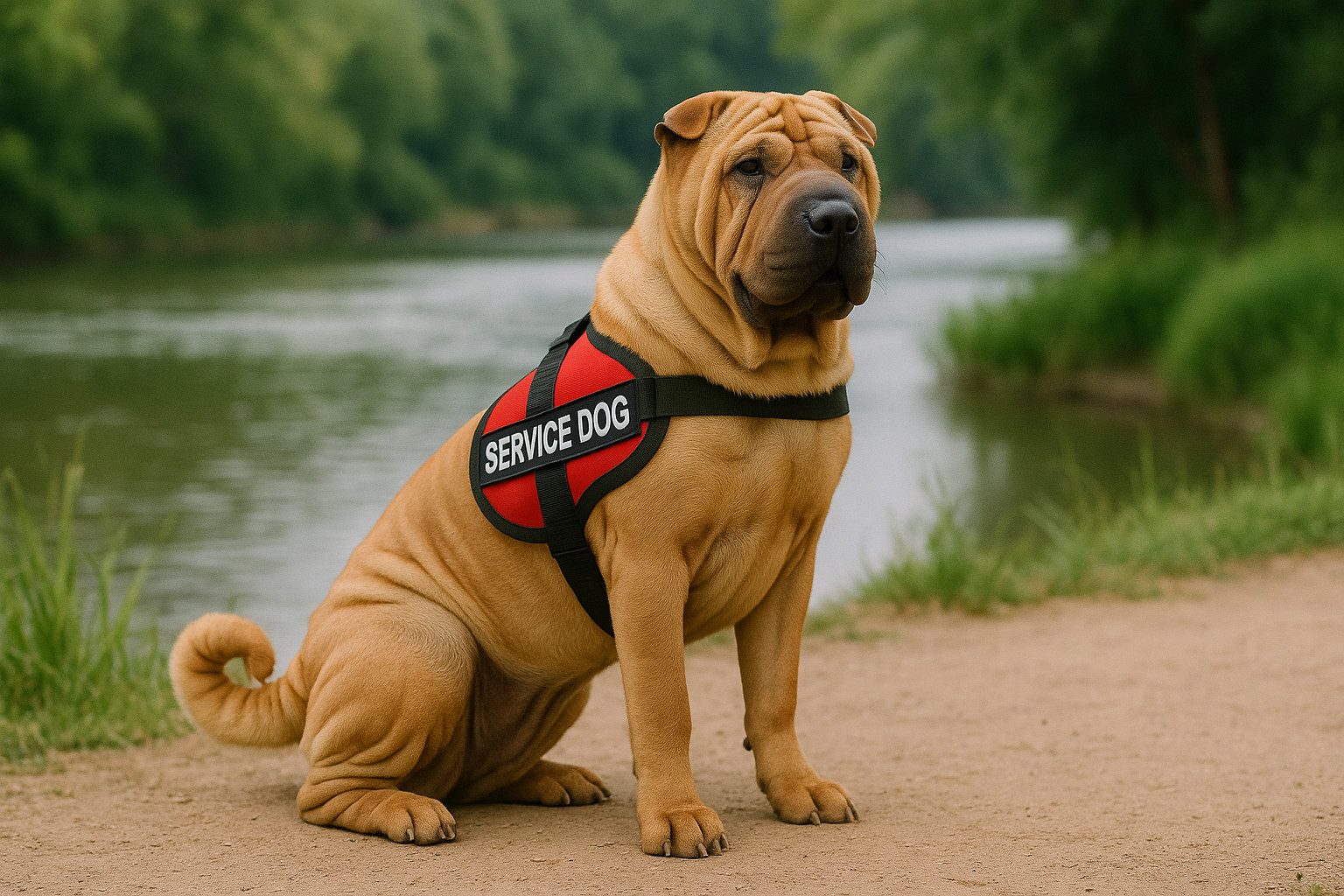
The Chinese Shar-Pei is a distinctive breed known for its wrinkled skin and unique appearance. While its striking looks may initially catch your eye, it's important to delve deeper into the breed's characteristics to assess its suitability as a service dog. This article explores in detail the potential of the Chinese Shar-Pei as a service dog, examining its physical attributes, temperament, types of service work it could be suited for, health considerations, and training potential.
Chinese Shar-Pei Overview
The Chinese Shar-Pei is a breed that originated from southern China and was historically used for hunting, herding, and guarding. It is known for its deeply wrinkled skin, blue-black tongue, and hippopotamus-like face. Although this breed once faced near extinction, diligent breeding efforts have restored its numbers. Today, Shar-Peis are appreciated for their loyalty and protective nature, qualities essential for certain types of service work.
Physical Characteristics
The Chinese Shar-Pei is a medium-sized dog, typically weighing between 40 to 65 pounds and standing 18 to 20 inches tall at the shoulder. The breed's most defining feature is its wrinkled skin, which serves both as a physical shield and a thermal barrier. Their compact, muscular build provides strength and agility, potentially useful for service tasks requiring physical exertion.
- Size: Medium, usually between 18 to 20 inches in height and 40 to 65 pounds in weight.
- Appearance: Known for their loose, wrinkled skin and distinctive blue-black tongue.
- Energy Level: Moderate — requires regular but not excessive exercise.
This robust physique implies that the Shar-Pei can handle certain physical demands, including tasks in mobility assistance where strength is required. However, their moderate energy levels mean they are less suited for service roles that demand high endurance, like search and rescue.
Temperament and Attitude
Shar-Peis are renowned for their loyalty and guarded demeanor, making them highly protective of their handlers. This innate protectiveness is accompanied by an independent streak, which can sometimes translate into stubbornness if not managed with consistent training. In public or stressful environments, Shar-Peis generally exhibit a calm demeanor but can be wary of strangers.
- Loyalty: Extremely loyal to their family or handler, which is beneficial in service dog roles.
- Independence: Though loyal, they require an assertive handler due to their stubborn nature.
- Interaction with Strangers: Can be aloof or suspicious, necessitating early and consistent socialization.
These traits indicate that while Shar-Peis have the potential to form deep bonds with their handlers, they are less naturally inclined to roles requiring continuous interaction with strangers, such as therapy work. Instead, their loyalty and independence might make them suitable for more personalized service roles.
Types of Service Work
The suitability of a Chinese Shar-Pei for specific service roles depends on an ideal match between the breed's characteristics and the task demands.
Register Any Breed
- Mobility Assistance: Their strength and moderate size make Shar-Peis suitable for tasks like pulling a wheelchair or passing objects.
- Psychiatric Service: With proper socialization, they can provide comfort and grounding for individuals with anxiety or PTSD, capitalizing on their loyal nature.
- Medical Alert: Shar-Peis might be trained for medical alert tasks, although this usually requires overcoming their stubborn streak through patience and positive reinforcement.
The Shar-Pei's independent nature and moderate activity level make it less ideal for high-energy needs like guiding the blind or performing sustained physical activities. However, when considering more personal assistance roles, their loyal nature can be an asset.
Health Considerations
Every breed has specific health considerations that impact its suitability for long-term service work. For Shar-Peis, skin health is paramount due to their signature wrinkles. The breed is also prone to specific conditions like hip dysplasia and Shar-Pei fever, which could affect their service life.
- Skin Issues: The characteristic wrinkles can trap moisture and lead to skin infections if not maintained properly.
- Hip Dysplasia: A concern for any working role, this condition can limit their mobility over time.
- Shar-Pei Fever: A hereditary condition that can cause periodic fevers and swelling.
These health issues necessitate attentive care and regular veterinary visits, which should be factored into any decision to train a Shar-Pei as a service dog. Prospective handlers need to be prepared for potential health-related interruptions in service work.
Training and Suitability
The Chinese Shar-Pei's trainability is influenced by its intelligence and independent nature. While they are intelligent and capable of learning complex tasks, their stubbornness can pose a challenge for novice trainers.
- Intelligence: High, capable of understanding advanced commands and tasks.
- Stubbornness: Requires consistent training and a firm yet positive training approach.
- Socialization Needs: Early and ongoing socialization is necessary to ensure calmness and good behavior in public settings.
Effective training strategies for Shar-Peis include using positive reinforcement techniques while establishing clear boundaries. Their training suitability hinges on a strong bond with a committed handler willing to consistently work on obedience and task training.
Summary of Chinese Shar-Pei
In summary, the Chinese Shar-Pei presents a unique option for service work but demands careful consideration of both its strengths and limitations.
Key Strengths:
- Strong loyalty and protective instincts.
- Strength and agility suited for mobility assistance.
- Moderate energy levels requiring reasonable exercise.
Key Weaknesses:
- Prone to health issues requiring regular maintenance.
- Aloofness with strangers, requiring extensive socialization.
- Potential stubbornness necessitates experienced and patient training.
Ideal Service Roles:
- Mobility assistance, where their strength and size are utilized effectively.
- Psychiatric service roles, leveraging their loyal nature for emotional grounding.
- Medical alert tasks with appropriate training and management.
In conclusion, while the Chinese Shar-Pei is not traditionally seen as a typical service dog, its physical characteristics and temperament can make it a viable option for certain service roles with the right training and care.


-
Public Access Kits
$149.00 Learn more This product has multiple variants. The options may be chosen on the product page -
Quick Ship Premium Vests
$48.00 – $82.00 Learn more This product has multiple variants. The options may be chosen on the product page -
Service Dog Bandana
$39.95 Learn more This product has multiple variants. The options may be chosen on the product page
Custom ID Cards

Custom ID Cards
All States

Canada Cards
Custom Service Dog Tags
Official Dog Vests

Smart Vests
Official Public Access Kits
Complete Kits
USA & CANADA Letters
High Quality Bandanas
Service Dog Tags
Smart Tags

ESA TAGS