Dalmatian as a Service Dog
Register Any Breed
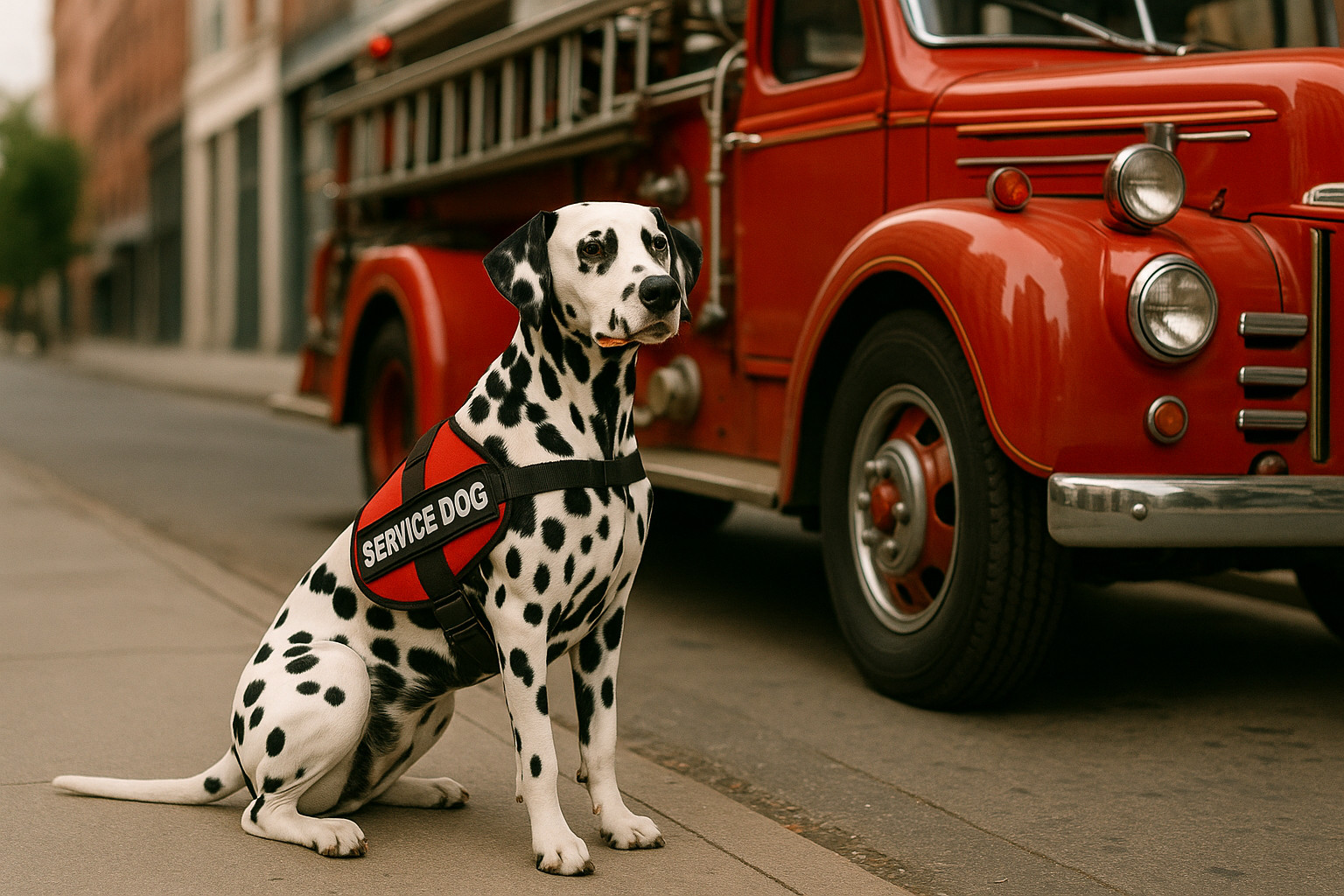
The Dalmatian, known for its distinctive spots and high energy levels, is a breed that often turns heads wherever it goes. While they have historically been associated with firefighters and carriage dogs, their suitability as service dogs is frequently questioned. This article explores the various aspects of the Dalmatian breed and assesses its potential as a service dog.
Dalmatian Overview
The Dalmatian is a breed that boasts a storied history filled with tales of valor and versatility. Originating in Croatia, these dogs have been historically used as carriage dogs, offering both protection and companionship to traveling horse-drawn carriages.
Physical Characteristics
Dalmatians are medium-sized dogs, typically weighing between 45 to 70 pounds and standing 19 to 24 inches tall at the shoulder. Their body is athletic and muscular, showcasing their agility and strength.
- Size and Build: Medium-sized, athletic build, good for tasks requiring agility.
- Coat and Appearance: Short, dense coat with distinct black or liver spots, requires frequent grooming due to shedding.
- Energy Levels: High-energy breed requiring plentiful exercise, can be both a benefit and a challenge in service roles.
The physical attributes of the Dalmatian can be both an asset and a drawback in service work. Their agility makes them suitable for tasks involving mobility assistance, but their high energy levels demand an active lifestyle from their handler.
Temperament and Attitude
The temperament of a Dalmatian is a crucial consideration when evaluating its potential as a service dog. Dalmatians are known for their intelligence, independence, and sometimes, stubbornness.
- Intelligence: Highly intelligent, quick learners, can be trained for complex tasks.
- Social Behavior: Friendly with people, but may be reserved with strangers, requires early socialization.
- Stress Response: May become anxious or overly excitable, handling stress depends on individual temperament and training.
Their social nature and loyalty make them excellent companions, lending themselves well to fostering deep bonds with their handlers. However, their potential for anxiety and excitability in new environments can limit their effectiveness in certain service situations without extensive training.
Types of Service Work
Dalmatians may not be the first breed that comes to mind when thinking of service dogs, but they do hold potential in specific areas of service work:
Register Any Breed
- Mobility Assistance: Their strength and agility allow them to assist with physical tasks.
- Medical Alert: With training, they can be conditioned to respond to specific medical conditions like seizures or low blood sugar.
- Emotional Support: Their loyalty and sociability make them well-suited for providing emotional stability and companionship.
Although their physical characteristics can suit certain types of service work, other areas like guide work for the visually impaired may not align perfectly with their temperament and energy levels.
Health Considerations
When considering a Dalmatian as a service dog, health is a critical aspect due to several potential breed-specific issues:
- Deafness: A significant portion of Dalmatians are born deaf in one or both ears, impacting their suitability.
- Urinary Stones: Prone to urinary tract issues, requiring careful diet management.
- Skin Allergies: Some individuals may suffer from dermatological issues, affecting their capacity to work outdoors.
These health considerations can significantly impact their service dog potential, necessitating proactive health management and regular veterinarian check-ups.
Training and Suitability
Training plays a pivotal role in shaping the Dalmatian into a capable service dog. Their intelligence offers an advantage, while their independence introduces challenges.
- Training Ease: Quick learners, but require consistent training and leadership.
- Behavioral Challenges: May exhibit stubbornness, addressing requires expertise in positive reinforcement techniques.
- Adaptability: Ability to adapt to various environments with patterned socialization and exposure.
Training a Dalmatian as a service dog demands a significant time commitment and expertise to manage their independent nature and ensure they comply with service dog etiquette and needs.
Summary of Dalmatian
In summary, here are some key strengths, weaknesses, and ideal service roles of the Dalmatian:
- Strengths:
- High intelligence and quick learning capabilities.
- Strong physicality favorable for mobility tasks.
- Loyal and social, offering emotional support.
- Weaknesses:
- High energy levels requiring active handlers.
- Potential health issues like deafness influencing their service potential.
- Independent streak leading to training challenges.
- Ideal Service Roles:
- Mobility assistance.
- Medical alert tasks.
- Providing emotional support and companionship.
Overall, while Dalmatians can serve competently in specific service roles, prospective handlers must weigh their unique needs and characteristics against the demands of the service work required. The Dalmatian's suitability depends significantly on the dedicated training and adaptability of both the dog and the handler.


-
Public Access Kits
$149.00 Learn more This product has multiple variants. The options may be chosen on the product page -
Quick Ship Premium Vests
$48.00 – $82.00 Learn more This product has multiple variants. The options may be chosen on the product page -
Service Dog Bandana
$39.95 Learn more This product has multiple variants. The options may be chosen on the product page
Custom ID Cards

Custom ID Cards
All States

Canada Cards

Custom Service Dog Tags
Official Dog Vests

Smart Vests
Official Public Access Kits
Complete Kits
USA & CANADA Letters
High Quality Bandanas
Service Dog Tags
Smart Tags

ESA TAGS