English Foxhound as a Service Dog
Register Any Breed
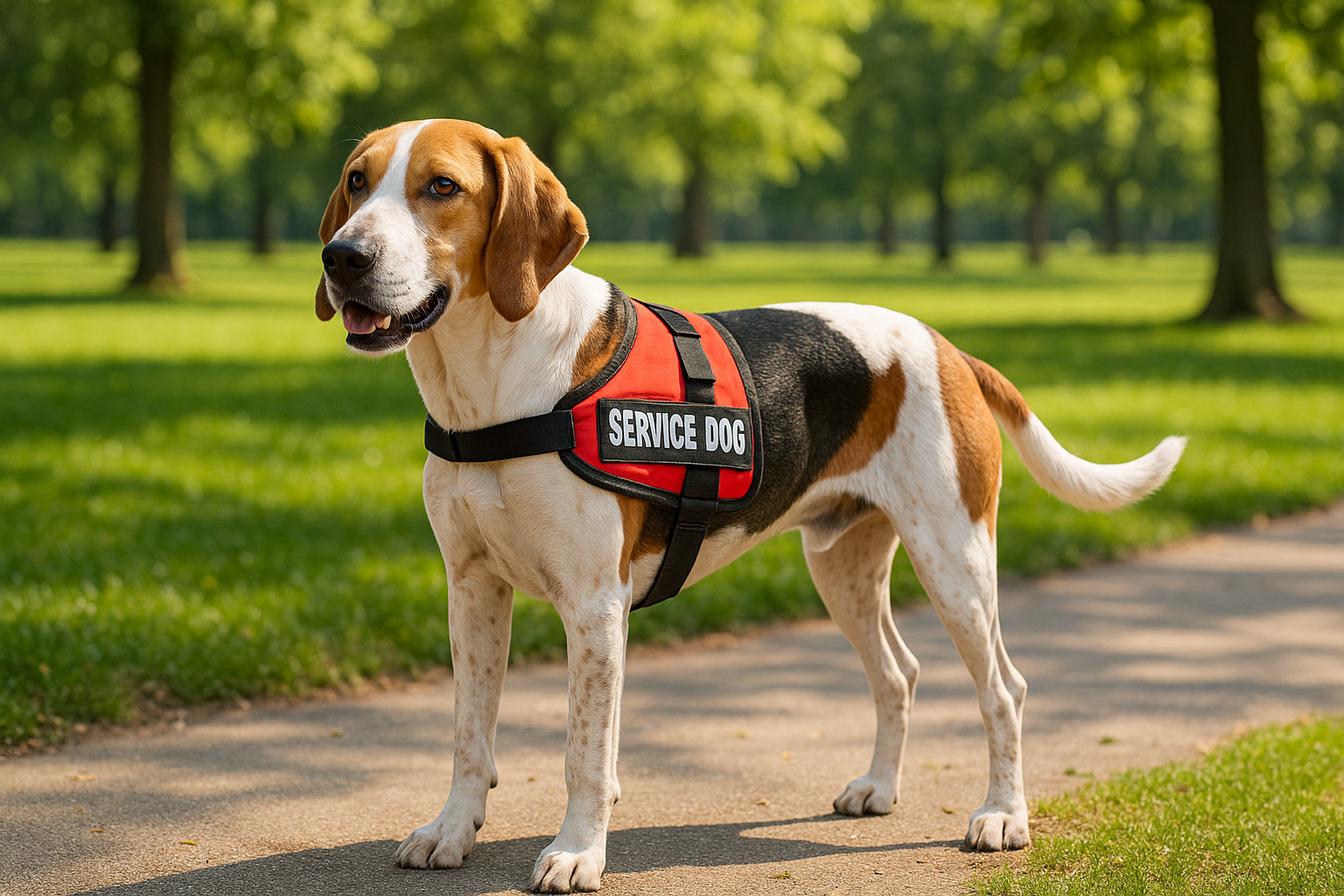
The English Foxhound is a striking breed with a profound history rooted in hunting and companionship. While not traditionally seen in the service dog role, this breed's unique characteristics may offer valuable contributions in specific service contexts. This guide delves into the comprehensive study of the English Foxhound in the realm of service work.
English Foxhound Overview
Originating from England during the 16th century, the English Foxhound was initially bred to assist hunters in tracking and chasing foxes. Known for its remarkable stamina and distinctive bay, the breed was designed for long pursuits across various terrains. Despite their primary role in hunting, these hounds possess qualities that may translate well into certain service capacities if the proper conditions and training demands are met.
Physical Characteristics
The English Foxhound is a robust and athletic breed, markedly suited for activities demanding endurance and strength.
- Size and Build: Generally, English Foxhounds stand between 24 and 27 inches tall at the shoulder, weighing between 60 and 75 pounds. Their muscular build supports high physical exertion, making them potentially suitable for mobility assistance under particular circumstances.
- Coat and Grooming Needs: The breed sports a smooth, dense coat that is relatively low-maintenance, requiring minimal grooming compared to many other breeds. This characteristic could be beneficial when considering the upkeep demands of a service dog.
- Energy Levels: Known for high energy and exceptional stamina, English Foxhounds need ample physical exercise. This trait is crucial in ensuring the dog remains content and well-behaved in service roles that demand physical exertion.
Temperament and Attitude
When assessing a dog’s suitability for service work, temperament is as critical as physical attributes.
- Disposition: English Foxhounds are generally gentle and friendly. They interact well with humans and other dogs, which can be advantageous in public environments. However, their strong hunting instincts might make them easily distracted by small animals or unfamiliar scents.
- Sociability: As pack animals, English Foxhounds often thrive in social environments. They are typically eager to please and enjoy human companionship, which can be advantageous for service work. Yet, their independence, characteristic of hunting breeds, might pose challenges in strictly structured tasks.
- Stress Response: In stressful or unfamiliar situations, English Foxhounds can remain composed, though their effectiveness can vary due to their inherent prey drive, potentially causing them to distract easily.
Types of Service Work
While they are not the archetype of a service dog breed, English Foxhounds can excel in certain roles given the right training and handler compatibility.
- Mobility Support: Due to their size and strength, some English Foxhounds might be suitable for mobility assistance. However, their high energy levels necessitate a handler who can provide ample exercise beyond service duties.
- Search and Rescue: The breed’s strong sense of smell and tracking abilities can be leveraged in search and rescue operations, though they should not be solely relied upon for this without proper training.
- Companionship and Emotional Support: Their gentle nature makes them excellent candidates for emotional support roles, offering comfort and companionship to those in need.
Health Considerations
Understanding the health profile of the English Foxhound is crucial for assessing long-term service potential.
- Common Health Issues: While generally healthy, English Foxhounds can suffer from hip dysplasia, a common condition that may impact their suitability for physically demanding service roles. Attention to the dog’s genetic background and regular veterinary checks are essential.
- Longevity and Lifespan: English Foxhounds typically live between 10 to 13 years. This lifespan is a critical consideration for the duration of their service career.
- Nutritional Needs: Due to their active lifestyle, maintaining a diet that supports their energy and health without leading to obesity is important.
Training and Suitability
The trainability of a breed and its predisposition towards specific behaviors play a vital role in assessing its effectiveness as a service dog.
Register Any Breed
- Learning Ability: English Foxhounds are intelligent, though their independence can sometimes translate into stubbornness. Early and consistent training with positive reinforcement tactics is key to harnessing their potential.
- Independence and Obedience: Their lineage as hunting dogs means they have evolved to work independently. This independence can be advantageous in search roles but may be less desired in roles requiring immediate and consistent obedience.
- Suitability Challenges: Their propensity to follow scents and chase may pose challenges in focused obedience tasks. Regular, scenario-based training could help mitigate these distractions.
Summary of English Foxhound
In summary, the English Foxhound may not be the first choice for conventional service dog roles, but certain attributes make it viable under the right circumstances. Prospective handlers should be prepared to meet the breed's high exercise demands and potential health considerations while ensuring stable, structured environments in which these dogs can excel.
- Strengths:
- Exceptional stamina and energy
- Friendly and sociable demeanor
- Good size for some physical assistance roles
- Weaknesses:
- High prey drive, likely to be distracted by scents
- Requires significant physical activity
- Potential health issues like hip dysplasia
- Ideal Service Roles:
- Mobility assistance, if managed with regular exercise
- Search and rescue, with appropriate training
- Emotional support and companionship
Ultimately, while the English Foxhound may not fit every service role, its unique attributes can be leveraged effectively where physical stamina and social temperament are primary requirements. Proper training, vigilant health management, and a compatible handler are essential in utilizing this breed to its full service potential.


-
Public Access Kits
$149.00 Learn more This product has multiple variants. The options may be chosen on the product page -
Quick Ship Premium Vests
$48.00 – $82.00 Learn more This product has multiple variants. The options may be chosen on the product page -
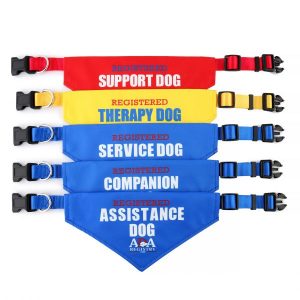
Service Dog Bandana
$39.95 Learn more This product has multiple variants. The options may be chosen on the product page
Custom ID Cards

Custom ID Cards
All States
Canada Cards

Custom Service Dog Tags
Official Dog Vests

Smart Vests
Official Public Access Kits
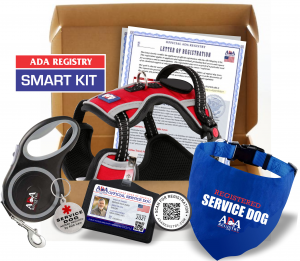
Complete Kits
USA & CANADA Letters
High Quality Bandanas
Service Dog Tags
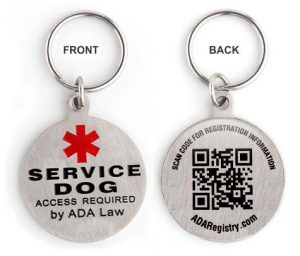
Smart Tags

ESA TAGS