Golden Retriever as a Service Dog
Register Any Breed
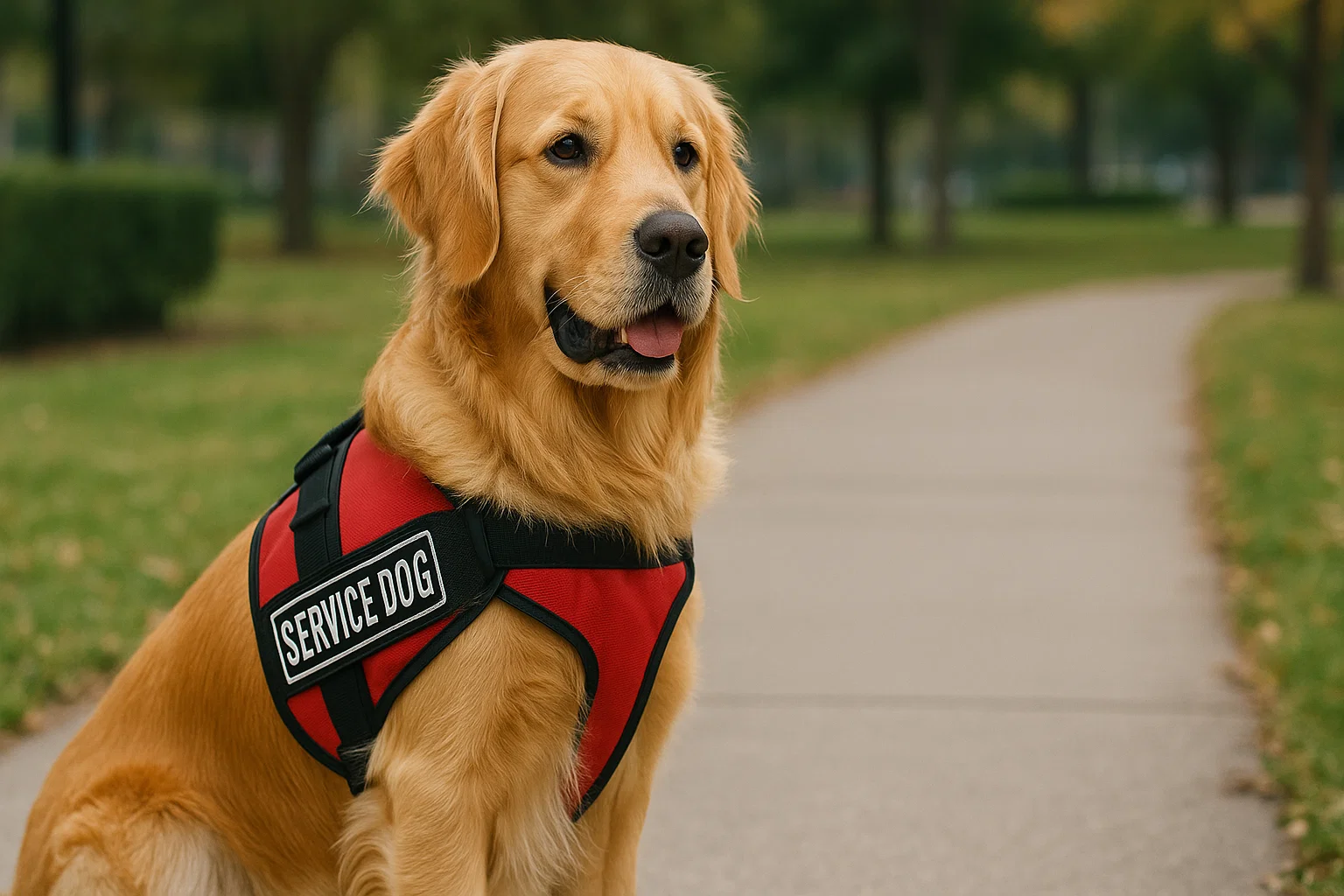
Golden Retrievers are renowned for their friendly nature and intelligence, traits that make them remarkable service dogs. This article delves into why Golden Retrievers are often selected for various service roles, discussing their physical characteristics, temperament, capability in different service roles, health considerations, and training suitability.
Golden Retriever Overview
Golden Retrievers are a beloved breed, originally bred in Scotland during the 19th century. They are known for their loyalty, intelligence, and adaptability, factors that have contributed to their popularity not only as family pets but also as service dogs.
Physical Characteristics
Golden Retrievers are medium to large-sized dogs, with males typically weighing between 65 to 75 pounds and females ranging from 55 to 65 pounds. Their sturdy build and muscular frame contribute to their capacity to perform tasks involving strength and agility.
- Coat: Their distinctive double coat is water-repellent and ranges from light to dark golden hues, providing protection and durability during service activities.
- Size and Build: Their size is ideal for supporting individuals in mobility tasks, while their strength ensures they can perform a variety of duties.
- Energy Level: Golden Retrievers have high energy levels, which is advantageous for active service roles but necessitates adequate exercise to prevent restlessness.
Temperament and Attitude
The temperament of a Golden Retriever is one of its most appealing attributes. They are inherently friendly and eager to please, which is paramount for service roles.
- Friendly Nature: Their sociability makes them well-suited for environments where interaction with people is frequent.
- Loyalty and Bonding: Their strong attachment to handlers fosters reliable assistance in service tasks.
- Calm Disposition: Even in stressful situations, Golden Retrievers maintain composure, which is critical for service work.
Golden Retrievers exhibit a balanced temperament, which includes sensitivity and patience, enabling them to thrive as service dogs. They respond well to gentle commands and are typically non-aggressive, ensuring they can operate effectively in various public situations.
Types of Service Work
Golden Retrievers excel in several service work areas due to their intelligence, size, and eagerness to work.
- Mobility Assistance: Their strength and size allow them to aid individuals with mobility challenges, such as providing balance support or retrieving objects.
- Medical Alert: Golden Retrievers can be trained to detect medical conditions, such as seizures or hypoglycemia, alerting owners to impending episodes.
- Emotional Support and Psychiatric Services: Their empathetic nature makes them suitable for emotional support roles, providing comfort during stress or anxiety episodes.
- Guide Dogs for the Vision Impaired: Although Labradors and German Shepherds are more commonly seen, Golden Retrievers are also excellent guide dogs due to their intelligence and trainability.
Health Considerations
Like all breeds, Golden Retrievers are susceptible to specific health issues that can affect their service work.
Register Any Breed
- Hip Dysplasia: This is a common hereditary condition that affects their mobility and can impact their ability to work as service dogs.
- Cancer: Golden Retrievers have a higher incidence of cancer than some other breeds, which can affect their lifespan and service capability.
- Heart Conditions: They are prone to certain heart diseases, which require regular vet check-ups to ensure fitness for service roles.
The consideration of these health challenges is critical in determining their long-term suitability as service dogs. Regular veterinary care and preventative health measures can help maintain their functional ability.
Training and Suitability
Golden Retrievers are highly trainable due to their intelligence and desire to please. They quickly learn commands and routines, which is essential in service dog training.
- Intelligence: Their cognitive abilities enable them to learn complex tasks required for specialized services such as medical alerts or guide work.
- Obedience: They respond well to obedience training, fostering reliability in performing their duties.
- Adaptability: Their ability to adapt to various environments makes them versatile in service roles.
Despite their adaptability and intelligence, the training process for service dogs is intensive and requires a calm, patient, and consistent approach. Golden Retrievers are well-suited for handlers who can provide structured training and ample mental stimulation.
Summary of Golden Retriever
Golden Retrievers possess a unique combination of attributes that make them excellent service dogs. Their physical characteristics, temperament, and trainability contribute to their effectiveness in various roles.
- Strengths:
- Friendly and sociable demeanor
- High intelligence and trainability
- Strong and sturdy build suitable for mobility assistance
- Excellent sensitivity for emotional and psychiatric support
- Weaknesses:
- Susceptibility to health issues like hip dysplasia and cancer
- High energy levels require an active handler
- Ideal Service Roles:
- Mobility Assistance
- Medical Alert
- Emotional Support and Psychiatric Service
Golden Retrievers are an exceptional choice for service work, particularly in roles that benefit from their friendly disposition, intelligence, and versatile capabilities. Proper training and health management are crucial to maximizing their potential and ensuring a fulfilling partnership with their handlers.


-
Public Access Kits
$149.00 Learn more This product has multiple variants. The options may be chosen on the product page -
Quick Ship Premium Vests
$48.00 – $82.00 Learn more This product has multiple variants. The options may be chosen on the product page -
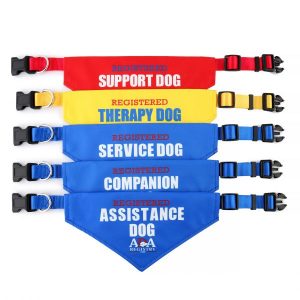
Service Dog Bandana
$39.95 Learn more This product has multiple variants. The options may be chosen on the product page
Custom ID Cards

Custom ID Cards
All States
Canada Cards
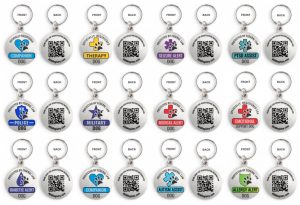
Custom Service Dog Tags
Official Dog Vests

Smart Vests
Official Public Access Kits
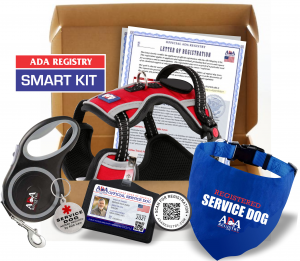
Complete Kits
USA & CANADA Letters
High Quality Bandanas
Service Dog Tags
Smart Tags

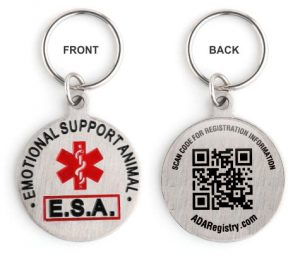
ESA TAGS