Great Swiss Mountain Dog as a Service Dog
Register Any Breed
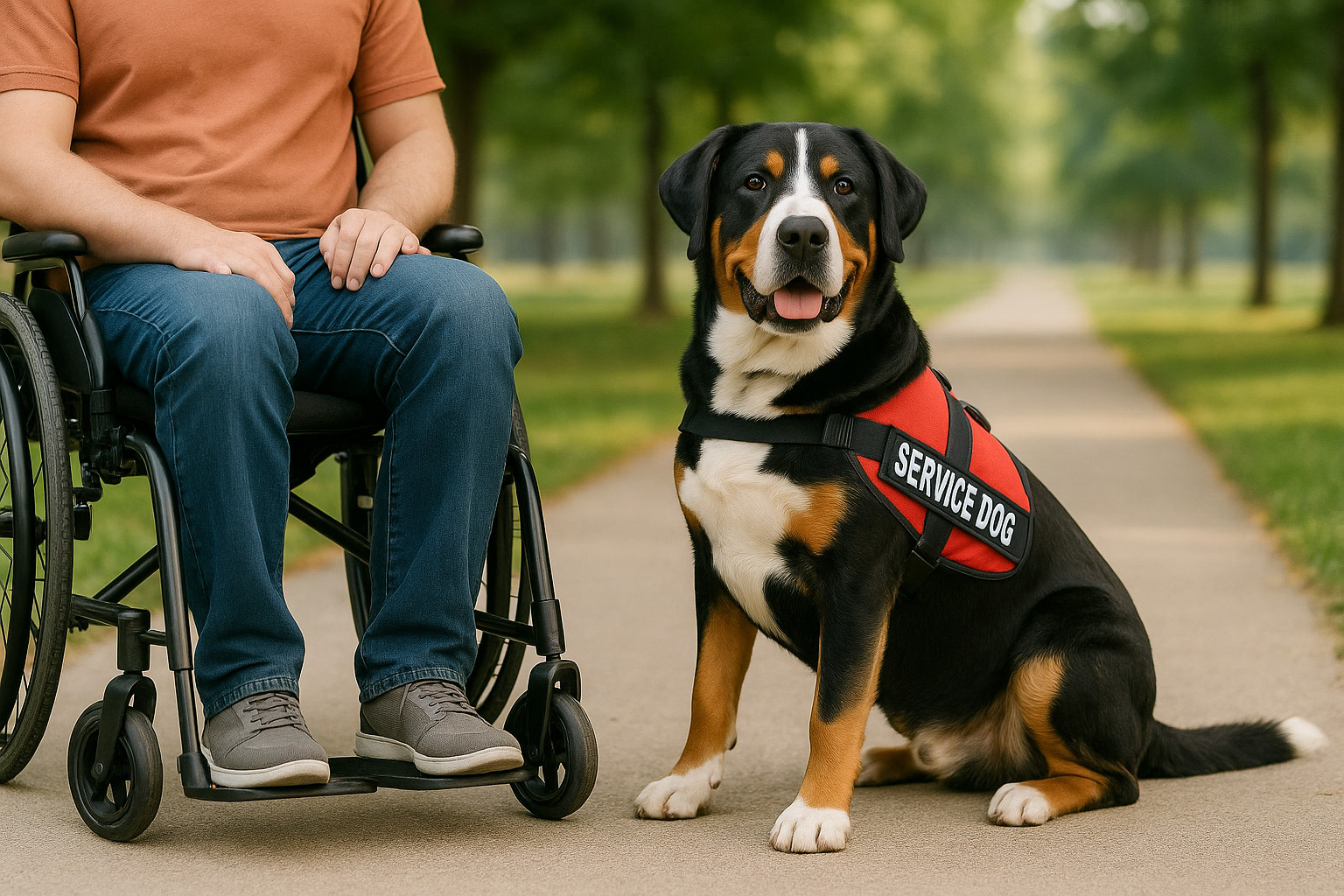
The Great Swiss Mountain Dog, often regarded as a gentle giant, possesses a rich heritage as a working dog in Switzerland. These dogs are known for their impressive strength, friendly demeanor, and loyalty—traits that make them a potential candidate for service dog roles. However, understanding the breed’s physical characteristics, temperament, and individual health needs is crucial in assessing their suitability for service work.
Great Swiss Mountain Dog Overview
Physical Characteristics
The Great Swiss Mountain Dog is instantly recognizable due to its powerful build and striking appearance. These dogs typically stand between 23.5 to 28.5 inches tall and weigh anywhere from 85 to 140 pounds, displaying a muscular and robust physique. The breed is adorned with a tri-color coat—black with rust and white markings, which not only adds to their aesthetic appeal but also reflects their mountain heritage.
Their physical attributes have a significant impact on their suitability as service dogs:
- Strength and Stamina: Their strength and endurance make them excellent candidates for mobility assistance roles, capable of providing balance and support to individuals with physical disabilities.
- Size Limitations: While their size can be beneficial for certain tasks, it may limit their suitability in environments that require maneuverability in tight spaces or for individuals unable to manage a large dog.
Temperament and Attitude
The temperament of the Great Swiss Mountain Dog is typically calm, gentle, and friendly. They are known for their devotion to family and their steady disposition, which are critical attributes for service dogs. However, their suitability in stressful or public environments hinges on several factors:
- Social Nature: Despite their calm demeanor, these dogs are inherently social and enjoy human interaction, making them attentive and responsive companions.
- Alertness: They possess a keen sense of alertness, which can be advantageous for service roles that require vigilance, such as medical alert or assistance.
- Independence: While generally obedient, they can exhibit independence at times, requiring consistent, patient training and positive reinforcement.
Types of Service Work
The Great Swiss Mountain Dog’s unique blend of physical characteristics and temperament makes them suitable for a variety of service roles:
- Mobility Assistance: Their size and strength make them ideal for tasks that involve supporting disabled individuals, such as helping with balance or pulling a wheelchair.
- Medical Alert: Their alertness and trainable nature enable them to be trained for medical alert roles, such as detecting seizures or diabetes-related changes in their owners.
- Emotional Support: With their loyal and gentle demeanor, these dogs can provide comfort and companionship for individuals struggling with emotional and psychological challenges.
Health Considerations
As with any breed, the Great Swiss Mountain Dog has specific health considerations that should be taken into account:
- Hip Dysplasia: This common issue in large breeds can affect their ability to perform physically demanding tasks required of some service dogs.
- Bloat: Known medically as gastric dilatation-volvulus, this serious condition can be life-threatening and requires vigilance from their handlers.
- Lifespan: These dogs tend to have a shorter lifespan, averaging 8 to 10 years, which can impact the long-term planning for service work roles.
Training and Suitability
The Great Swiss Mountain Dog’s intelligence and eagerness to please make them relatively trainable, albeit with some considerations:
Register Any Breed
- Consistency and Patience: Due to their independent streak, training should be consistent, with positive reinforcement techniques being most effective.
- Sensitivity: They are known to be sensitive to the mood of their handlers, which can aid their responsiveness but also necessitates a calm and positive training environment.
- Socialization: Early and ongoing socialization is crucial to ensure they are comfortable in a variety of settings and can handle different social and environmental stimuli.
Summary of Great Swiss Mountain Dog
In evaluating the Great Swiss Mountain Dog as a service dog, several components come into play. They possess inherent strengths and challenges that determine their aptitude for varying service roles. Here is a comprehensive overview of their suitability:
- Strengths:
- Exceptional strength and endurance make them suitable for mobility tasks.
- Friendly and loyal demeanor facilitates emotional support work.
- Alert nature is beneficial for medical alert tasks.
- Weaknesses:
- Independent streak requires consistent training.
- Large size may limit maneuverability in certain environments.
- Health issues like hip dysplasia and bloat can impact service longevity.
- Ideal Service Roles:
- Mobility Assistance: Best suited for individuals needing physical support.
- Medical Alert: Can be trained for seizure or diabetes detection.
- Emotional Support: Provide comfort and companionship effectively.
With proper training, attention to health needs, and suitable role assignment, the Great Swiss Mountain Dog can indeed serve as a dedicated service companion, embodying the balance of strength, gentleness, and loyalty.


-
Public Access Kits
$149.00 Learn more This product has multiple variants. The options may be chosen on the product page -
Quick Ship Premium Vests
$48.00 – $82.00 Learn more This product has multiple variants. The options may be chosen on the product page -
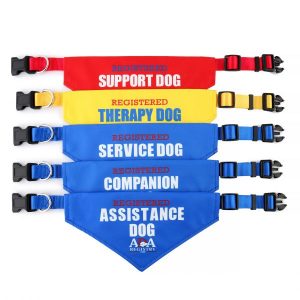
Service Dog Bandana
$39.95 Learn more This product has multiple variants. The options may be chosen on the product page
Custom ID Cards

Custom ID Cards
All States

Canada Cards

Custom Service Dog Tags
Official Dog Vests
Smart Vests
Official Public Access Kits
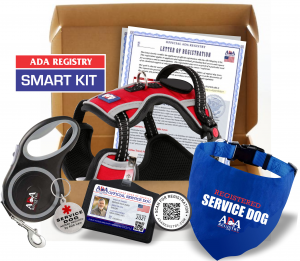
Complete Kits
USA & CANADA Letters

High Quality Bandanas
Service Dog Tags
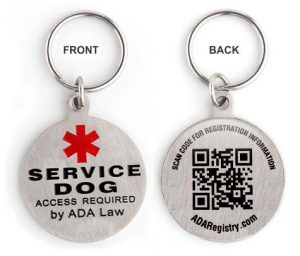
Smart Tags

ESA TAGS