Komondor as a Service Dog
Register Any Breed
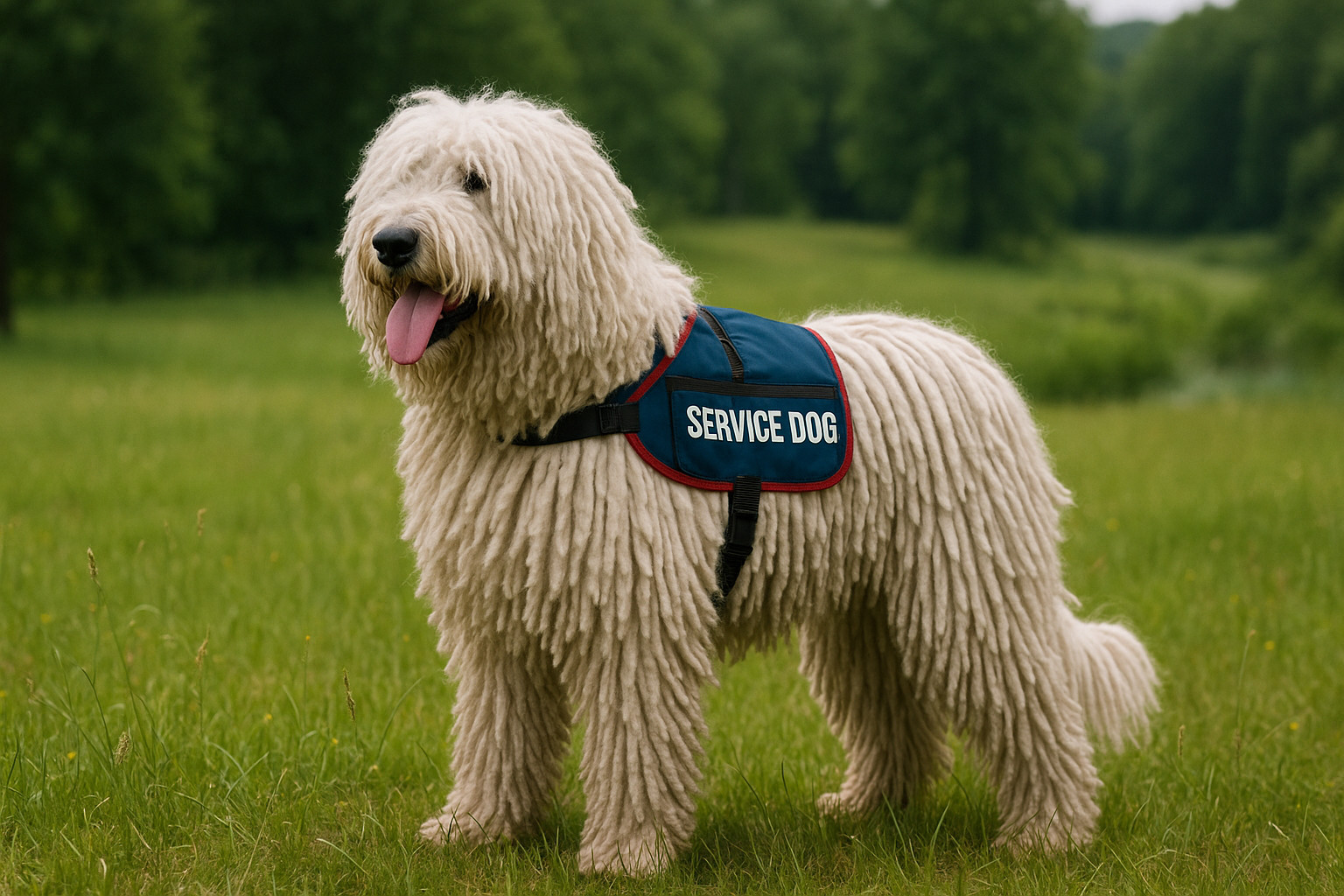
The Komondor, with its distinctive corded coat and commanding presence, stands out among dog breeds. While traditionally known as a livestock guardian, recent years have seen increased interest in the breed's potential as a service dog. Like any breed considered for this role, the Komondor comes with specific attributes and considerations that may influence its suitability for various types of service work. In this article, we'll explore these factors in detail, providing insight into whether this breed could serve your specific needs.
Komondor Overview
The Komondor is a majestic breed with deep-rooted origins in Hungary. Known for their protective nature and unique appearance, these dogs were originally bred to guard livestock, a role they have fulfilled for centuries. Their natural intelligence and loyalty are balanced by an inherent independence and willfulness, traits that can make them both a blessing and a challenge as service animals.
Physical Characteristics
The Komondor is a large, powerful dog, typically weighing between 80 to 100 pounds for males, with females slightly smaller. They stand tall, between 25.5 to 27.5 inches at the shoulder. The most distinctive feature of the Komondor is its corded coat, which, while visually impressive, requires significant upkeep. The cords can trap dirt and moisture, necessitating regular maintenance to keep them clean and free from mats and odors.
- Size and Strength:
- Suitable for mobility assistance due to their robust build and strength.
- Requires a handler physically capable of managing a large, strong dog.
- Coat Maintenance:
- Requires regular grooming to prevent matting and potential skin issues.
- Shedding is minimal, but debris may get trapped in the cords.
Given these physical considerations, while the Komondor's strength is beneficial for tasks requiring physical support, its grooming needs could complicate some service roles.
Temperament and Attitude
Komondors possess a temperament shaped by centuries of guarding sheep: they are independent, protective, and alert. While loyal to their families, they are often aloof or wary of strangers, traits that can be advantageous or challenging depending on the service role envisioned.
- Loyalty and Protectiveness:
- Extremely devoted, providing a strong bond essential for service work.
- Potential for overprotectiveness; requires extensive socialization.
- Independence:
- High intelligence allows for quick learning, but independence can impede training sessions if not managed properly.
- Best suited to handlers who can assert strong, consistent leadership.
These traits mean they can excel in environments where loyalty and alertness are crucial, though they may struggle in settings that require frequent social interactions or immediate obedience.
Types of Service Work
Given their physical and temperament characteristics, Komondors can be suited to specific service roles, yet might not excel universally across all.
Register Any Breed
- Mobility Assistance:
- Their strength and size make them well-suited to tasks that require physical support, such as balance assistance or carrying items.
- Guarding/Alert Roles:
- Naturally alert, they can be trained to recognize and respond to specific medical emergencies, though this requires rigorous training to manage their protective instincts.
- Psychiatric Service Work:
- Their loyalty provides comfort, but their size and demeanor might be intimidating in public settings or to individuals unfamiliar with dogs.
Health Considerations
Komondors are generally healthy dogs, but like all breeds, they are prone to specific health issues that could influence their ability to serve in specific roles.
- Hip Dysplasia:
- A common issue in large breeds, affecting their usefulness in mobility tasks as they age.
- Bloat:
- Due to their deep chests, they are at risk of bloat, a serious condition that can impact their overall health and service reliability.
- Skin Health:
- Their dense coat can lead to skin infections if not properly maintained.
These health aspects need to be taken into account when considering a Komondor for long-term service dog roles.
Training and Suitability
The intelligence and independence of the Komondor call for a training regimen that is firm yet positive, with an emphasis on consistency and patience.
- Trainability:
- Intelligent and quick learners, provided training is engaging and positive.
- May resist repetitive commands; thus, tasks should be diverse and thoughtfully structured.
- Socialization:
- Crucial to ensure they are comfortable around different people and environments.
- Helps mitigate excessive shyness or protective behaviors in public spaces.
- Independence:
- This trait can either enhance their decision-making in certain situations or become a challenge in immediate task execution.
Overall, potential owners must be committed to ongoing training and socialization to mold these independent thinkers into capable service companions.
Summary of Komondor
In summary, the Komondor, with its imposing form and guardian instincts, presents a complex yet compelling option for service work. Their suitability is notably high for roles demanding strength and loyalty but significantly lower in environments requiring frequent social interaction or immediate compliance with commands.
- Strengths:
- Strong and capable of physical assistance
- Loyal and devoted to handlers
- Weaknesses:
- Requires extensive grooming and maintenance
- May be overly protective or aloof in public settings
- Ideal Service Roles:
- Mobility assistance
- Guarding or alert roles
Selecting a Komondor as a service dog requires a handler who is prepared to invest significant time into training and maintenance, yet for those with the dedication and patience, the reward is a steadfast, protective companion.


-
Public Access Kits
$149.00 Learn more This product has multiple variants. The options may be chosen on the product page -
Quick Ship Premium Vests
$48.00 – $82.00 Learn more This product has multiple variants. The options may be chosen on the product page -
Service Dog Bandana
$39.95 Learn more This product has multiple variants. The options may be chosen on the product page
Custom ID Cards

Custom ID Cards
All States
Canada Cards

Custom Service Dog Tags
Official Dog Vests

Smart Vests
Official Public Access Kits
Complete Kits
USA & CANADA Letters

High Quality Bandanas
Service Dog Tags
Smart Tags

ESA TAGS