Komondor as a Therapy Dog
Register Any Breed
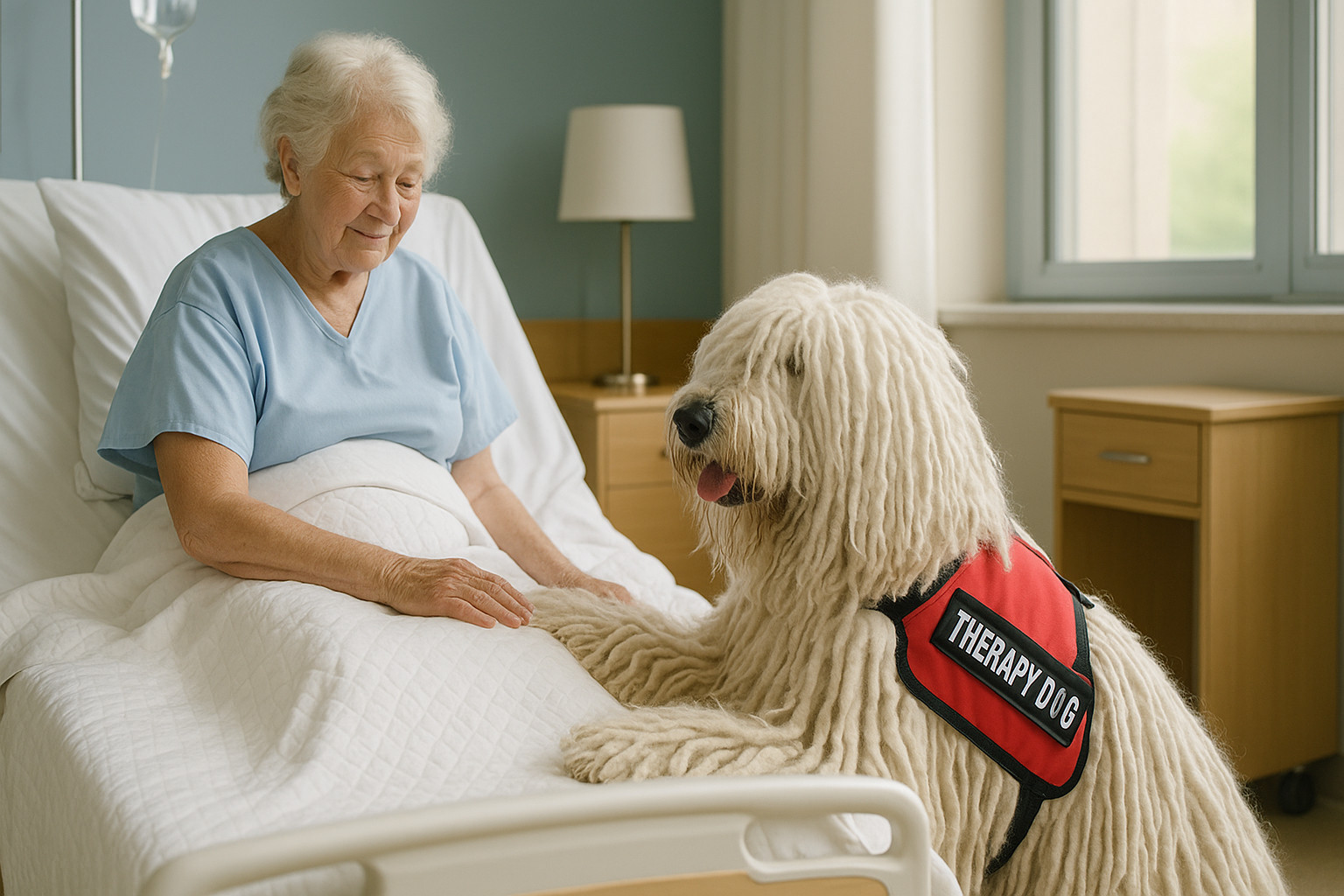
Therapy dogs play an important role in providing comfort, support, and therapeutic benefits across various settings, from hospitals to educational institutions. The Komondor, known for its unique corded coat and protective nature, might not be the first breed that comes to mind when considering therapy dogs. However, their distinct attributes can make them effective in this role, given the right environment and training. This comprehensive guide explores the potential of the Komondor as a therapy dog, focusing on temperament, behavioral traits, and specific care requirements.
Komondor as a Therapy Dog Overview
In this overview, we delve into the characteristics that make the Komondor both a promising and challenging therapy dog candidate. Their empathetic, calm demeanor, when properly nurtured, can enrich therapy sessions, while their grooming needs and independent nature require consideration.
Understanding the Therapy Dog Role
Therapy dogs are used to provide comfort and affection and improve the mental health of humans in structured environments. Unlike service dogs, they do not have special access rights but are invited into facilities such as hospitals, nursing homes, and schools to visit. Their presence can dramatically improve emotional well-being, reduce stress, and support therapeutic outcomes in clinical settings.
- Core Attributes: Therapy dogs need to be gentle, obedient, capable of managing various emotional stimuli, and comfortable around different populations. The role requires a balance of calmness and responsiveness.
- Komondor's Suitability: The Komondor’s protective instinct and loyalty can shine in environments where a reassuring presence is needed.
Physical Appearance and Energy Level
The Komondor is notable for its mop-like appearance due to its distinctive, corded coat, which provides a visually interesting allure. This attractive look can facilitate positive initial interactions, particularly in settings such as children's hospitals.
- Energy Level: They have a moderate energy level, which is pivotal in maintaining a relaxed demeanor. This makes them suitable for calm environments rather than highly chaotic ones.
- Grooming Demands: High care demands of their coat must be managed to maintain hygiene and comfort, vital for infection-prone environments such as hospitals.
Personality and Emotional Intelligence
The breed is well-known for its protective, affectionate, and devoted disposition towards its family, traits that can extrapolate to a therapy setting with proper socialization.
- Temperament: Though independent, they display a remarkable ability to bond with those they interact with regularly. Their innate loyalty and need for strong bonds ensure they are consistently attentive and comforting in therapy sessions.
- Emotional Intelligence: Their capacity to read emotions and provide a calming presence can be uplifting in settings requiring emotional support.
Environments Where Komondor Excels
Komondors thrive in environments where they can showcase their natural nurturing and protecting instincts.
- Optimal Conditions: Quiet, structured environments where therapy is directed at small groups or individuals, such as counseling sessions, can greatly benefit from their calming aura.
- Challenges: Highly chaotic environments with constant stimuli might overwhelm a Komondor unless specifically trained for such scenarios.
Common Therapy Settings
Komondors can be successfully integrated into various therapy settings:
Register Any Breed
- Hospitals and Care Facilities: Here, their calm demeanor and comforting presence can help improve patient morale.
- Schools: As a part of reading or social skills programs, their unique appearance and gentle nature can engage children effectively.
- Mental Health Facilities: Their empathy and calming effect can provide crucial support in stress reduction and morale boosting.
Interactions with Different Populations
Komondors, when well-socialized, adapt to diverse populations, offering companionship and therapeutic benefits to individuals of all ages.
- Children: Their distinct undercoat can serve as a point of fascination, encouraging interaction and communication.
- Elderly: Their steady, reassuring presence can alleviate feelings of loneliness and depression among elderly populations.
- Special Needs Individuals: A Komondor’s patience and nonaggressive nature allow them to work effectively with individuals requiring special care under guided supervision.
Health and Wellness Factors
The Komondor requires specific health and grooming considerations to ensure they remain effective in their role as therapy dogs.
- General Health: While generally healthy, they can be prone to issues like hip dysplasia and should be regularly checked by a veterinarian. This ensures they remain fit for therapy work.
- Hygiene: Considering therapy environments often involve vulnerable individuals, maintaining a clean, well-groomed dog is necessary to meet health safety standards.
Lifespan and Common Health Issues
With a lifespan ranging from 10 to 12 years, Komondors can potentially offer several years of therapy service given good health and proper care.
- Health Concerns: Common ailments include hip dysplasia and eye issues, which should be monitored as they can affect the dog's comfort and mobility, crucial for therapy work.
- Regular Check-ups: Implementing a routine health check schedule is recommended to maintain their capacity as therapy dogs and to quickly address any health issues that may arise.
Maintenance and Care Needs
Their corded coat, while visually striking, demands careful maintenance to prevent matting, which can cause discomfort.
- Grooming Routine: Requires considerable effort and should be undertaken by someone experienced with the breed. Regular grooming sessions to check and cleanse the coat are essential in maintaining hygiene standards required for therapy dogs.
- Environmental Acclimatization: Komondors do best in environments suited to their grooming and health needs; thus, the therapy program must ensure each location is appropriate for these considerations.
Training and Certification Readiness
Training a Komondor for therapy work involves addressing their independent nature and reinforcing their naturally caring disposition.
- Socialization: Early and consistent socialization is vital to accustom them to different people and environments.
- Consistency: Consistent commands and training sessions magnify their natural loyalty, ensuring they respond well to therapy tasks.
Learning Style and Responsiveness
Komondors possess a high degree of intelligence, which can be harnessed effectively through targeted training approaches.
- Training Techniques: Positive reinforcement methods yield the best outcomes. Patience and consistency help in overcoming any inherent stubbornness.
- Adaptability: They show a moderate level of adaptability to different tasks, benefiting trainers who focus on gradually introducing new stimuli and settings.
Handling Social and Emotional Stimuli
The breed’s behavior is inclusively affected by how they interact socially and manage emotions.
- Social Engagement: They require experiences from an early age to meet and interact with various groups, boosting their effectiveness in therapy settings.
- Stress Management: Initially cautious, a structured routine can help them approach new situations calmly, ensuring both comfort for the dog and a soothing presence for clients.
Strengths, Limitations, and Ideal Roles for Komondor
The balance of natural instincts against training rigor defines the Komondor’s utility in therapeutic environments.
- Strengths:
- Deeply loyal and calming presence
- High intelligence and ability to bond closely
- Limitations:
- High grooming and care requirements
- Needs rigorous socialization to prevent overprotectiveness
- Ideal Roles:
- Settings benefiting from one-on-one interactions and quiet environments like private counseling or therapy-focused activities
Final Thoughts
The Komondor holds potential as a therapy dog through its empathic and composed nature. However, prospective therapy handlers should thoroughly consider its grooming needs and social requirements before incorporating them into therapy programs. When matched with appropriate settings and adequately trained, the Komondor can serve as a loyal and comforting therapy companion. Balancing their care demands with their intrinsic capabilities and emotional intelligence allows these noble dogs to shine in the right therapeutic roles.
Key Takeaways for the Komondor as a Therapy Dog
- Best suited for: Environments with controlled and calm atmospheres like counseling centers and reading programs
- Not ideal for: Highly dynamic or chaotic environments that may overwhelm due to sensory overload
- Temperament highlights: Loyal, emotionally intelligent, calm in appropriate settings
- Care and health notes: Demanding grooming requirements; potential for health issues like hip dysplasia
- Therapy environments where they shine: Hospitals, schools, and settings focused on emotional comfort and support


-
Public Access Kits
$149.00 Learn more This product has multiple variants. The options may be chosen on the product page -
Quick Ship Premium Vests
$48.00 – $82.00 Learn more This product has multiple variants. The options may be chosen on the product page -
Service Dog Bandana
$39.95 Learn more This product has multiple variants. The options may be chosen on the product page
Custom ID Cards

Custom ID Cards
All States

Canada Cards

Custom Service Dog Tags

Official Dog Vests

Smart Vests
Official Public Access Kits

Complete Kits
USA & CANADA Letters

High Quality Bandanas

Service Dog Tags

Smart Tags

ESA TAGS