Maltese as an Emotional Support Dog
Register Any Breed
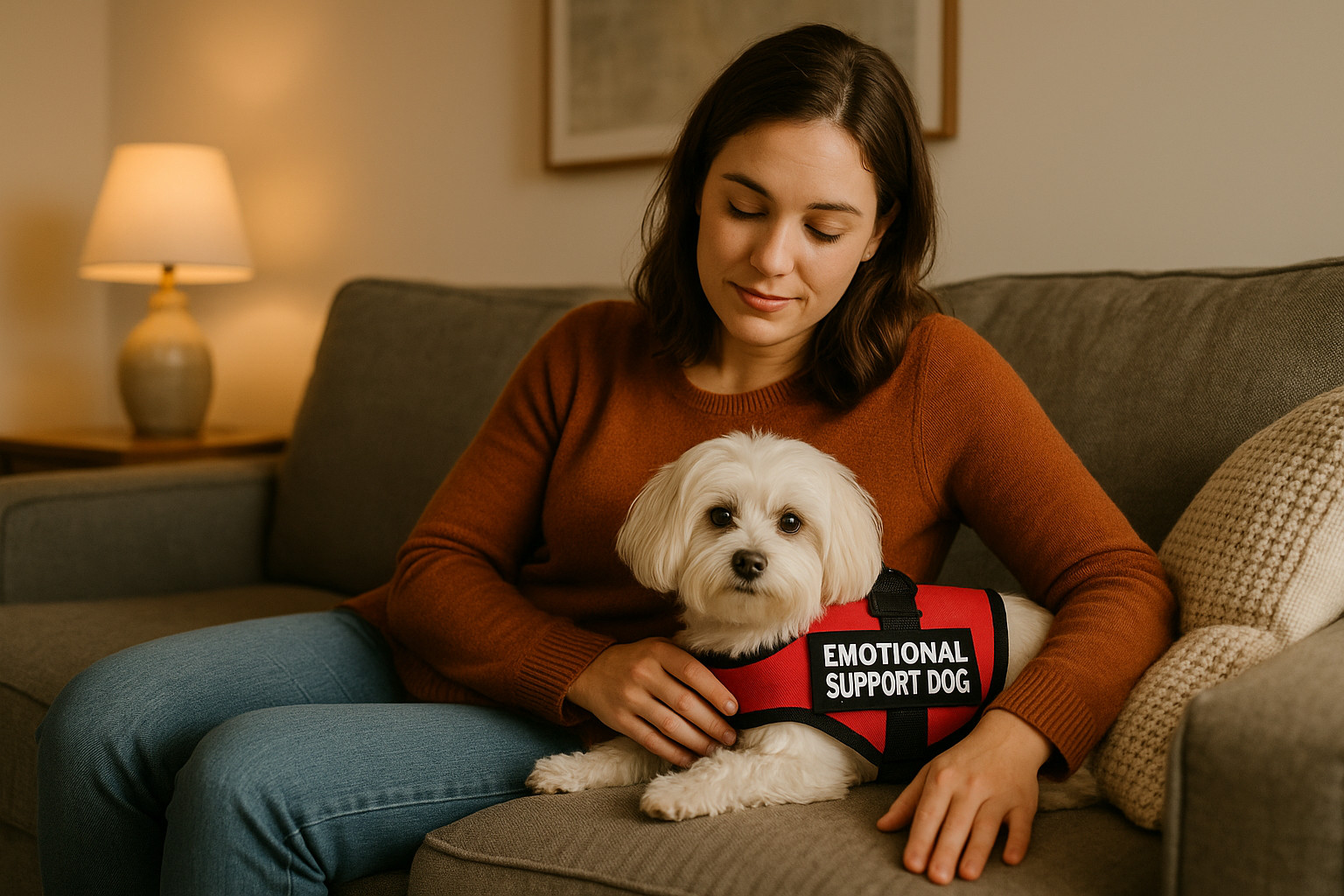
The Maltese breed shines in its role as an emotional support animal, providing unmatched companionship and serenity. Known for their gentle and affectionate nature, these dogs often become indispensable to those in need of emotional stability. In this article, we delve into the characteristics, care needs, and supportive roles Maltese dogs play in the lives of those requiring emotional support.
Understanding the Emotional Support Role
Emotional support animals (ESAs) offer significant comfort and companionship to individuals with emotional or psychological conditions, such as anxiety, depression, or PTSD. Unlike service dogs, ESAs are not trained to perform specific tasks but offer support through their presence and interaction.
Maltese Overview
Maltese dogs are small, white, and silky-coated companions who have been cherished for their beauty and charm for centuries. Originating from the Mediterranean, their manageable size and stunning coat make them ideal companions for people seeking a small and serene pet. Their history as lap dogs sets the foundation for their current role as effective emotional support animals.
Temperament and Emotional Connection
The Maltese is renowned for its loving and gentle temperament. Their ability to form strong emotional connections with their owners is evident as they thrive on human companionship. These dogs:
- Exhibit high levels of empathy and sensitivity, making them adept at reading human emotions.
- Are naturally affectionate, often offering comfort by snuggling or sitting beside their owner during times of emotional distress.
- Have low to moderate energy levels, providing a calming presence rather than overwhelming activity.
Adaptability and Daily Behavior
Maltese dogs adapt well to various lifestyles and environments, which is crucial for an emotional support animal. Their adaptability is characterized by:
- Comfort in small living spaces, like apartments, making them suitable for urban living.
- The capacity to thrive in family settings or with single owners, providing flexible emotional support dynamics.
- The availability to align with their owner’s routine, adapting easily to varied daily activities and providing consistent companionship.
Situations Where Maltese Provides Strong Support
A Maltese is particularly effective in providing support in situations including:
- During stressful periods, such as transitions or life changes, where their presence provides stability.
- When dealing with loneliness, offering companionship and reducing the feelings of isolation.
- In routine-bound environments, where their predictable nature and routine help maintain a sense of order and calm.
Ideal Living Environments
Maltese dogs are versatile but thrive in environments that respect their need for comfort and companionship:
Register Any Breed
- Apartments or small homes where their size and exercise needs are easily accommodated.
- Assisted living situations, providing older adults or individuals with mobility limitations with comforting companionship.
- Family settings where they can interact with multiple family members while forming a close bond with a primary caregiver.
Bonds with Different Types of People
Maltese dogs are known for their ability to form bonds with a wide variety of individuals:
- Older adults, offering gentle companionship without demanding extensive exercise.
- Individuals struggling with anxiety, as their calming presence and predictable demeanor help mitigate stress.
- Families, providing a loving and gentle companion to children and adults alike.
Health, Care, and Wellbeing
To maximize their role as an emotional support animal, Maltese dogs require conscientious care and attention:
- Regular veterinary check-ups to address breed-specific health issues and maintain overall health.
- A balanced diet and appropriate exercise for maintaining physical well-being and energy levels.
- Emotional health through positive interactions and environments that encourage bonding.
Common Health Considerations
Maltese dogs, like all breeds, come with particular health considerations:
- Prone to dental issues, regular teeth cleaning or veterinary dental care is essential.
- Watch for signs of tracheal collapse and maintain care routines that do not strain their neck.
- Monitor for signs of patellar luxation or other joint concerns.
Grooming, Comfort, and Maintenance Needs
Maltese dogs have specific grooming requirements that affect their readiness in a support role:
- Regular grooming to maintain their long, silky coat in good health and comfort.
- Routine baths and ear cleaning to prevent infections and maintain overall hygiene.
- Regular nail trimming and teeth brushing to ensure comfort and prevent health issues.
Preparing a Maltese for Emotional Support Work
Maltese dogs are naturally suited for emotional support work but benefit from additional preparation:
- Socialization through positive interactions with diverse individuals and environments.
- Responsive training that encourages obedience and enhances the dog’s ability to adapt to an owner’s emotional needs.
- Exposure to various scenarios to build resilience and reduce the likelihood of stress in unfamiliar situations.
Socialization and Responsiveness
Socialization plays an important role in preparing a Maltese for its emotional support role:
- Encourage gentle interaction with a range of individuals, fostering empathy and adaptability.
- Develop a repertoire of commands to ensure responsiveness, increasing their effectiveness as support animals.
- Engage in activities that promote focus and calmness, reinforcing their calming presence in the face of their owner’s emotional challenges.
Managing Stress and Emotional Cues
Maltese dogs support their owners by effectively managing stress and responding to emotional cues:
- Observant and intuitive, they can sense shifts in mood and provide comfort through proximity and affectionate behavior.
- Training to recognize and respond to specific emotional cues can enhance their supportive role.
- Providing a stable environment helps them remain calm and effective during periods of their owners’ stress or anxiety.
Strengths, Challenges, and Ideal Homes for Maltese
While Maltese dogs excel as emotional support animals, they also face certain challenges:
- Strengths include their affectionate nature, adaptability, and ability to build strong human connections.
- Challenges involve their grooming requirements and potential health issues, which demand dedicated care.
- Ideal homes are those that match their need for companionship and provide a stable, comforting environment.
Final Thoughts
The Maltese breed, with its gentle nature and unwavering companionship, excels as an emotional support animal. Their size, temperament, and ability to connect with humans on a deep emotional level make them a wonderful choice for individuals seeking emotional support. By understanding their needs and preparing them for their role, Maltese dogs can offer invaluable support and comfort.
Key Takeaways for the Maltese as an Emotional Support Dog
- Best suited for: Individuals seeking affectionate, low-energy companions, small apartment living, older adults.
- Not ideal for: People unable to commit to grooming or those with highly active lifestyles.
- Emotional traits: Highly empathetic, gentle, affectionate, adaptable.
- Care and health notes: Regular grooming, monitor common health concerns, maintain preventive care.
- Environments where they provide the most comfort: Small apartments, assisted living, family homes, with routines and stability.


-
Public Access Kits
$149.00 Learn more This product has multiple variants. The options may be chosen on the product page -
Quick Ship Premium Vests
$48.00 – $82.00 Learn more This product has multiple variants. The options may be chosen on the product page -
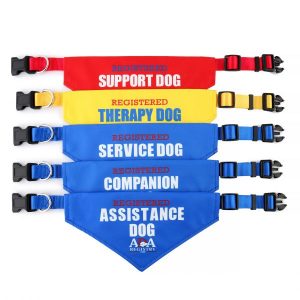
Service Dog Bandana
$39.95 Learn more This product has multiple variants. The options may be chosen on the product page
Custom ID Cards

Custom ID Cards
All States
Canada Cards
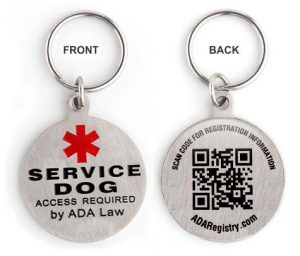
Custom Service Dog Tags
Official Dog Vests
Smart Vests
Official Public Access Kits
Complete Kits
USA & CANADA Letters
High Quality Bandanas
Service Dog Tags
Smart Tags

ESA TAGS