Miniature Bull Terrier as a Service Dog
Register Any Breed
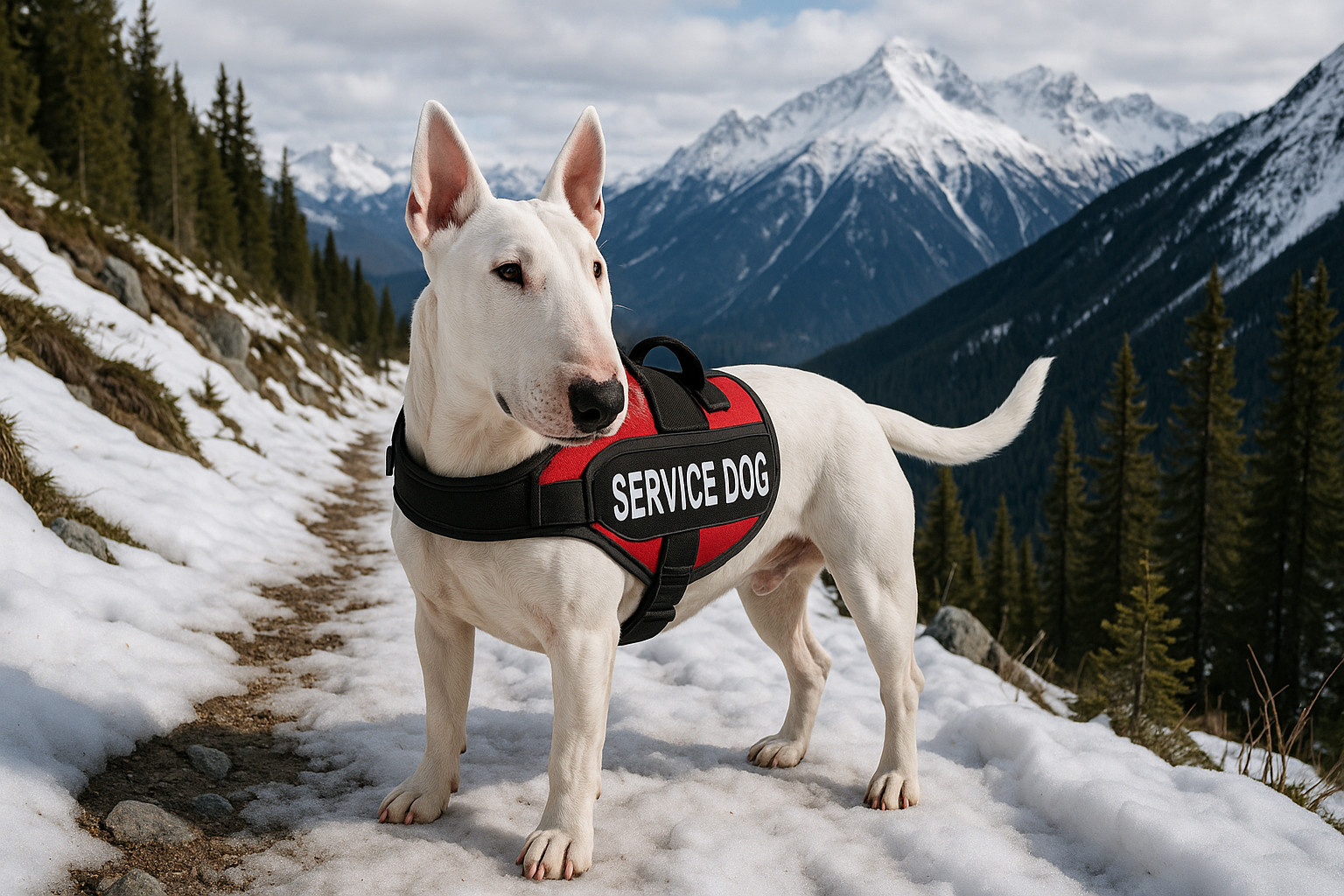
The Miniature Bull Terrier, a smaller variant of the Bull Terrier, is a breed that captures the attention with its unique appearance and spirited personality. Known for being both affectionate and courageous, Miniature Bull Terriers have a range of qualities that could be advantageous or challenging in service dog roles. This article explores their characteristics, suitability for various types of service work, health and training considerations, and ultimately evaluates their potential as service dogs.
Miniature Bull Terrier Overview
Originating in the 19th century, the Miniature Bull Terrier was bred for a more manageable size while retaining the distinctive features of the Bull Terrier. This breed is part of the terrier group, known for their energetic and independent natures.
Physical Characteristics
The Miniature Bull Terrier stands at about 10 to 14 inches in height and typically weighs between 20 to 35 pounds. Despite their compact size, they are muscular and robust, exuding strength and agility.
- Size and Strength: Their moderate size can be both a benefit and a limitation in service work. While they may not be ideal for physical assistance tasks requiring significant strength, their size makes them more manageable in public settings or homes with limited space.
- Energy Levels: Known for high energy, they require substantial physical and mental stimulation, which may or may not align with the energy demands of certain service roles.
Temperament and Attitude
Miniature Bull Terriers are recognized for a distinctive personality characterized by their playful, curious, and sometimes stubborn nature.
- Affectionate and Loyal: They form strong bonds with their human companions, a crucial trait for service work as it strengthens the dog-handler relationship.
- Confidence and Independence: Their independent streak can pose a challenge in training, particularly for roles requiring strict adherence to commands in complex scenarios.
These dogs thrive in environments where they can be both active and mentally stimulated. Their temperament can be advantageous in roles like emotional support where companionship and affection are paramount, though their independence can be a drawback in more structured service roles.
Types of Service Work
The versatility of a service dog is often defined by its ability to perform various tasks. Below, we explore the different service roles where a Miniature Bull Terrier might excel or face challenges:
- Emotional Support and Companionship: Given their affectionate nature, they excel as emotional support animals, offering companionship and comfort to those in need.
- Psychiatric Service: While their loyalty and bonding can aid in psychiatric service work, especially for anxiety management, their sometimes stubborn nature might require advanced training techniques to ensure reliability in task execution.
- Medical Alerts: Due to their keen sense of smell and intelligence, they have the potential for detection roles, although consistency and accuracy depend heavily on individual training success.
Health Considerations
When evaluating Miniature Bull Terriers as service dogs, their breed-specific health concerns must be carefully considered:
Register Any Breed
- Genetic Conditions: Miniature Bull Terriers can be prone to certain hereditary conditions such as deafness and patella luxation, which could impact their efficacy and longevity in service roles.
- Skin Problems: They might also experience dermatological issues which need regular medical attention and maintenance.
Health screenings and regular veterinary care are essential to address these predispositions, ensuring they remain fit for service work.
Training and Suitability
Training a Miniature Bull Terrier requires a professional approach considering both their strengths and challenges.
- Trainability: Intelligent yet independent, these dogs can pick up commands quickly but might resist repetitive or monotonous training exercises.
- Positive Reinforcement: A training approach leveraging positive reinforcement can help mitigate their stubbornness while strengthening their task performance reliability.
Considering their energy levels and need for regular mental stimulation, they are better suited to handlers who can provide continuous engagement and structured training sessions.
Summary of Miniature Bull Terrier
In summary, the Miniature Bull Terrier has a unique profile that offers both potential and challenges in service dog roles. Here's an evaluative overview of their strength and limitations:
- Strengths:
- Affectionate and loyal, enhancing emotional support roles.
- Intelligent, with potential for task learning and alert roles.
- Manageable size for public spaces.
- Weaknesses:
- Independent and sometimes stubborn, which can make training challenging.
- Breed-specific health issues impacting long-term service capability.
- Ideal Service Roles:
- Emotional support and companionship.
- Possible success in psychiatric support with tailored training.
Understanding these attributes can help prospective handlers and trainers in making informed decisions about the suitability of a Miniature Bull Terrier in service work. While they have qualities that may not align with all service roles, their affection and intelligence can certainly make them valuable companions and support dogs in the right contexts.


-
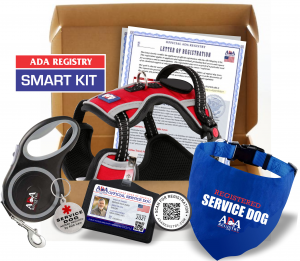
Public Access Kits
$149.00 Learn more This product has multiple variants. The options may be chosen on the product page -
Quick Ship Premium Vests
$48.00 – $82.00 Learn more This product has multiple variants. The options may be chosen on the product page -
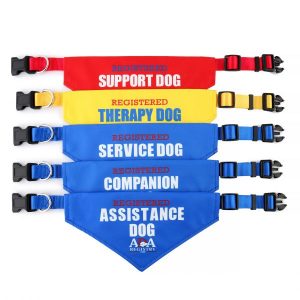
Service Dog Bandana
$39.95 Learn more This product has multiple variants. The options may be chosen on the product page
Custom ID Cards

Custom ID Cards
All States

Canada Cards

Custom Service Dog Tags
Official Dog Vests
Smart Vests
Official Public Access Kits
Complete Kits
USA & CANADA Letters
High Quality Bandanas
Service Dog Tags
Smart Tags

ESA TAGS