Miniature Schnauzer as a Service Dog
Register Any Breed
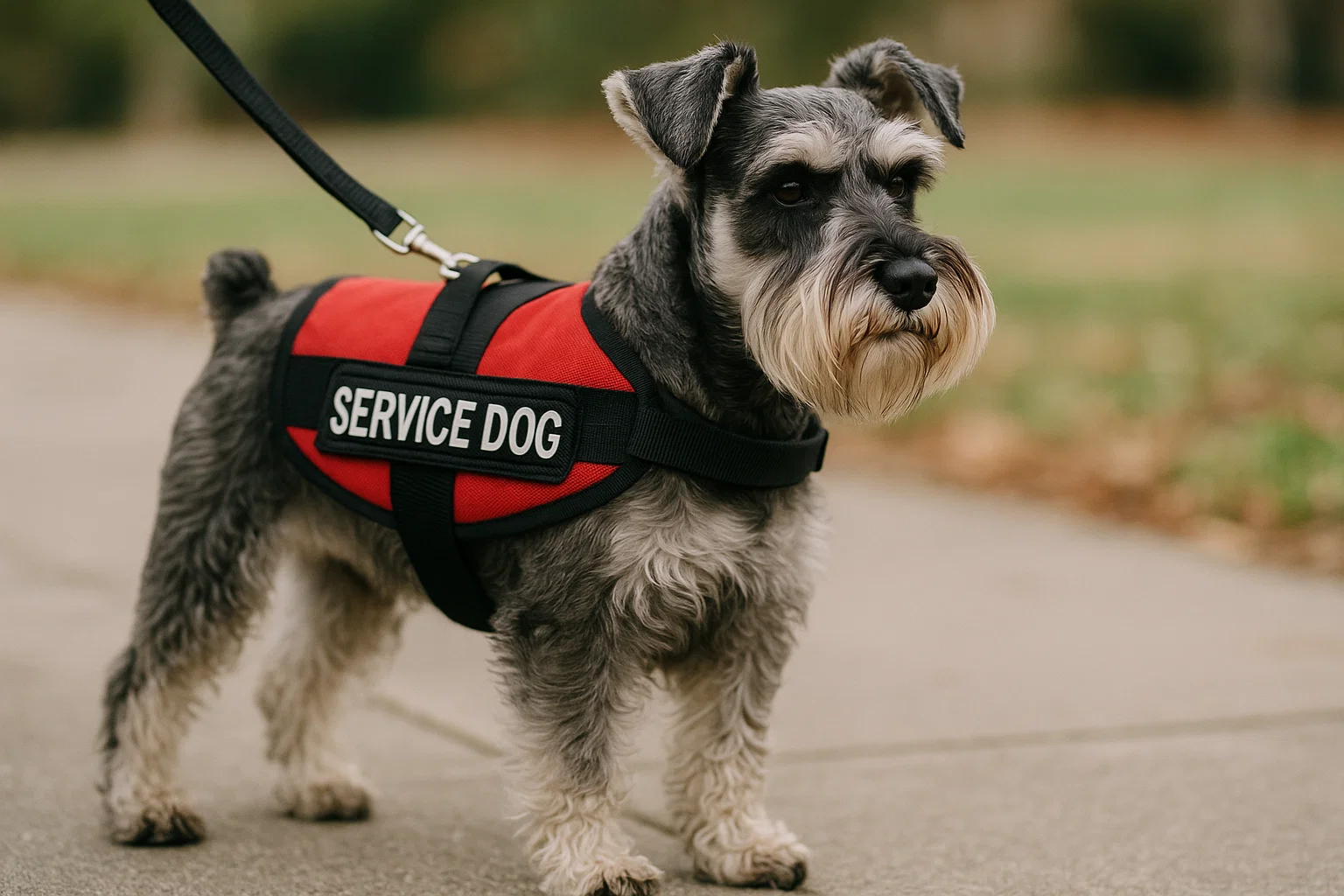
While not the most common choice for service dog work, the Miniature Schnauzer has unique qualities that can make it a valuable companion and service animal in specific roles. Understanding its characteristics and capabilities can help determine if this breed is a suitable match for service dog tasks.
Miniature Schnauzer Overview
The Miniature Schnauzer is a spirited and intelligent breed, recognized for its distinctive beard and eyebrows. Originating in Germany as farm dogs, they were bred to be ratters and small livestock guardians. Over time, their quick wit and devoted nature have made them popular as family pets and suitable candidates in some service dog roles.
Physical Characteristics
The Miniature Schnauzer is a robust, small-sized dog with a compact build that belies its energetic disposition. Here’s a detailed look at its physical attributes:
- Size and Build: Typically, Miniature Schnauzers stand about 12 to 14 inches high at the shoulder and weigh between 11 and 20 pounds. Their small size allows them to fit comfortably in various environments, making them candidates for service work in more confined spaces like apartments or offices.
- Coat and Grooming: They have a double coat with a wiry top layer and a softer undercoat. Regular grooming is required to maintain their distinctive appearance and prevent matting. For service dog handlers, this means a commitment to routine grooming is essential.
- Energy Level: As a breed, they have high energy levels and require regular exercise. This energy can be channeled into training and tasks, though it requires a dedicated handler to meet their physical and mental stimulation needs.
Temperament and Attitude
The temperament of a Miniature Schnauzer plays a crucial role in its suitability as a service dog. Here are some key traits:
- Intelligence: Known for their intelligence, Miniature Schnauzers are quick learners. This trait makes them highly trainable, but they need mental challenges to keep them engaged and prevent boredom.
- Alertness: These dogs are naturally alert and can be excellent as hearing dogs or in roles requiring vigilance. However, their alertness can sometimes lead to excessive barking, which needs to be managed through proper training.
- Affectionate: They are known to be loyal and affectionate with their families, which is beneficial for service work requiring a strong bond between the dog and handler.
- Independence: While they are generally cooperative, their independent streak can make them less suitable for tasks requiring constant obedience and support.
Types of Service Work
While not suitable for all types of service work, the Miniature Schnauzer excels in certain roles due to its unique attributes.
- Medical Alert Work: Their keen sense of smell and alertness can be harnessed for tasks such as diabetic or allergen alerts.
- Hearing Assistance: Due to their alert nature, they can be trained to assist the deaf by signaling the presence of specific sounds.
- Emotional Support and Companionship: Their affectionate and engaging demeanor makes them well-suited for emotional support roles.
- Psychiatric Service Work: With proper training, their intelligence and eagerness to please can be utilized to assist individuals with psychiatric disabilities, particularly tasks that do not require heavy lifting or physical guidance.
Health Considerations
Potential health issues in Miniature Schnauzers can impact their suitability and longevity as service dogs.
- Common Health Issues: This breed is prone to certain health problems such as pancreatitis, bladder stones, and myotonia congenita. These health concerns can affect their performance as service animals.
- Maintenance and Preventive Care: Regular veterinary check-ups are crucial to monitor and manage these conditions effectively. An early intervention and preventive care routine can significantly enhance their quality of life and service longevity.
- Longevity: Despite some health hurdles, Miniature Schnauzers have a relatively long lifespan of 12 to 15 years, contributing to their stability as long-term service animals.
Training and Suitability
Training a Miniature Schnauzer as a service dog requires dedication due to their specific traits.
Register Any Breed
- Training Techniques: Positive reinforcement training techniques work best given their desire to please combined with an independent streak that resists harsh corrections.
- Socialization: Early and extensive socialization is essential, given their alertness which, if unchecked, can lead to excessive barking or wariness with strangers.
- Task Suitability: Training should focus on tasks that align with their strengths, such as medical alert tasks or signal tasks, rather than those requiring extensive physical support.
Summary of Miniature Schnauzer
Advantages:
- Small size suits confined spaces
- High intelligence and trainability
- Affectionate and loyal demeanor
- Longevity offers long-term service potential
Disadvantages:
- Prone to barking if not trained correctly
- Health issues like pancreatitis need management
- May struggle with tasks requiring significant physical strength or guidance
Ideal Service Roles:
- Medical alert service
- Hearing assistance
- Emotional support and companionship
In conclusion, the Miniature Schnauzer, with its intelligence and resilience, can be an excellent service dog in specific roles. While challenges such as health concerns and a potential for excessive barking exist, with the right training and management, this breed can provide great value as a service dog, particularly for tasks suited to its strengths such as alert and emotional support roles.


-
Public Access Kits
$149.00 Learn more This product has multiple variants. The options may be chosen on the product page -
Quick Ship Premium Vests
$48.00 – $82.00 Learn more This product has multiple variants. The options may be chosen on the product page -
Service Dog Bandana
$39.95 Learn more This product has multiple variants. The options may be chosen on the product page
Custom ID Cards
Custom ID Cards
All States
Canada Cards
Custom Service Dog Tags
Official Dog Vests
Smart Vests
Official Public Access Kits
Complete Kits
USA & CANADA Letters
High Quality Bandanas
Service Dog Tags
Smart Tags
ESA TAGS