Pomeranian as a Service Dog
Register Any Breed
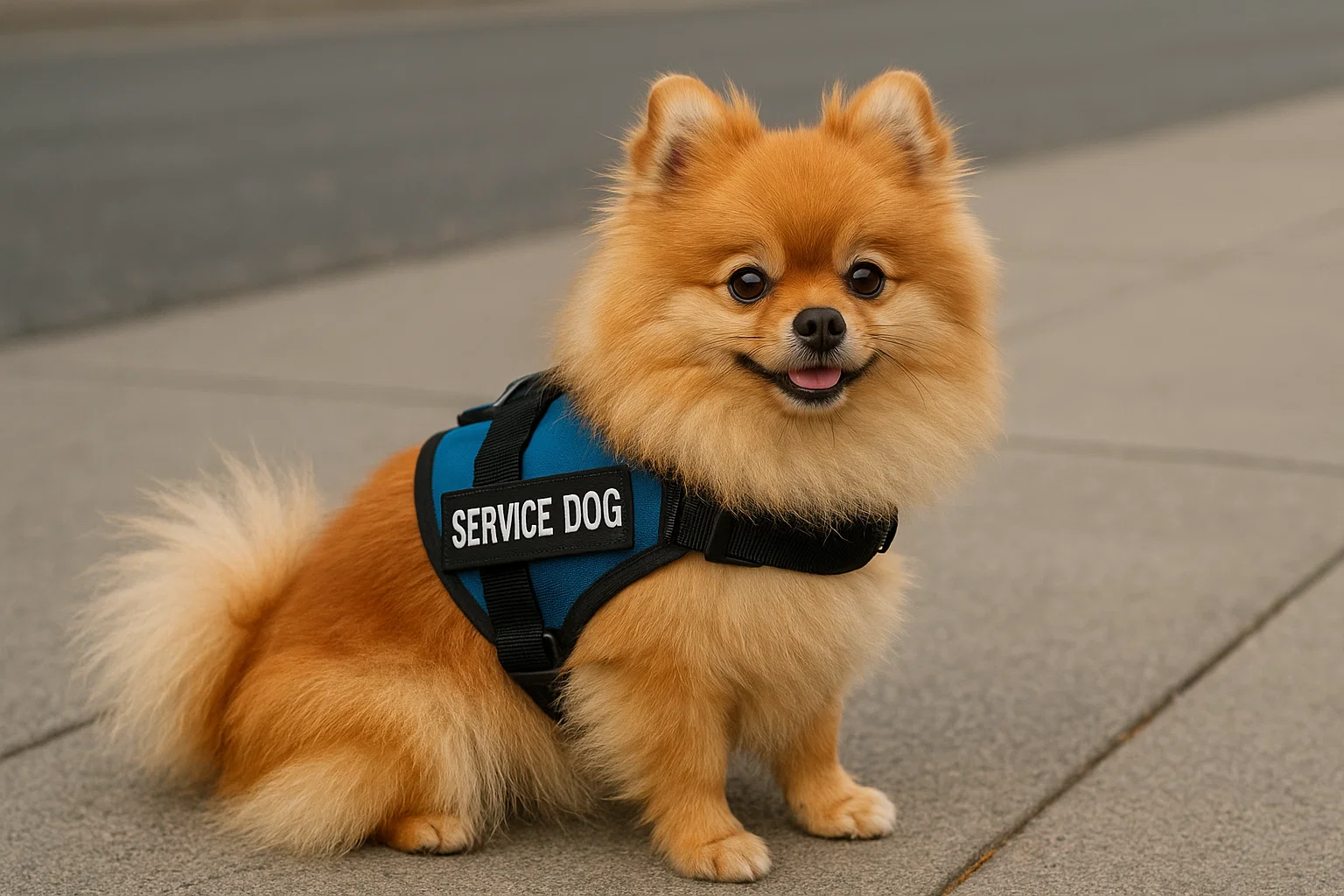
In the realm of service dogs, breeds like Labrador Retrievers and Golden Retrievers often steal the spotlight due to their size and utility. However, small breeds can also play a pivotal role in supporting individuals with disabilities, and the Pomeranian is a prime example of this versatility. Let's explore why the Pomeranian could be the ideal candidate for specific types of service work.
Pomeranian Overview
The Pomeranian, often recognized for its fluffy coat and spirited personality, belongs to the spitz family of dogs. Despite its diminutive size, this breed is known for its intelligence, alertness, and trainability, which are crucial traits for service dogs.
Physical Characteristics
The physical attributes of a Pomeranian impact its suitability for service work. These toy-sized dogs typically weigh between 3 to 7 pounds and stand about 7 to 12 inches tall. Their compact size can be advantageous in specific service roles where agility and portability are essential.
- Size and Mobility: Due to its small size, a Pomeranian isn't suited for tasks that require heavy lifting or providing physical support. However, its agility allows it to navigate tight spaces, making it an excellent choice for individuals who need a dog that can maneuver easily in crowded or confined spaces.
- Grooming and Maintenance: With a thick double coat, Pomeranians require regular grooming. They shed moderately, and this grooming routine can help prevent any potential allergens that might affect sensitive individuals or those with respiratory conditions.
Temperament and Attitude
Pomeranians are known for their lively and spirited demeanor, which can be both a strength and a challenge in service work.
- Alertness and Companionship: These dogs are inherently alert and thrive on companionship. Their awareness makes them excellent candidates for tasks that require vigilance, such as medical alert duties.
- Energy and Enthusiasm: The high energy level of a Pomeranian can be advantageous in engaging individuals in need of emotional support. Their enthusiasm often provides the necessary companionship and stimulation individuals might require.
- Confidence and Trainability: Despite their small stature, Pomeranians exhibit confidence and a readiness to learn. These traits can simplify the training process, although their occasional stubbornness necessitates a patient and consistent training approach.
Types of Service Work
While not suitable for every type of service work, Pomeranians excel in certain areas where their size and temperament offer unique benefits.
- Medical Alert Services: Given their alert nature, Pomeranians are well-suited for roles involving medical alert, such as alerting owners to changes in blood sugar levels or the onset of seizures.
- Psychiatric Service Dog: Their compact size and emotional intelligence make them ideal candidates for psychiatric support roles. Pomeranians can be trained to provide comfort and mitigate symptoms of anxiety or depression.
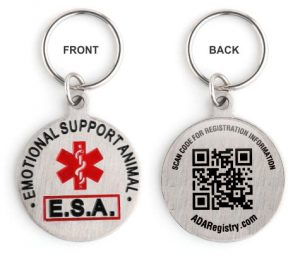
- Emotional Support Animal (ESA): Naturally loving and affectionate, Pomeranians excel as emotional support animals, offering companionship and reducing stress for individuals with emotional or psychological needs.
Health Considerations
While Pomeranians can take on specific service roles, their health considerations must be accounted for.
- Common Health Issues: Like many small breeds, Pomeranians are predisposed to certain health conditions such as dental issues, patellar luxation, tracheal collapse, and heart problems. These conditions can impact their capacity to perform service tasks consistently.
- Lifespan and Care: Pomeranians enjoy a relatively long lifespan of 12 to 16 years. Regular veterinary care, a balanced diet, and weight management are crucial to ensuring their longevity and capability to fulfill their service roles.
Training and Suitability
Training a Pomeranian for service work requires an understanding of their unique attributes and potential challenges.
Register Any Breed
- Trainability: Their intelligence makes training a relatively straightforward process, although they require consistent sessions to overcome their independent streak. Positive reinforcement is key to harnessing their eagerness to please.
- Socialization: Pomeranians must be adequately socialized from a young age to ensure they remain well-behaved in various environments and situations. This is particularly crucial for service dogs that will encounter different people and settings regularly.
Summary of Pomeranian
In summary, while Pomeranians are not universally ideal for all types of service work, their unique qualities make them well-suited for specific roles, especially where their size, alertness, and temperament are beneficial.
**
- Strengths: Highly alert, trainable, compact size suitable for confined spaces, excels in medical alert and psychiatric support roles.
- Weaknesses: Susceptible to specific health issues, not suited for mobility or physical support roles, requires consistent grooming.
- Ideal Service Roles: Medical alert, psychiatric service, emotional support.
**
In conclusion, whether a Pomeranian becomes a service dog should be assessed on an individual basis, taking into account its health, temperament, and the specific needs of the handler. With the right training and care, Pomeranians can be invaluable companions and support animals.


-
Public Access Kits
$149.00 Learn more This product has multiple variants. The options may be chosen on the product page -
Quick Ship Premium Vests
$48.00 – $82.00 Learn more This product has multiple variants. The options may be chosen on the product page -
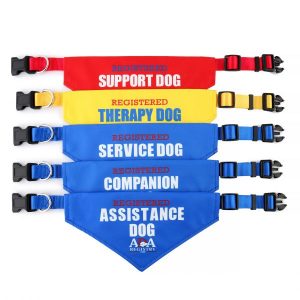
Service Dog Bandana
$39.95 Learn more This product has multiple variants. The options may be chosen on the product page
Custom ID Cards

Custom ID Cards
All States
Canada Cards
Custom Service Dog Tags
Official Dog Vests
Smart Vests
Official Public Access Kits
Complete Kits
USA & CANADA Letters
High Quality Bandanas
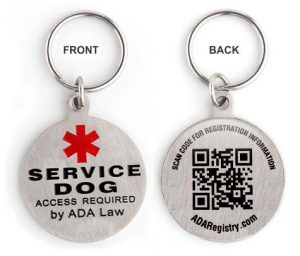
Service Dog Tags
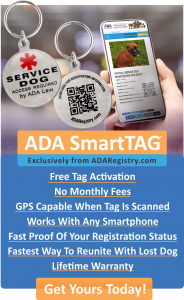
Smart Tags
ESA TAGS