Puli as a Service Dog
Register Any Breed
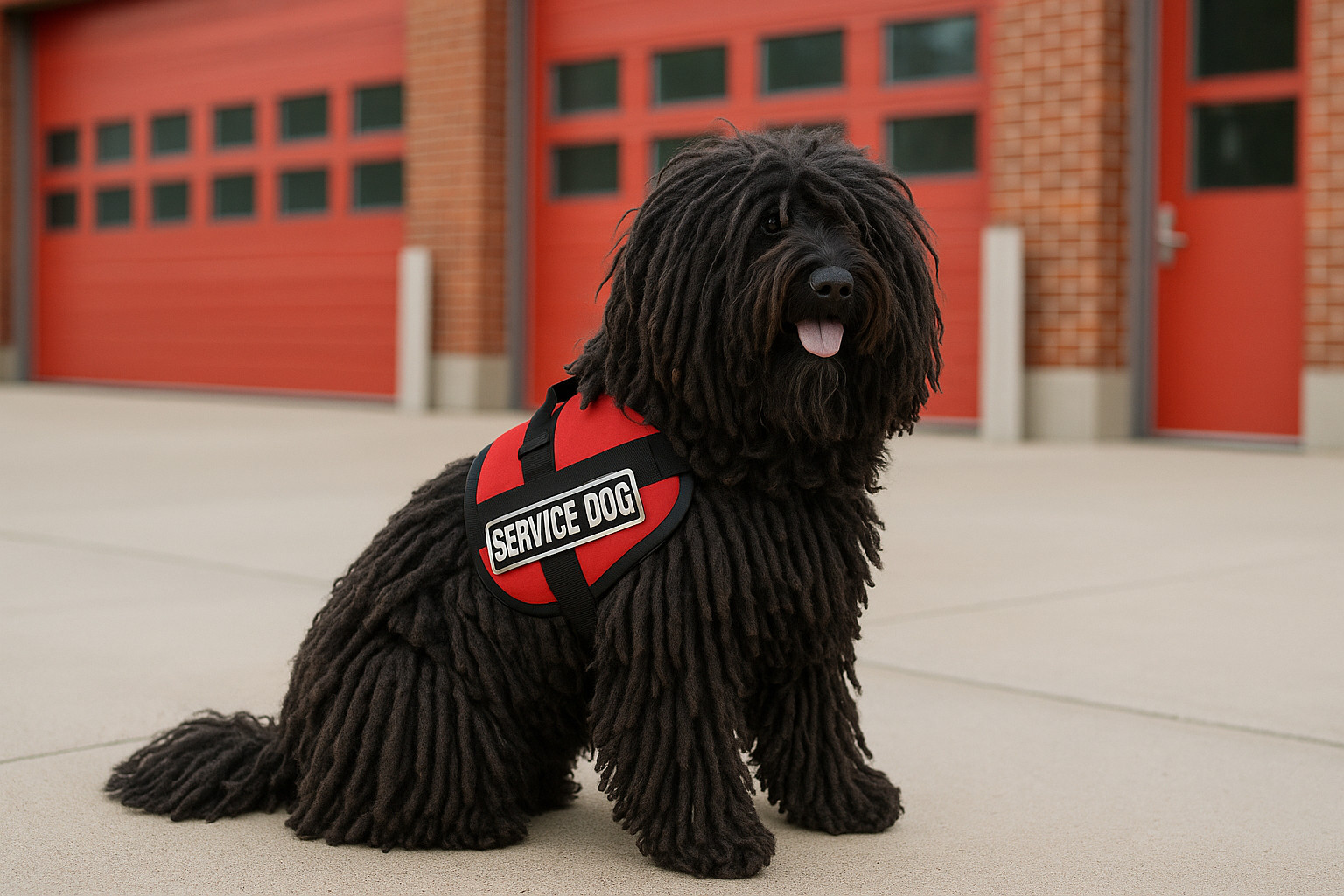
The role of a service dog is both critical and diverse, serving individuals with varying disabilities and needs. While many breeds are traditionally used in service work, the Puli—a unique and striking breed—offers its own set of qualities that can be harnessed in a service capacity. This article explores the suitability of the Puli as a service dog, examining various aspects from physical traits to temperament, training, and health.
Puli Overview
Originating from Hungary, the Puli is easily recognized by its corded coat and energetic demeanor. While primarily known historically as a herding dog, the Puli's unique traits may also lend themselves to functioning as a specialized service dog.
Physical Characteristics
The Puli is a medium-sized dog with an athletic build and a distinctive, waterproof corded coat.
- Size and Build: Adult Pulis typically stand between 16 to 17 inches tall and weigh around 25 to 35 pounds. Their compact size and agility make them suitable for environments where space is limited or when working in close proximity to humans.
- Coat and Grooming: The Puli's signature coat is dense, corded, and water-resistant. This coat requires significant maintenance, which includes regular grooming to prevent matting. In the context of service work, this grooming needs to be planned around.
These physical traits suggest that while the Puli is not ideal for heavy-duty physical tasks or environments requiring low-maintenance dogs, its sturdiness and medium size may be advantageous for lighter tasks in diverse settings.
Temperament and Attitude
- Loyalty and Bonding: Pulis are known for their high degree of loyalty and form strong bonds with their handlers, which is an essential quality for service dogs who must work closely with their human partners.
- Intelligence and Problem-Solving: This breed exhibits impressive intelligence and problem-solving abilities, traits necessary for performing complex tasks and learning various commands and routines.
- Energy Levels and Drive: Pulis are inherently energetic, with a strong herding instinct and drive. While this could make them tireless workers, their energy must be well-managed with sufficient exercise and mental stimulation.
These behavioral traits suggest that the Puli's intelligence and bond-forming capabilities are beneficial for service roles, while their energy levels must be considered in the context of the handler’s lifestyle and daily needs.
Types of Service Work
While the Puli's primary historical function has been herding, their qualities may be harnessed in certain service areas:
- Mobility Assistance: Due to its medium size and strength, the Puli may not be the best choice for strenuous mobility assistance work. However, they can perform assistive tasks such as picking up items or opening doors.
- Medical Alert: The Puli’s acute sense of smell and intelligence can be trained for medical alert tasks, such as detecting changes in a diabetic’s blood sugar levels.
- Psychiatric and Emotional Support: The breed's strong attachment to their owners and their instinctual ability to read human emotions make them good candidates for psychiatric service tasks or emotional support.
This diversity in service applications highlights the Puli’s potential, particularly in non-physical support roles where mental acuity and emotional intelligence are paramount.
Register Any Breed
Health Considerations
- Genetic Health Risks: Pulis are generally healthy but can be predisposed to conditions such as hip dysplasia and progressive retinal atrophy (PRA), which can impact their work capability.
- Maintenance Needs: Their corded coat, while distinct, poses additional responsibilities for grooming and cleanliness which could impact their practicality in certain service environments.
- Lifespan: With an average lifespan of 12 to 16 years, Pulis offer long-term companionship, which can be beneficial for continuity in a handler-service dog relationship.
While health is typically robust in Pulis, these potential issues and their unique grooming requirements must be considered when evaluating them for service work.
Training and Suitability
Training a Puli for service work must be approached with an understanding of their breed-specific traits:
- Trainability: Pulis are quick learners thanks to their intelligence, but they can also be independent and occasionally stubborn. This requires a patient and experienced trainer who can effectively harness their capabilities without overwhelming them.
- Socialization: Due to their protective nature, early and consistent socialization is crucial to ensure they are well-adjusted in public and non-threatening situations.
- Task Training: Pulis can be taught a variety of tasks, but their strong will means commands must be clear, consistent, and reinforced with positive approaches.
Considering these factors, potential handlers and trainers need to invest time and effort into specialized training and socialization to maximize the breed’s service potential.
Summary of Puli
- Strengths: High intelligence, strong bond with handlers, versatility in task learning, medium size suited for various environments.
- Weaknesses: High maintenance coat, potential genetic health issues, high energy requiring management.
- Ideal Service Roles: Medical alert, psychiatric service, and emotional support roles.
In summary, while the Puli may not fit the mold of traditional service breeds like Labs or Golden Retrievers, its intelligence, loyalty, and adaptability make it a notable candidate for certain specialized service tasks. Potential handlers should consider the breed’s unique needs and qualities to ensure the fit is mutually beneficial.


-
Public Access Kits
$149.00 Learn more This product has multiple variants. The options may be chosen on the product page -
Quick Ship Premium Vests
$48.00 – $82.00 Learn more This product has multiple variants. The options may be chosen on the product page -
Service Dog Bandana
$39.95 Learn more This product has multiple variants. The options may be chosen on the product page
Custom ID Cards
Custom ID Cards
All States
Canada Cards
Custom Service Dog Tags
Official Dog Vests
Smart Vests
Official Public Access Kits
Complete Kits
USA & CANADA Letters
High Quality Bandanas
Service Dog Tags
Smart Tags
ESA TAGS