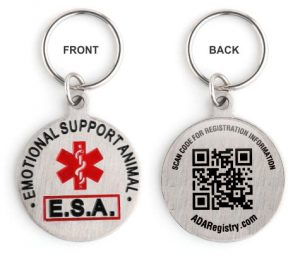
Saint Bernard as an Emotional Support Dog
Register Any Breed
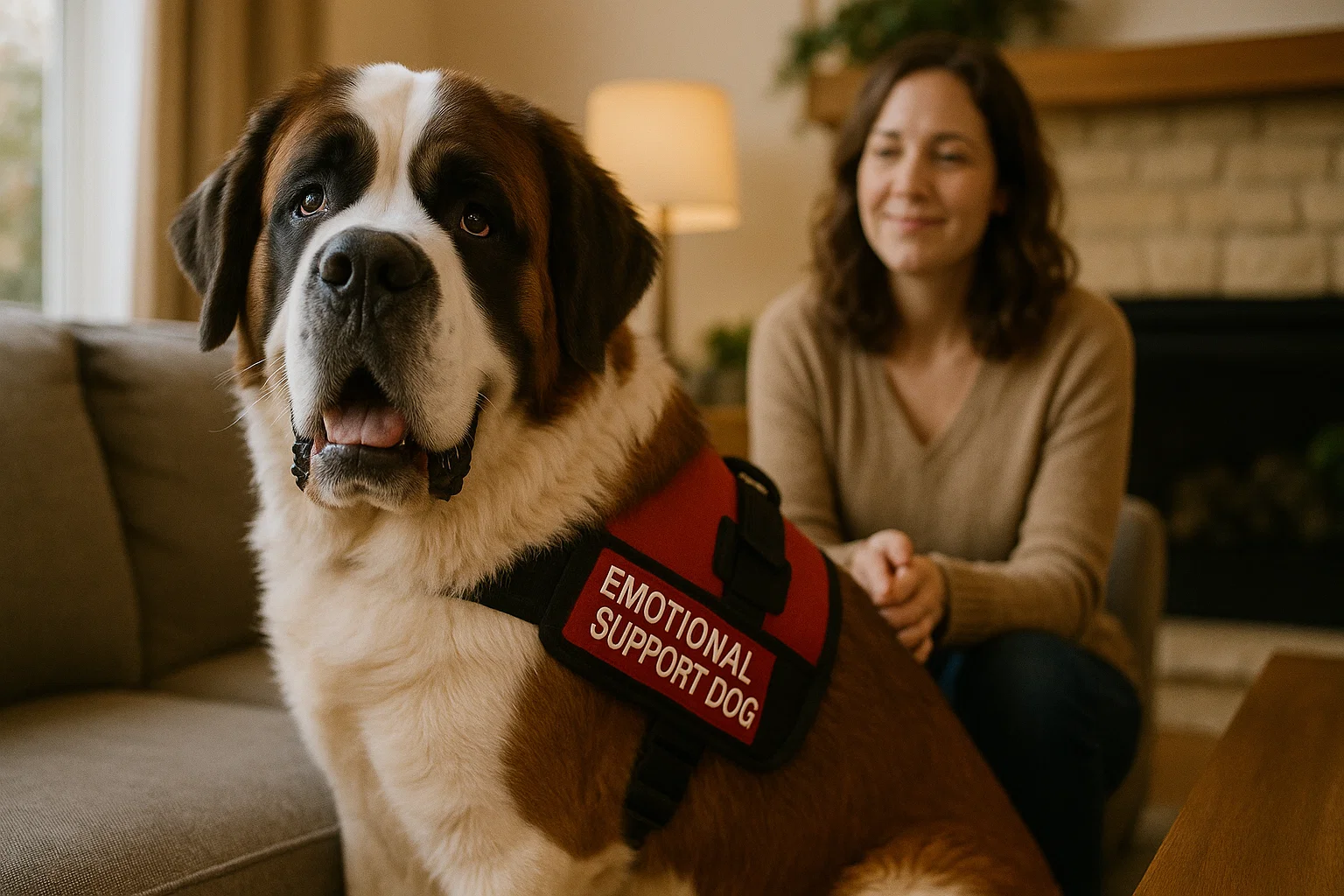
The Saint Bernard, a breed celebrated for its gentle giant nature, embodies an impressive combination of empathy, strength, and calmness, making it a fitting choice for an emotional support animal (ESA). While not every dog is suited for the demands of providing emotional support, the Saint Bernard’s distinct qualities often align well with these roles.
Understanding the Emotional Support Role
Emotional support animals (ESAs) primarily offer companionship, helping to alleviate symptoms of mental health challenges such as anxiety, depression, and loneliness. Unlike service dogs, ESAs are not trained to perform specific tasks but must demonstrate a naturally gentle and empathetic disposition to provide invaluable comfort and emotional stability.
Saint Bernard Overview
Originating from the Swiss Alps, the Saint Bernard was initially bred by monks for rescue operations in harsh mountain conditions. This history has fostered a breed that is not only physically robust but also remarkably patient and gentle. Standing up to 30 inches tall and weighing between 120 to 180 pounds, their size is often matched by a heart equally large.
Temperament and Emotional Connection
Saint Bernards are famous for their loving and placid temperament. They possess an innate ability to form strong emotional bonds with their human companions, a trait that is extraordinarily advantageous for an emotional support role. Here’s why their temperament is particularly suited to emotional support:
- Empathy and Sensitivity: Saint Bernards are highly sensitive to the moods and emotions of their owners, providing sympathy and understanding during periods of distress.
- Calming Presence: Their steadfast and relaxed demeanor can soothe anxiety and stress, promoting an aura of reassurance and safety.
- Gentle Companionship: Despite their large size, they are known for their gentle and affectionate nature, often described as "nanny dogs."
Adaptability and Daily Behavior
A Saint Bernard’s adaptability further enhances its suitability as an ESA. They can adapt to various living conditions and are generally content with a moderate amount of daily exercise. Key points include:
- Low-to-Moderate Energy Levels: Their calm demeanor doesn't necessitate high-energy activities, making them ideal for quieter households.
- Compatibility with Routine: Saint Bernards thrive in settings where they can follow a routine, feeling secure in knowing what to expect.
- Indoors Comfort: They possess a disposition that allows them to be comfortable indoors for extended periods, a crucial trait for those needing consistent companionship.
Situations Where Saint Bernard Provides Strong Support
Saint Bernards offer significant comfort in several scenarios that benefit from their emotional strengths:
- Anxiety Reduction: Their imposing but friendly presence is reassuring, helping to alleviate anxiety through proximity and physical warmth.
- Companionship in Loneliness: Their ability to form profound emotional connections makes them a cherished companion for those experiencing social isolation or loneliness.
- Support During Transitions: They offer stability during emotional transitions, such as moving homes or dealing with life changes.
Ideal Living Environments
While adaptable, Saint Bernards thrive in certain environments where their presence can be maximally comforting:
Register Any Breed
- Family Homes: Their nature makes them well-suited to living with families, offering a sense of stability and comfort to both children and adults.
- Assisted Living Facilities: Their gentle nature makes them excellent companions for elderly individuals, offering both emotional and physical warmth.
- Quiet Neighborhoods: Areas with access to open spaces or yards offer them a comfortable setting for mild exercise.
Bonds with Different Types of People
Saint Bernards can form bonds with various types of people, enhancing their effectiveness as ESAs:
- Children: They are protective yet gentle, often serving as a calming influence for young children.
- Elderly: Their ability to provide steadfast companionship suits the needs of elderly individuals who benefit from consistent emotional support.
- People with Anxiety Disorders: Their calming nature and loyalty make them ideal companions for individuals managing anxiety symptoms.
Health, Care, and Wellbeing
Ensure the Saint Bernard's wellbeing to maintain their effectiveness in providing emotional support:
- Balanced Diet: Provide a healthy and balanced diet suited to their size and metabolism.
- Regular Exercise: Though not overly energetic, regular moderate exercise is necessary to prevent obesity and maintain health.
- Veterinary Care: Frequent check-ups are crucial to monitor their overall health, as they are prone to specific genetic conditions.
Common Health Considerations
Like all breeds, Saint Bernards have health concerns that need to be managed to ensure they remain effective as ESAs:
- Hip and Elbow Dysplasia: Regular veterinary care can help manage these joint-related issues.
- Heart Conditions: Awareness and monitoring of congenital heart conditions are important for their longevity and quality of life.
- Bloat (Gastric Dilatation-Volvulus): Owners should be educated on the signs and preventive measures for bloat, which can be life-threatening if not addressed promptly.
Grooming, Comfort, and Maintenance Needs
Grooming is vital not only for comfort but also for health:
- Regular Brushing: Due to their dense fur, they require regular brushing to prevent matting and reduce shedding.
- Bathing and Hygiene: Routine bathing and maintaining dental hygiene will keep them comfortable and healthy.
- Climate Consideration: They do best in cooler climates due to their thick coat, and care must be taken to prevent overheating.
Preparing a Saint Bernard for Emotional Support Work
Preparation for emotional support roles is key to maximizing the benefits a Saint Bernard can offer:
- Early Socialization: Introducing them to various environments and people from an early age can enhance their adaptability.
- Basic Obedience Training: While inherently calm, they benefit from basic training to reinforce good behavior indoors.
- Consistency and Patience: Engage in consistent routines and apply patience to develop their natural inclination for emotional support work.
Socialization and Responsiveness
Socialization is crucial for any ESA, and Saint Bernards are no exception:
- Exposure to Stimuli: Regular exposure to different environments helps them remain calm and responsive.
- Interaction with People and Animals: Facilitates the development of a well-rounded and approachable demeanor.
Managing Stress and Emotional Cues
Understanding and managing their responses is crucial for owners:
- Reading Emotional Cues: They tend to be sensitive to emotional changes in their handler, necessitating clear communication and positive reinforcement.
- Providing Reassurance: In times of stress, offering reassurance helps Saint Bernards remain focused and calm, further benefiting their human companion.
Strengths, Challenges, and Ideal Homes for Saint Bernard
Saint Bernards bring notable strengths as ESAs, but also face some challenges:
Strengths:
- Gentle, loving temperament ideal for establishing strong emotional bonds.
- Calming presence helps mitigate anxiety, stress, and loneliness.
Challenges:
- Require substantial grooming and are susceptible to certain health issues.
- Large size may not suit small living spaces, highlighting the need for an appropriate environment.
Final Thoughts
Saint Bernards make magnificent emotional support animals, thanks to their empathetic nature and steady companionship. They thrive best in environments that appreciate their gentle strength and where they can build meaningful connections that promote emotional wellbeing.
Key Takeaways for the Saint Bernard as an Emotional Support Dog
- Best suited for: Families, elderly individuals, those with anxiety needs.
- Not ideal for: Small apartments, hot climates, those unable to manage grooming.
- Emotional traits: Affectionate, empathetic, calm.
- Care and health notes: Regular veterinary care and grooming required; watch for hip dysplasia and bloat.
- Environments where they provide the most comfort: Family homes, assisted living, and spacious, quiet environments.


-
Public Access Kits
$149.00 Learn more This product has multiple variants. The options may be chosen on the product page -
Quick Ship Premium Vests
$48.00 – $82.00 Learn more This product has multiple variants. The options may be chosen on the product page -
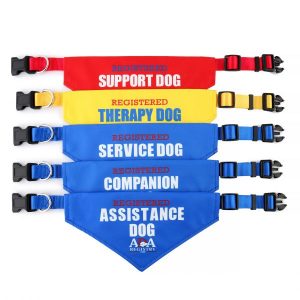
Service Dog Bandana
$39.95 Learn more This product has multiple variants. The options may be chosen on the product page
Custom ID Cards

Custom ID Cards
All States

Canada Cards

Custom Service Dog Tags
Official Dog Vests

Smart Vests
Official Public Access Kits
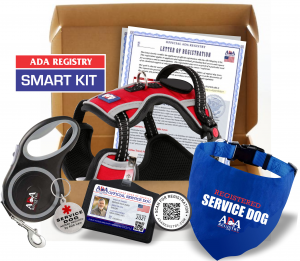
Complete Kits
USA & CANADA Letters

High Quality Bandanas
Service Dog Tags
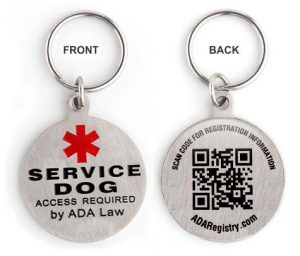
Smart Tags

ESA TAGS