Scottish Terrier as an Emotional Support Dog
Register Any Breed
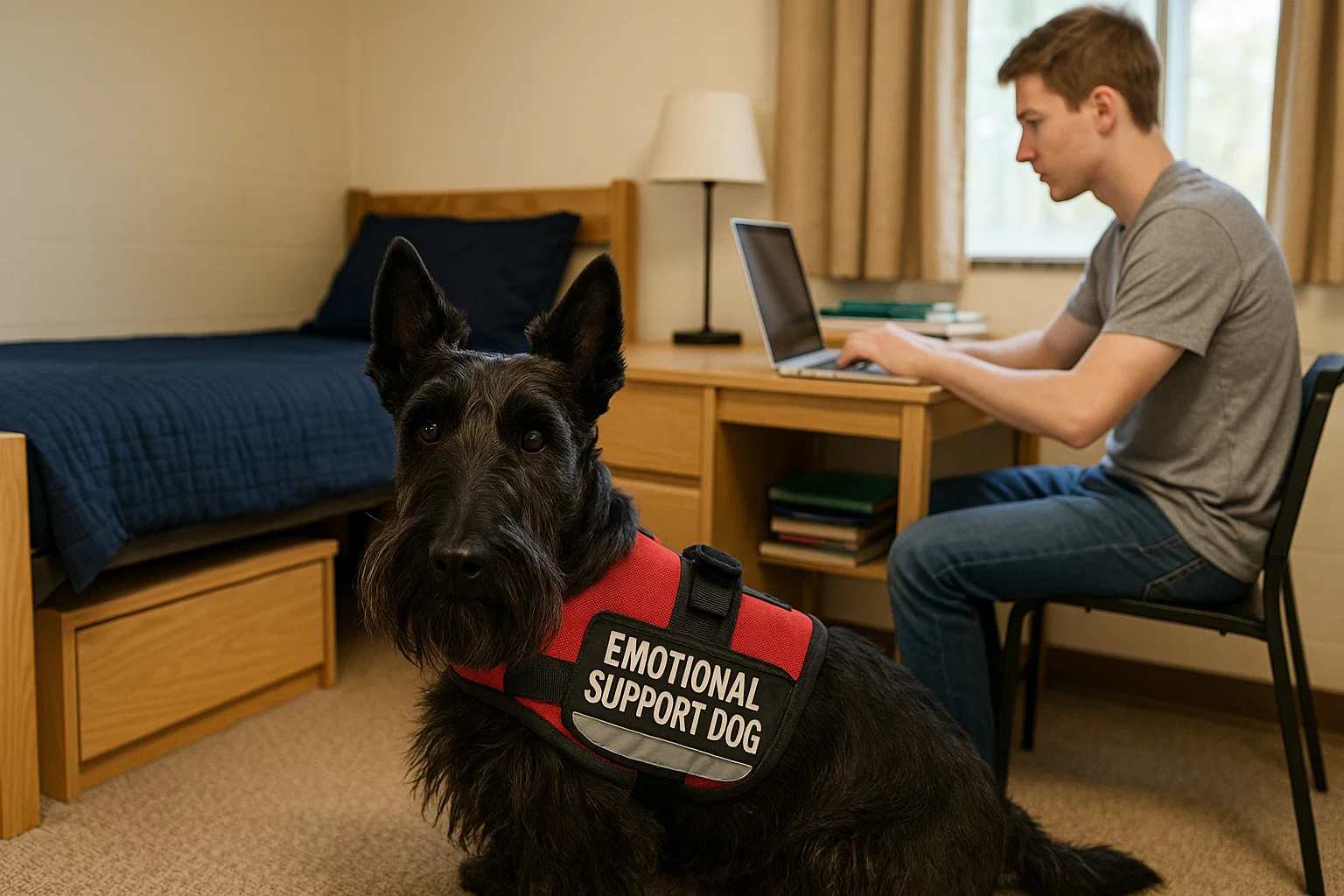
The concept of emotional support animals (ESAs) has gained prominence for the invaluable comfort and stability they offer. Among potential ESA candidates, the Scottish Terrier, with its unique temperament and vibrant personality, stands out. This article delves into the suitability of Scottish Terriers for emotional support roles, highlighting their emotional intelligence, care needs, and adaptability to various lifestyles.
Understanding the Emotional Support Role
Scottish Terrier Overview
Scottish Terriers, often affectionately called “Scotties,” were originally bred for hunting various game. Over time, their role has evolved, and they are now cherished as household companions. Weighing between 18 to 22 pounds and exhibiting a robust frame with a distinctive wiry coat, Scotties possess a charm that endears them to many. However, their appeal extends beyond mere aesthetics; it encompasses their keen emotional perception and enduring loyalty—qualities that are pivotal in an emotional support capacity.
Temperament and Emotional Connection
Scottish Terriers are renowned for their independence and confidence. Their profound loyalty translates into a deep bond with their human companions. These traits make them particularly effective as emotional support animals, as they can:
- Sense emotional fluctuations in their owners and respond with comforting presence
- Display empathy by staying close during emotional distress, offering a sense of security
- Be non-judgemental listeners, invaluable for individuals processing complex emotions
By offering consistent companionship, Scottish Terriers provide a stable emotional presence, crucial for dealing with anxiety, depression, and loneliness.
Adaptability and Daily Behavior
Despite their independent nature, Scottish Terriers are remarkably adaptable. They can adjust to various living conditions and routines, including:
- Apartment living, thanks to their moderate exercise needs and small size
- Active family homes, where interaction with multiple family members can enhance their social skills
- Smaller spaces where their energy levels do not impose extensive exercise demands, thus reducing the owner’s stress related to pet activity
This adaptability ensures they remain a constant source of comfort, regardless of lifestyle changes or environmental shifts.
Situations Where Scottish Terrier Provides Strong Support
The emotional support provided by a Scottish Terrier is particularly effective in several scenarios:
Register Any Breed
- Reducing anxiety in crowded or unfamiliar environments by acting as a grounding presence
- Providing a routine that encourages owners to engage in daily walks and playtime, fostering physical activity and mental stimulation
- Offering mute companionship that is both comforting and non-intrusive, helping with work-from-home settings or recovery periods
These capabilities highlight their potential to stabilize emotional states and improve mental well-being.
Ideal Living Environments
Scottish Terriers thrive in environments where they can form deep emotional connections. Ideal settings include:
- Homes with adults or seniors, where their calm demeanor complements a quieter lifestyle
- Assisted living environments, offering companionship without overwhelming demanding care
- Family settings where they can engage with different age groups, learning to navigate a variety of emotional expressions
These environments allow them to perform their emotional support roles effectively while maintaining their mental and physical well-being.
Bonds with Different Types of People
Scottish Terriers are versatile in forming bonds with various individuals:
- Seniors, who benefit from the calming presence and routine the dogs provide
- Individuals with mental health challenges, where their empathy helps mitigate episodes of distress
- Families with children, appreciating their playful yet gentle demeanor
Such bonds foster an environment where both the animal and human flourish emotionally, reinforcing their role as companions.
Health, Care, and Wellbeing
Common Health Considerations
To maintain their role as consistent emotional supporters, Scottish Terriers require proper care, which includes:
- Regular vet check-ups to manage breed-specific conditions like skin diseases, allergies, and certain cancers
- Dental hygiene due to their susceptibility to periodontal disease, ensuring they remain in good spirits and health
- Proper weight management, vital due to a slight inclination towards obesity, which can affect their mood and energy levels
Proper health care ensures that they remain physically capable of providing the robust emotional support their role demands.
Grooming, Comfort, and Maintenance Needs
In terms of grooming, Scottish Terriers require:
- Regular brushing to maintain their unique coat, thus preventing discomfort or irritation
- Periodic trimming, which not only keeps them well-groomed but prevents matting that could affect their mood
- Attention to ear cleaning and nail trimming to avoid infections and ensure their physical comfort
This regimen not only keeps them healthy but also fosters bonding during grooming sessions, enhancing their emotional connection with their owner.
Preparing a Scottish Terrier for Emotional Support Work
Preparation involves training and socialization. Scottish Terriers benefit from:
- Basic obedience training for improved responsiveness to emotional cues
- Consistent socialization practices, exposing them to various environments and individuals, which aids their adaptability and reduces anxiety
- Identifying and reinforcing behaviors that support their owner’s well-being, like sitting quietly or offering nuzzles as reassurance
These steps ensure that Scottish Terriers are well-equipped to perform their supportive roles seamlessly.
Socialization and Responsiveness
Effective socialization enables Scottish Terriers to:
- React positively in diverse situations, resulting in less stress for both the dog and owner
- Display adaptability that is critical for consistency in social settings or chaotic environments
- Enhance their problem-solving capabilities, which could assist in navigating emotional tasks effectively
Moreover, responsiveness training enhances their ability to read emotional cues, further cementing their role as adept companions.
Managing Stress and Emotional Cues
While largely unflappable, Scottish Terriers must manage stress to maintain their supportive roles:
- Recognizing stress signs early helps owners manage their behavior appropriately, such as providing quiet time away from overstimulation
- Employing training techniques such as positive reinforcement to encourage calm and composed behaviors
- Understanding routine and consistency benefit their mental health, ensuring they remain reliable support animals
Effectively managing stress helps them remain the emotional pillars their owners rely on.
Strengths, Challenges, and Ideal Homes for Scottish Terrier
Scottish Terriers’ strengths include:
- Deep emotional bonding, crucial for continuous support in various emotional environments
- Loyalty and consistency, providing a steadfastness integral to emotional support roles
- Intelligence and independence, making them low-maintenance from a training perspective
Challenges may include:
- Their initial wariness of strangers, which requires socialization to adjust
- Prone to stubborn moments, which requires consistent and thoughtful training to mitigate
Ideal homes are those with structure, gentle routines, and a focus on relationships, ensuring happiness and utility in their roles.
Final Thoughts
Scottish Terriers possess emotional intelligence, loyalty, and adaptability, making them ideal candidates for emotional support roles. Their capacity to form deep connections ensures they bring comfort in numerous settings, from bustling family homes to serene assisted living environments. However, ensuring their health, grooming, and training needs are met ensures they remain supportive, healthy, and happy companions.
Key Takeaways for the Scottish Terrier as an Emotional Support Dog
- Best suited for: Seniors seeking companionship, adults requiring emotional consistency, families valuing loyalty
- Not ideal for: Individuals needing high energy companions or those unable to provide routine grooming
- Emotional traits: Empathic, consistent, loyal, adaptable to emotions
- Care and health notes: Regular grooming needed, attention to weight and dental care
- Environments where they provide the most comfort: Apartments, assisted living, structured family homes
Scottish Terriers, with their blend of devotion and independence, offer a rare balance of emotional support that adapts to the diverse needs of their owners. This ensures they remain cherished companions, providing comfort and stability tailored to various living arrangements and emotional requirements.


-
Public Access Kits
$149.00 Learn more This product has multiple variants. The options may be chosen on the product page -
Quick Ship Premium Vests
$48.00 – $82.00 Learn more This product has multiple variants. The options may be chosen on the product page -
Service Dog Bandana
$39.95 Learn more This product has multiple variants. The options may be chosen on the product page
Custom ID Cards

Custom ID Cards
All States

Canada Cards

Custom Service Dog Tags

Official Dog Vests

Smart Vests
Official Public Access Kits
Complete Kits
USA & CANADA Letters
High Quality Bandanas

Service Dog Tags
Smart Tags

ESA TAGS