Tibetan Mastiff as a Service Dog
Register Any Breed
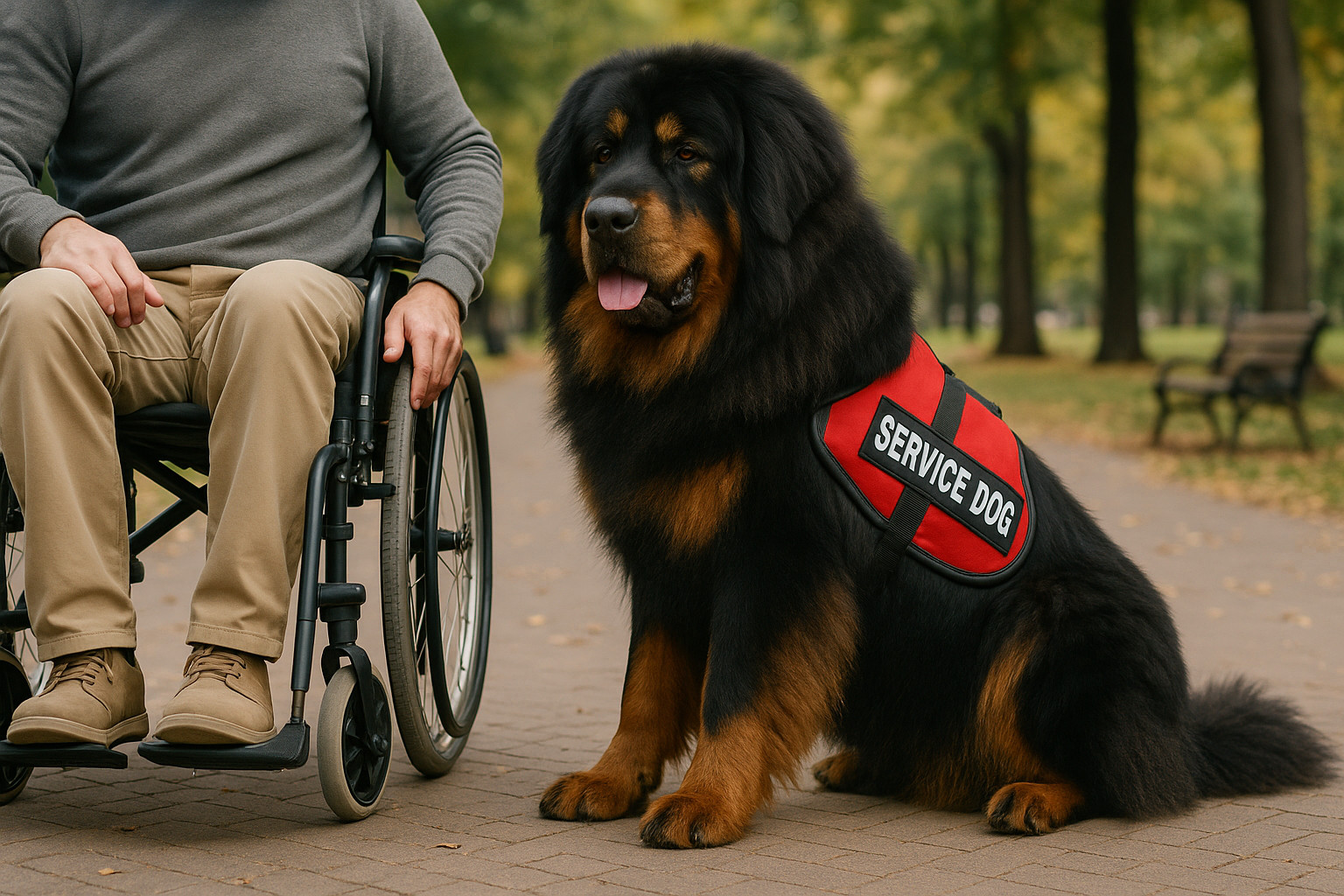
Tibetan Mastiffs, known for their majestic appearance and commanding presence, have been guarding livestock and homesteads on the high plateaus of the Himalayan regions for centuries. While their imposing size and protective instincts render them ideal guardians, one might wonder how they fare as service dogs in modern settings. This comprehensive guide evaluates the Tibetan Mastiff's potential as a service dog, examining their physical characteristics, temperament, service suitability, health considerations, training requirements, and overall suitability.
Tibetan Mastiff Overview
The Tibetan Mastiff is a giant breed with origins rooted deeply in the nomadic cultures of Tibet, Nepal, and India. These dogs have traditionally served as protectors of sheep from predators like wolves and leopards. As potential service dogs, their inherent traits must be carefully assessed to ensure they meet the rigorous demands of service work.
Physical Characteristics
Tibetan Mastiffs are notable for their imposing stature and impressive strength. Adults can weigh between 70 to 150 pounds and stand 24 to 30 inches at the shoulder. Their double coat, which helps them withstand harsh Himalayan climates, requires regular grooming.
- Size: Their massive size is both an asset and a challenge. On one hand, it makes them suitable for tasks that require strength, such as mobility assistance. On the other hand, their size can make them less suitable for environments that require agility or compactness.
- Strength: This aspect is beneficial when providing support in mobility or pulling, but it can become a liability without adequate control and training.
- Energy Level: Tibetan Mastiffs possess moderate energy levels. They require daily exercise to prevent boredom and maintain health but are generally calm indoors.
Temperament and Attitude
Understanding the Tibetan Mastiff’s temperament is crucial when evaluating their potential as service dogs. These dogs are known for their independence, intelligence, and protective nature.
- Protective Instincts: They have a strong protective drive, which can be channeled positively into roles that require safeguarding a handler. However, these instincts may occasionally lead to over-guarding.
- Independence: Their independence might challenge traditional service dog training methods, which rely on following commands without hesitation. This trait needs focusing through consistent, patient training.
- Socialization: Early socialization is imperative to prevent over-protectiveness and to ensure the dog behaves appropriately in public and in the presence of other animals and people.
Types of Service Work
Given their unique attributes, Tibetan Mastiffs may excel or struggle in various types of service work:
- Mobility Assistance: Their strength and size make them ideal for tasks requiring physical support, such as helping handlers rise from a seated position or providing balance.
- Psychiatric and Emotional Support: Their loyalty and bond with their handlers can offer immense comfort. However, their independent nature may not make them the best fit for tasks requiring quick response to detailed commands.
- Search and Rescue: While not traditional service dog work, their keen sense of smell and tracking ability can be harnessed for search and rescue operations.
Health Considerations
Health is a key factor in a Tibetan Mastiff's ability to serve as a service dog. This breed is predisposed to several health conditions:
- Hip Dysplasia: A common issue in large breeds, hip dysplasia can impact mobility tasks, necessitating regular veterinary check-ups and possibly limiting strenuous activity.
- Thyroid Issues: Hypothyroidism can affect energy levels, weight management, and overall mood, which might impact their service capabilities.
- Skin Conditions: Their thick coat can sometimes predispose them to skin issues, requiring attentive grooming and care.
Training and Suitability
Training a Tibetan Mastiff for service work poses unique challenges:
Register Any Breed
- Trainability: While intelligent, their stubbornness can hinder traditional reinforcement-based training methods. A firm yet gentle approach is necessary to maintain motivation.
- Independence: Training requires patience and creativity to engage their independent spirit effectively. Without proper engagement, their attention may wander.
- Control and Management: Given their protective nature, establishing control and ensuring obedience is critical, particularly in public spaces.
Summary of Tibetan Mastiff
In summary, Tibetan Mastiffs offer a blend of strengths and challenges as service dogs. Their majestic stature and strong work ethic make them suitable for specific service roles, yet require attentive training and care to mitigate potential downsides.
- Strengths:
- Size and strength for physical support roles
- Loyalty to their handler
- Excellent protective instincts
- Weaknesses:
- Potential over-protectiveness
- Need for extensive grooming
- Can be stubborn and independent, requiring patience in training
- Ideal Service Roles:
- Mobility assistance due to their physical strength
- Search and rescue owing to their tracking abilities
- Emotional support, given their loyalty and bond with handlers
In conclusion, while the Tibetan Mastiff may not be the typical choice for a service dog, their potential in specific niches is undeniable with appropriate training and management. Their unique blend of attributes can be a wonderful asset to the right handler willing to embrace the challenges and rewards this breed offers.


-
Public Access Kits
$149.00 Learn more This product has multiple variants. The options may be chosen on the product page -
Quick Ship Premium Vests
$48.00 – $82.00 Learn more This product has multiple variants. The options may be chosen on the product page -
Service Dog Bandana
$39.95 Learn more This product has multiple variants. The options may be chosen on the product page
Custom ID Cards

Custom ID Cards
All States
Canada Cards
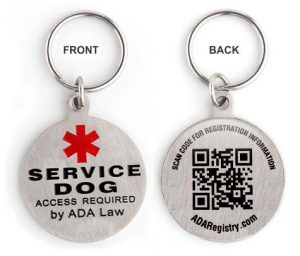
Custom Service Dog Tags
Official Dog Vests
Smart Vests
Official Public Access Kits
Complete Kits
USA & CANADA Letters

High Quality Bandanas
Service Dog Tags
Smart Tags

ESA TAGS