Weimaraner as a Service Dog
Register Any Breed
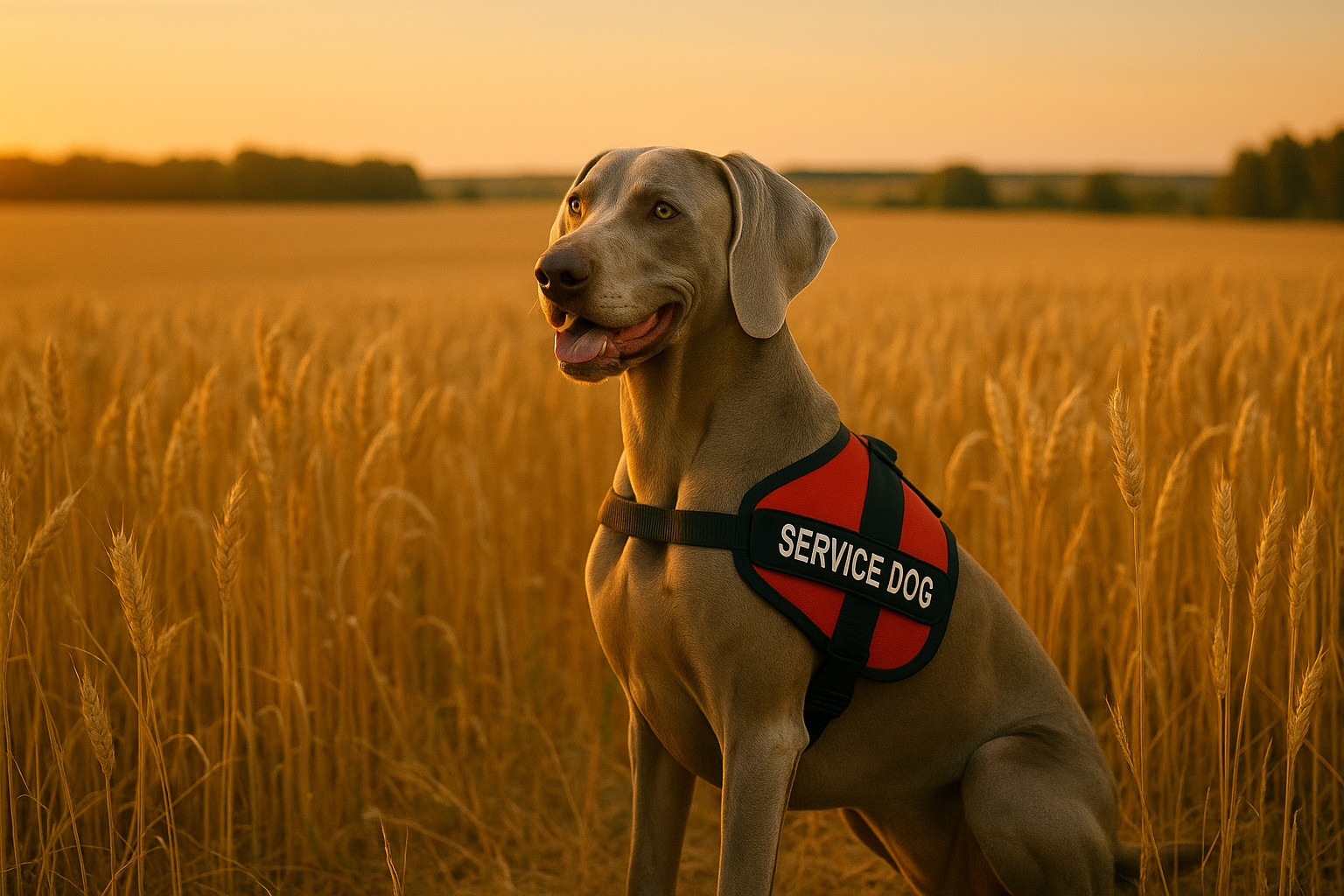
The Weimaraner, often called the "Grey Ghost" due to its sleek, silver-grey coat, is a breed celebrated for its beauty, intelligence, and energy. Known primarily as a hunting dog, the Weimaraner has begun to make its mark in the realm of service work. This guide explores the Weimaraner's suitability as a service dog, considering its physical characteristics, temperament, and overall capabilities.
Weimaraner Overview
Physical Characteristics
The Weimaraner is a medium to large-sized dog, with males typically ranging from 25 to 27 inches at the shoulder and females slightly smaller. They generally weigh between 55 to 90 pounds, making them robust enough to handle various types of service work that require strength and endurance. The breed's short coat is dense and smooth, requiring minimal grooming—a practical advantage for handlers who may not have the capacity for extensive maintenance.
Despite their attractive appearance, their physical attributes are not merely aesthetic. Their athletic build contributes significantly to their ability to perform tasks that involve mobility assistance and outdoor activities. Their expressive eyes, often described as amber or blue-grey, are not only captivating but also indicative of their alertness and intelligence.
Temperament and Attitude
Weimaraners are known for their energetic and affectionate nature. They form strong bonds with their families and handlers, demonstrating loyalty that is essential in a service dog. Their intelligence garners them high marks in trainability; they quickly learn commands and adapt to new environments. However, this intelligence also brings a level of independence that might require consistent training and socialization to ensure they remain responsive to their handlers.
Their temperament is generally friendly and outgoing, which can be beneficial for public interactions. However, their high energy levels and enthusiasm might need to be tempered in environments where calmness is required. They thrive on human companionship and attention, which suits them well to service roles but also means they may not do well being left alone for extended periods.
Types of Service Work
The Weimaraner's versatility allows them to engage in various types of service work:
- Mobility Assistance: Thanks to their size and strength, Weimaraners can be trained to assist individuals who need support with balance and movement.
- Medical Alert: Their keen sense of smell allows them to detect changes in human biochemistry, making them suitable for diabetic alert and allergen detection roles.
- Psychiatric Service: The Weimaraner’s strong bonding capability with handlers makes them effective in roles assisting those with PTSD or anxiety disorders.
- Search and Rescue: Their athleticism and keen sense of smell can also be redirected to search and rescue efforts, although this may not classically fall under service work as defined for individual assistance.
While versatile, it’s important to match their energetic disposition with a role that allows them regular physical activity to ensure they remain engaged and fulfilled.
Register Any Breed
Health Considerations
Weimaraners are generally healthy, but like all breeds, they are prone to certain genetic issues that can impact their service work effectiveness:
- Hip Dysplasia: A common concern in larger breeds, this condition can affect a Weimaraner’s ability to perform physically demanding tasks.
- Bloat: Weimaraners can be susceptible to gastric torsion, a serious and life-threatening condition, necessitating careful monitoring of feeding routines.
- Eye Problems: Certain hereditary eye conditions could affect their sensory reliability.
Health screenings and regular veterinary check-ups are recommended to maintain their health, which is paramount for any working dog.
Training and Suitability
Training a Weimaraner requires patience, consistency, and a firm yet loving approach. Their intelligence and eagerness to please work in their favor, but they can sometimes exhibit willful behavior. Early socialization and a structured environment foster obedience and confidence, necessary for reliable service work.
The breed’s natural curiosity and pursuit instincts necessitate training focused on impulse control, especially if they are to work in public or distracting environments. Positive reinforcement methods, particularly those that incorporate both physical and mental stimulation, are most effective.
Summary of Weimaraner
In summary, the Weimaraner’s physical capabilities, coupled with an affectionate and intelligent nature, make them a viable candidate for various service roles. However, their energetic disposition requires a dedicated handler willing to invest time in training and exercise.
- Pros:
- Intelligent and trainable
- Strong physical attributes for mobility assistance
- Affectionate and forms strong bonds with handlers
- Cons:
- High energy needs might overwhelm some handlers
- Requires consistent, firm training
- Prone to certain health conditions
- Ideal Service Roles:
- Mobility Assistance
- Medical Alert
- Psychiatric Support
Overall, with the right match between handler and dog, Weimaraners can flourish in service roles that utilize their strengths and accommodate their needs for activity and companionship.


-
Public Access Kits
$149.00 Learn more This product has multiple variants. The options may be chosen on the product page -
Quick Ship Premium Vests
$48.00 – $82.00 Learn more This product has multiple variants. The options may be chosen on the product page -
Service Dog Bandana
$39.95 Learn more This product has multiple variants. The options may be chosen on the product page
Custom ID Cards

Custom ID Cards
All States

Canada Cards

Custom Service Dog Tags
Official Dog Vests
Smart Vests
Official Public Access Kits
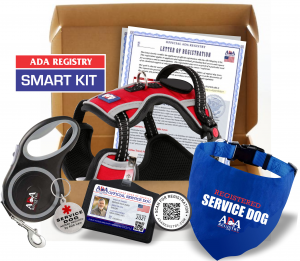
Complete Kits
USA & CANADA Letters
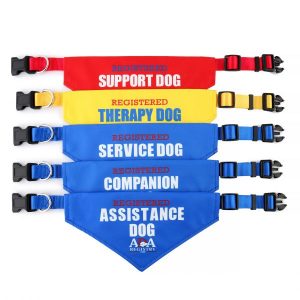
High Quality Bandanas
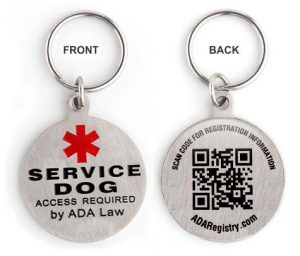
Service Dog Tags
Smart Tags

ESA TAGS