West Highland White Terrier as a Service Dog
Register Any Breed
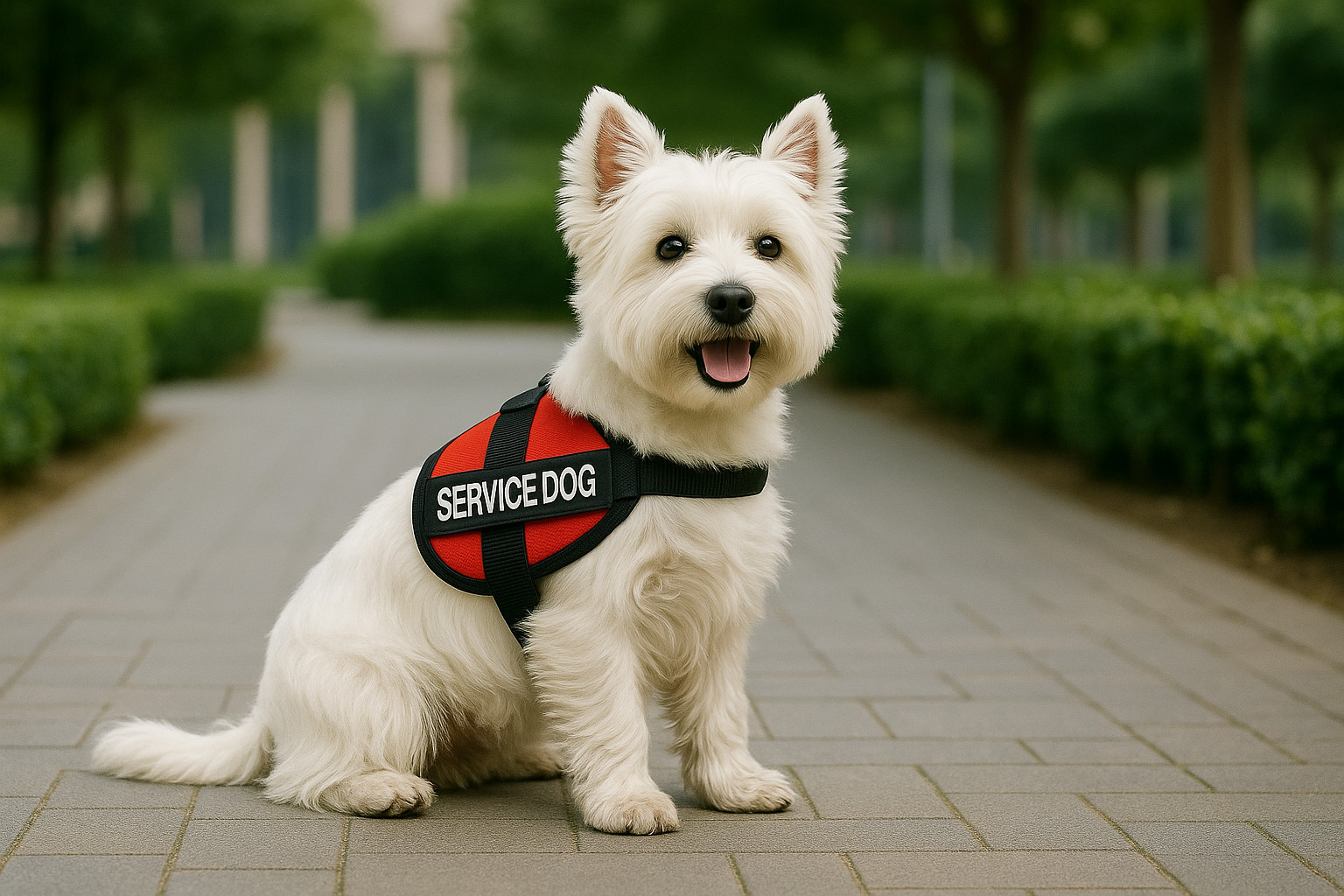
The role of service dogs in enhancing the quality of life for individuals with disabilities is well-recognized. While breeds such as Labradors and Golden Retrievers often dominate this field, there is growing interest in using smaller breeds like the West Highland White Terrier (Westie) for specific service tasks. The question arises: how well does this spirited little Terrier fulfill service dog requirements?
West Highland White Terrier Overview
Physical Characteristics
The West Highland White Terrier, often affectionately called the Westie, is a small breed known for its distinctive white coat and lively demeanor. Typically weighing between 15 to 20 pounds and standing about 10 to 11 inches tall, Westies are compact and sturdy. Their small size makes them unsuitable for tasks requiring significant physical strength, such as mobility assistance or pulling weight. However, their diminutive stature is beneficial for individuals needing a service dog that can navigate tight spaces, such as on public transportation or in small living areas.
Their dense, double-layered coat provides some protection against the elements, although regular grooming is necessary to keep it in optimal condition. The Westie's pointed ears and dark eyes give the breed an alert appearance, complementing its keen senses, particularly in tasks that involve tracking or detecting. Their physical adeptness also lends itself well to performing tasks like retrieving small objects or alerting their handlers to specific sounds.
Temperament and Attitude
Westie temperament is defined by their vivacious and determined nature. As a breed originally developed for hunting small game, Westies possess a high prey drive and are known for their courage and independence. They are generally confident and friendly, which can be advantageous in environments where they need to interact with various people and adapt to different situations.
However, these same traits can present challenges. Being independent, Westies may require more time and consistency during training, especially for tasks that require prolonged focus and obedience. Furthermore, their high energy and alertness mean they are more impulsive, which could be daunting in stressful environments if not managed correctly. Unlike breeds specifically bred for companionship or assistance, Westies are not naturally inclined to seek human direction, a factor that influences both their training ability and their suitability in certain service roles.
Types of Service Work
Deciding if a West Highland White Terrier is suitable as a service dog necessitates understanding the types of service work they are best suited for. While their small stature excludes them from physical support or mobility tasks, Westies excel in roles that require vigilance and responsiveness.
- Medical Alert Services: Westies are adept at sensing changes in their environment, making them potential candidates for medical alert roles, such as detecting seizures or diabetic alerts due to their acute sense of smell and awareness.
- Psychiatric Service Work: For individuals with anxiety disorders, PTSD, or depression, Westies can provide comfort and alert their handlers to potential panic attacks or escalating symptoms due to their bonding nature and alert demeanor.
- Hearing Dogs: Their keen auditory senses make them excellent candidates for hearing roles, alerting handlers to doorbells, fire alarms, or phone calls.
While Westies may not naturally excel at the rigorous demands and physical tasks required of traditional service work, their competence in emotional and alert-based roles is highly commendable.
Register Any Breed
Health Considerations
The health of a service dog is of paramount importance due to the demanding nature of their work. West Highland White Terriers, like all breeds, are prone to specific hereditary and genetic conditions that could affect their suitability as service animals.
Common health issues include:
- Skin Disorders: Westies frequently suffer from skin allergies, which require diligent care and can affect comfort and performance.
- Orthopedic Problems: Although small, Westies can be prone to luxating patellas and hip dysplasia, conditions that may compromise mobility.
- Cranio-mandibular Osteopathy: A particular concern in this breed, this condition causes painful jaw and skull bone growth that can interfere with eating.
Through careful breeding and regular veterinary check-ups, potential health risks can be minimized, but they remain a key consideration when evaluating a Westie's viability as a service dog.
Training and Suitability
Training a service dog requires patience, expertise, and an understanding of breed-specific characteristics. Westies, known for their intelligence and high energy, can learn complex tasks but require trainers who understand their independent streak.
While they exhibit an eagerness to please, harnessing their alert nature effectively can be challenging. Service training should focus on positive reinforcement and consistency, leveraging their natural curiosity while managing impulses. Developing focus and obedience, particularly in environments with distractions, is crucial for Westies to perform service tasks effectively.
Professional training programs that specialize in small breed service dogs may be particularly beneficial in nurturing a Westie's potential, focusing on tasks suited to their size and capabilities.
Summary of West Highland White Terrier
In concluding the examination of the West Highland White Terrier as a service dog, several strengths and limitations emerge.
Strengths:
- Small size for navigating tight spaces
- Excellent at medical alert and psychiatric services
- Keen sense of smell and hearing
- Affectionate and alert nature
Weaknesses:
- Not suitable for physical support or mobility tasks
- Health issues particularly skin and joint problems
- Requires experienced trainer to manage independence and high energy
Ideal Service Roles:
- Medical alert (e.g., diabetes, seizure detection)
- Psychiatric assistance (anxiety, PTSD)
- Hearing assistance for the hearing impaired
The West Highland White Terrier is a breed with much to offer as a service companion in specific roles that align with their traits. While not universally suited for all service tasks, their spirit, intelligence, and sensory awareness can provide immense benefits as a service dog in the right scenarios. Such evaluation underscores the necessity of matching individual dogs to the service roles where they can truly excel.


-
Public Access Kits
$149.00 Learn more This product has multiple variants. The options may be chosen on the product page -
Quick Ship Premium Vests
$48.00 – $82.00 Learn more This product has multiple variants. The options may be chosen on the product page -
Service Dog Bandana
$39.95 Learn more This product has multiple variants. The options may be chosen on the product page
Custom ID Cards

Custom ID Cards
All States
Canada Cards

Custom Service Dog Tags

Official Dog Vests

Smart Vests
Official Public Access Kits
Complete Kits
USA & CANADA Letters
High Quality Bandanas
Service Dog Tags
Smart Tags

ESA TAGS