Whippet as an Emotional Support Dog
Register Any Breed
Understanding the Emotional Support Role
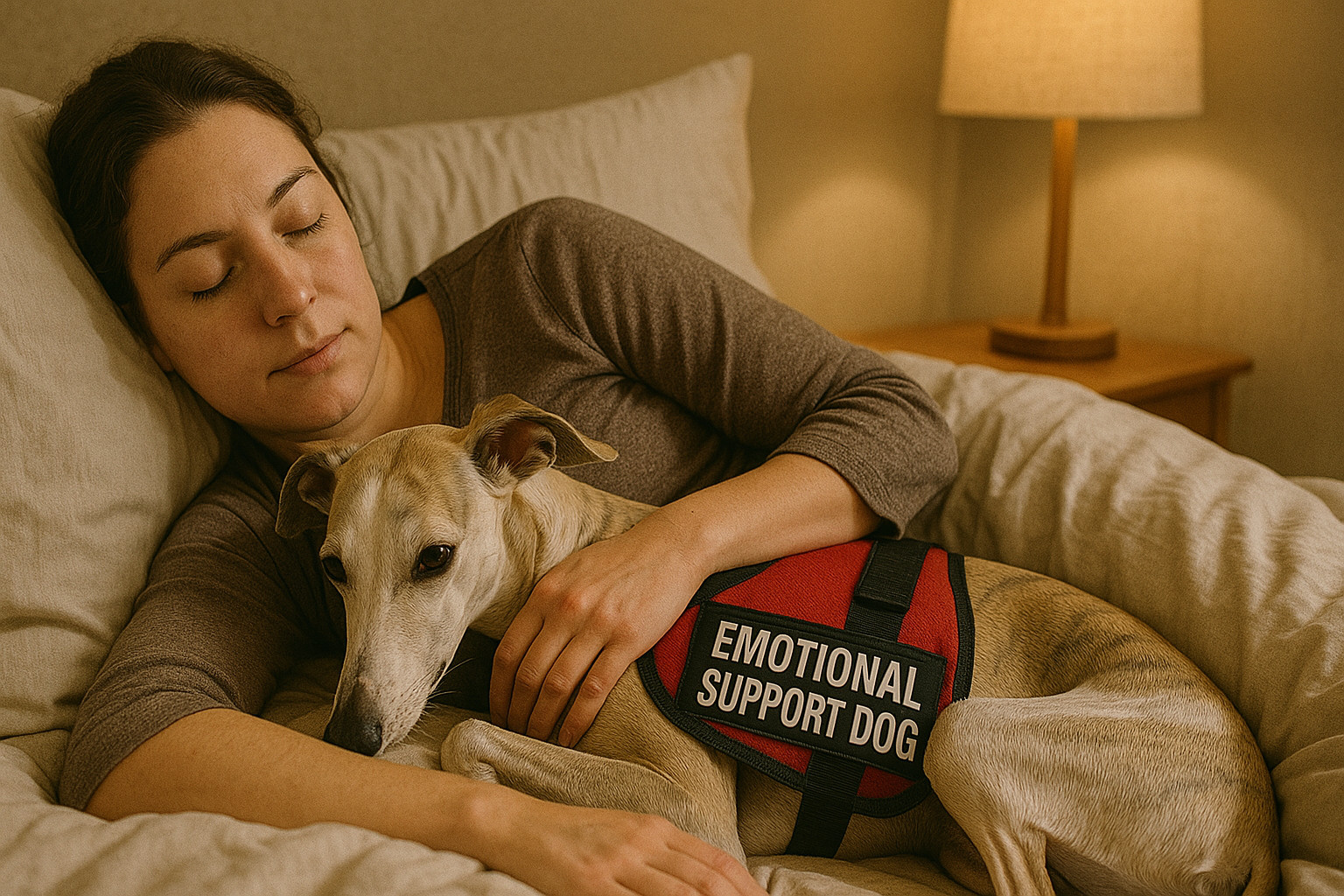
In recent years, the significant role of emotional support animals (ESAs) in alleviating mental health symptoms has been increasingly recognized. Unlike service dogs, ESAs are not trained to perform specific tasks but provide comfort and companionship that alleviates mental distress. When discussing potential breeds for such a role, the Whippet stands out with its unique combination of temperament, adaptability, and empathetic nature. This article will explore the suitability and characteristics of the Whippet as an emotional support dog, providing insights into how their traits contribute to this essential role in a compassionate and evidence-based manner.
Whippet Overview
The Whippet, a medium-sized sighthound breed, combines grace and agility with an unmistakable affection for companionship. Known for their sleek, aerodynamic build, Whippets are often mistakenly viewed only as sprinters. However, their calm and gentle demeanor makes them an excellent choice for providing emotional support.
- Size and Appearance: Typically weighing between 25-40 pounds, Whippets have a slender build, expressive eyes, and a short coat. Their physical elegance is matched by an equally graceful nature.
- Personality Traits: Often described as friendly and mellow, these dogs tend to bond closely with their human companions, making them ideal for offering emotional support.
Temperament and Emotional Connection
Whippets possess an intuitive ability to sense and respond to their owner’s emotional needs, a fundamental quality for emotional support animals.
- Empathy and Sensitivity: Whippets are highly sensitive and empathetic creatures. They often mirror the emotional state of their owners, effortlessly adopting a comforting demeanor when they sense stress or anxiety.
- Calm and Relaxed Nature: Their natural calmness can have a soothing effect on individuals suffering from anxiety or depression. Unlike more boisterous breeds, Whippets provide reassurance through quiet companionship.
- Affectionate Bonding: Whippets form strong bonds with their owners, offering consistent companionship. This enhances their ability to provide emotional and psychological stability.
Adaptability and Daily Behavior
When considering a breed for an emotional support role, adaptability to the owner’s lifestyle and daily behavior characteristics is crucial.
- Flexibility in Various Settings: Whippets are known for their adaptability, making them suitable for a variety of living conditions. Whether it’s a bustling urban environment or a quiet suburban home, Whippets adjust comfortably.
- Energy Levels: While they enjoy short, intense bursts of energy, Whippets are generally low-maintenance in terms of exercise. Their daily routines often include bursts of activity followed by long periods of restful lounging, aligning well with the needs of individuals requiring a calm presence.
Situations Where Whippet Provides Strong Support
The emotional support role of a Whippet shines in specific scenarios where their unique traits provide significant relief.
- Anxiety Alleviation: Those experiencing anxiety often find the steady presence of a Whippet calming due to its consistent and soothing nature.
- Combatting Loneliness: Whippets’ keen ability to bond and empathize makes them an excellent remedy for loneliness, offering companionship that fills emotional voids.
- Depression Support: By providing a sense of purpose and routine, Whippets contribute to mental well-being for individuals dealing with depression, encouraging engagement without overwhelming the owner.
Ideal Living Environments
Understanding optimal living conditions for a Whippet can enhance their performance as an emotional support dog.
- Apartment Living: Despite their history as racing dogs, Whippets are well-suited for apartment living due to their low noise levels and minimal exercise requirements.
- Family Homes: In a family setting, Whippets can thrive as they form bonds with family members, contributing to the emotional stability of all household members.
- Assisted Living Environments: Their gentle disposition and unobtrusive nature make them suitable for assisted living environments, offering calm companionship to those needing emotional support.
Bonds with Different Types of People
Whippets can form profound connections with a diverse array of individuals, adapting to various needs and personalities.
Register Any Breed
- Children: While generally gentle, Whippets’ sensitivity to noise may necessitate supervision around young children. Nonetheless, their loving nature often endears them to older kids.
- Elderly Individuals: The breed’s calmness and need for moderate activity align well with the lifestyle of elderly owners, providing companionship without demanding energy.
- Individuals with Mental Health Challenges: Those experiencing mental health issues often benefit from the calming presence and empathetic nature of Whippets, which help ground owners in times of emotional turmoil.
Health, Care, and Wellbeing
For a Whippet to adequately fulfill its role as an emotional support animal, understanding its health and care needs is imperative.
Common Health Considerations
While generally healthy, certain health considerations are pertinent for maintaining a Whippet’s well-being.
- Potential Health Issues: Some Whippets may experience genetic conditions, such as deafness or heart disease. Regular veterinary check-ups and monitoring are advised to maintain optimal health.
- Sensitivities: Due to their low body fat, Whippets can be sensitive to extreme temperatures and may require additional precautions in adverse weather.
Grooming, Comfort, and Maintenance Needs
Keeping a Whippet comfortable and healthy involves understanding specific grooming and care requirements.
- Minimal Grooming: The Whippet’s short coat requires low maintenance, making them easy to care for. Regular brushing is sufficient to manage shedding and maintain coat health.
- Comfort Considerations: Providing soft bedding is crucial, considering their thin coats and low body fat. This ensures that they can relax and provide support comfortably.
Preparing a Whippet for Emotional Support Work
Successful integration of a Whippet into an emotional support role involves focused preparation and training.
Socialization and Responsiveness
Early socialization and training enhance a Whippet’s ability to provide emotional support effectively.
- Training Techniques: Positive reinforcement methods work well, fostering a trusting and responsive relationship.
- Socialization Practices: Gradual exposure to various environments and people ensures that a Whippet remains calm and confident in diverse scenarios.
Managing Stress and Emotional Cues
Teaching Whippets to manage stress and read emotional cues increases their effectiveness as support animals.
- Recognizing Stress Triggers: Owners should be aware of factors that may induce stress in their Whippet and mitigate these to maintain a calm demeanor.
- Cues and Commands: Consistent cue training enables Whippets to respond appropriately to their owners’ needs, providing reassurance through trained behaviors.
Strengths, Challenges, and Ideal Homes for Whippet
Analyzing the strengths and challenges of Whippets highlights their suitability as emotional support dogs and identifies the best homes.
- Strengths: Empathy, adaptability, and calmness make Whippets excellent emotional support companions.
- Challenges: Their sensitivity to harsh climates or noise is a consideration, requiring mindful accommodation.
- Ideal Homes: Homes that provide a stable environment, regular companionship, and moderate exercise needs align well with a Whippet’s requirements and abilities.
Final Thoughts
The Whippet’s balance of calmness, empathy, and adaptability makes it a stellar candidate for an emotional support role. Providing comfort and companionship comes naturally to a Whippet, ensuring that those seeking emotional relief find a trustworthy and soothing companion in this breed. By thoroughly understanding their traits and needs, potential owners can effectively enhance a Whippet’s capacity to support emotional well-being, fulfilling a crucial role in mental health care.
Key Takeaways for the Whippet as an Emotional Support Dog
- Best suited for: Calm environments, apartment living, family homes, elderly individuals.
- Not ideal for: Extremely cold climates, noisy environments, high-stress households.
- Emotional traits: Empathetic, calm, adaptive, sensitive to human emotions.
- Care and health notes: Regular vet check-ups, minimal grooming, comfortable bedding.
- Environments where they provide the most comfort: Apartments, assisted living facilities, homes with moderate activity levels.


-
Public Access Kits
$149.00 Learn more This product has multiple variants. The options may be chosen on the product page -
Quick Ship Premium Vests
$48.00 – $82.00 Learn more This product has multiple variants. The options may be chosen on the product page -
Service Dog Bandana
$39.95 Learn more This product has multiple variants. The options may be chosen on the product page
Custom ID Cards

Custom ID Cards
All States

Canada Cards

Custom Service Dog Tags
Official Dog Vests

Smart Vests
Official Public Access Kits

Complete Kits
USA & CANADA Letters
High Quality Bandanas

Service Dog Tags
Smart Tags

ESA TAGS