Colorado Service Dog Laws
Register Any Breed
Example Cards Available In USA And Canada

Service dogs play a crucial role in assisting individuals with disabilities in leading independent lives. Understanding the legal framework surrounding service dogs is essential for handlers, landlords, business owners, and the general public. This article provides a comprehensive guide to service dog laws in Colorado, covering federal and state regulations, rights and responsibilities, and practical guidance for service dog handlers.
Overview of Service Dog and Legal Definitions in Colorado
What is a Service Dog?
A service dog is specifically trained to perform tasks for individuals with disabilities. Under the Americans with Disabilities Act (ADA), a service dog is defined as any dog that is individually trained to do work or perform tasks for the benefit of an individual with a disability, including physical, sensory, psychiatric, intellectual, or other mental disabilities. The tasks performed by the dog must be directly related to the person’s disability.
How Service Dogs Differ from Other Types of Assistance Animals
Service dogs are distinct from other assistance animals such as emotional support animals (ESAs) and therapy dogs. While ESAs provide comfort through companionship and may alleviate certain mental or emotional disorders, they do not have the specialized task-oriented training required of service dogs. Therapy dogs are typically visited by handlers to provide comfort and support to individuals in various settings, such as hospitals and nursing homes, but they are not considered service dogs under the ADA.
Key Federal Laws Affecting Service Dogs (e.g., ADA, FHA, ACAA)
Several federal laws govern the rights of individuals with service dogs:
- Americans with Disabilities Act (ADA): Protects the rights of individuals with disabilities in public areas, ensuring they are accommodated alongside their service dogs.
- Fair Housing Act (FHA): Requires landlords to make reasonable accommodations for individuals with disabilities, including allowing service dogs in housing units without pet-related charges.
- Air Carrier Access Act (ACAA): Covers the rights of passengers with disabilities to travel with service dogs in airplane cabins without additional fees.
State-Specific Service Dog Laws in Colorado
Housing Rights and Responsibilities
In Colorado, individuals with disabilities have the right to live with their service dogs without being charged extra fees, as governed by both the FHA and state laws. Landlords are required to make reasonable accommodations, and cannot impose restrictions based on the dog’s size, weight, or breed.
Public Access and Accommodation
Under ADA compliance, service dogs must be allowed to accompany their handlers in all areas of public spaces where the public is normally allowed to go, such as restaurants, stores, and hotels. In Colorado, this also includes state-owned facilities and other public service areas. Business owners can only ask two questions to verify a service dog: if the dog is required because of a disability and what task the dog is trained to perform.
Transportation and Travel Rules
Service dogs in Colorado have the right to travel with their handlers on public transportation, including buses, trains, and taxis, as well as in rideshare vehicles. The protections under the ACAA ensure that air travel is accessible, allowing service dogs to accompany their handlers in the cabin without additional fees or confinement to pet carriers.
Register Any Breed
Example Cards Available In USA And Canada
Employment and Workplace Considerations
Employers in Colorado, under the ADA, must provide reasonable accommodations for employees with disabilities, including allowing service dogs in the workplace. Employers can request documentation related to the employee’s disability and the necessity of the service dog, but they cannot require detailed medical records or refuse reasonable accommodations without evidence of undue hardship.
Documentation, Requirements, and Processes in Colorado
Service Dog Documentation and Who Can Issue It
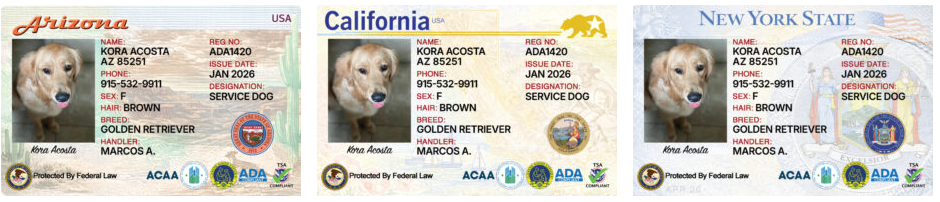
While the ADA does not mandate specific identification or documentation for service dogs, handlers in Colorado may choose to have some form of identification, such as a vest or ID card, for smoother public interactions. Health and vaccination records for the dog are generally advisable. Only licensed healthcare professionals can confirm a handler’s requirement for a service dog.
Landlord, Business, and Provider Verification Rules
In Colorado, landlords and businesses can verify service dogs by asking about the tasks the dog is trained to perform but cannot require documentation or certification. Business owners must remain updated on state laws to avoid potential discrimination lawsuits.
Rights, Limitations, and Legal Risks
Rights Service Dog Handlers Have in Colorado
Handlers have the right to be accompanied by their service dogs in all public and housing accommodations, transportation, and workplaces, provided that the dog is not a threat to the safety of others and behaves appropriately in public settings.
Limits on Service Dog Protections and Common Restrictions
Service dogs can be legally excluded from certain areas such as hospital sterile zones, food preparation areas, and private clubs not open to the public. Handlers must ensure their service dogs do not disrupt business operations or pose a legitimate safety threat to others.
Penalties for Fraud or Misrepresentation
Misrepresenting an untrained dog as a service dog in Colorado can lead to legal repercussions, including fines. The state considers this a serious offense, undermining the work of legitimate service animals and their handlers.
Practical Guidance for Service Dog Handlers in Colorado
How to Qualify for a Service Dog Legitimately
Individuals should obtain a recommendation from a licensed healthcare professional confirming their need for a service dog. They should select a dog that fits their specific disability needs and follow through with proper training, whether through a professional trainer or training the dog themselves to perform necessary tasks.
How to Talk to Landlords, Airlines, and Employers
When discussing service dog accommodations:
- Clearly articulate the tasks your service dog is trained to perform without disclosing detailed medical information.
- Provide any requested documents that verify the necessity of the service dog, as long as they comply with ADA guidelines.
- Understand your rights and calmly educate landlords and employers if misinformed about service dog laws.
Summary of Service Dog Laws in Colorado
**- Service dogs are defined by their task-oriented training to assist individuals with disabilities.
- Federal laws such as ADA, FHA, and ACAA protect service dog rights across public areas, housing, and travel.
- Colorado mandates reasonable accommodations for service dogs in housing, public spaces, and workplaces.
- No special documentation is required, but handlers may consider carrying health records or IDs for smoother interactions.
- Fraudulent representation of pets as service dogs carries legal penalties.
- Handlers should be informed of their rights and effectively communicate with landlords, airlines, and employers to enforce those rights.**
Understanding the comprehensive service dog laws in Colorado ensures that the rights of individuals with disabilities are respected and upheld, fostering an inclusive community environment.


-
Public Access Kits
$149.00 Learn more This product has multiple variants. The options may be chosen on the product page -
Quick Ship Premium Vests
$48.00 – $82.00 Learn more This product has multiple variants. The options may be chosen on the product page -
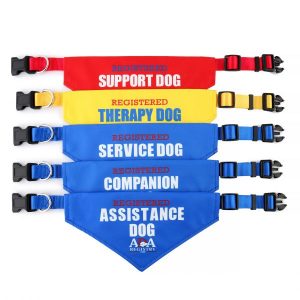
Service Dog Bandana
$39.95 Learn more This product has multiple variants. The options may be chosen on the product page
Custom ID Cards

Custom ID Cards
All States
Canada Cards

Custom Service Dog Tags

Official Dog Vests

Smart Vests
Official Public Access Kits
Complete Kits
USA & CANADA Letters

High Quality Bandanas
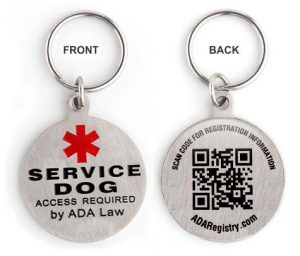
Service Dog Tags
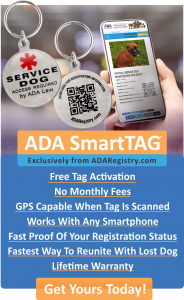
Smart Tags
ESA TAGS