New Hampshire Service Dog Laws
Register Any Breed
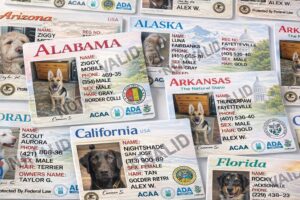
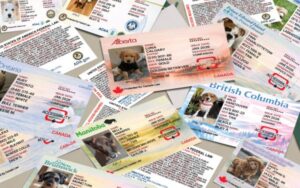
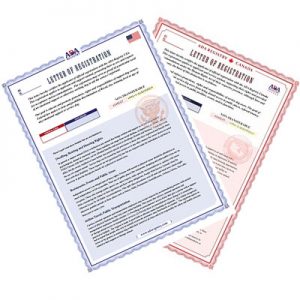
Example Cards Available In USA And Canada
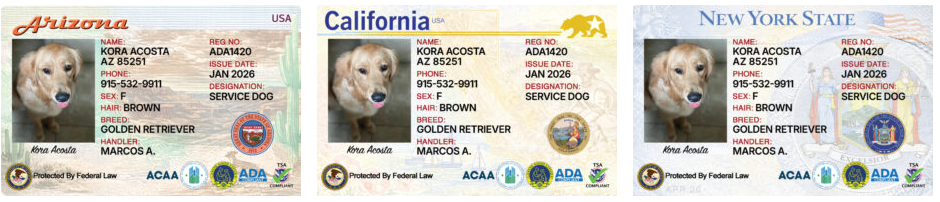
Navigating the world of service dog laws can be complex, especially with varying federal and state regulations. In New Hampshire, as in many other states, understanding the legalities surrounding service dogs is crucial for compliance and protection of rights. This guide provides a comprehensive overview of service dog laws in New Hampshire, focusing on legal definitions, rights, responsibilities, and practical guidance.
Overview of Service Dog and Legal Definitions in New Hampshire
What is a Service Dog?
In New Hampshire, as defined under federal laws such as the Americans with Disabilities Act (ADA), a service dog is specifically trained to perform tasks or do work for an individual with a disability. This includes guiding individuals who are blind, alerting individuals who are deaf, pulling a wheelchair, alerting and protecting a person who is having a seizure, and other specific tasks that directly address their handler’s disability. These dogs undergo extensive training to ensure they can provide their designated assistance reliably and safely.
How Service Dogs Differ from Other Types of Assistance Animals
Service dogs are distinct from other assistance animals, such as emotional support animals (ESAs) and therapy animals. While ESAs provide comfort and emotional support, they do not receive specialized training to perform tasks directly related to a disability. Consequently, ESAs and therapy animals are not granted the same public access rights as service dogs under ADA regulations. This distinction places service dogs in a unique legal category with specific rights and responsibilities.
Key Federal Laws Affecting Service Dogs (e.g., ADA, FHA, ACAA)
The primary federal legislation that governs service dog usage includes the Americans with Disabilities Act (ADA), the Fair Housing Act (FHA), and the Air Carrier Access Act (ACAA). These laws collectively ensure that individuals with disabilities and their service dogs are not discriminated against in various scenarios. The ADA mandates public access rights, meaning service dogs can accompany their handlers in most public places, including restaurants, hotels, and shops. The FHA covers housing, protecting individuals with disabilities from being denied housing or subjected to different terms. Meanwhile, the ACAA regulates air travel, ensuring that service dogs can accompany handlers in airplane cabins without additional fees.
State-Specific Service Dog Laws in New Hampshire
While New Hampshire adheres to federal guidelines for service dogs, it also has specific state statutes that complement these laws. State regulations reinforce the ADA, prohibiting discrimination against individuals with disabilities who use service dogs. This means that businesses and public entities in New Hampshire are legally required to permit service dogs access to all areas accessible to the general public.
Housing Rights and Responsibilities
Under both federal and New Hampshire laws, landlords must accommodate tenants who have service dogs. This applies even if the housing in question has a ‘no pets’ policy, as service dogs are not considered pets. Key responsibilities of landlords include:
- Waiving pet fees or deposits for service dogs.
- Allowing reasonable accommodations to ensure the handler’s equal enjoyment of the property.
However, a landlord may seek knowledge on the animal’s credentials only to a limited extent and should not inquire about the handler’s disability.
Register Any Breed
Example Cards Available In USA And Canada
Public Access and Accommodation
Service dogs in New Hampshire are granted significant public access rights, aligning with the ADA. Businesses and service providers:
- Cannot require documentation proving the dog’s service designation.
- May only ask if the dog is required because of a disability and what tasks it is trained to perform.
- Must allow service dogs to accompany their handlers everywhere open to the public.
Nevertheless, these rights are balanced by the handlers’ responsibility to ensure their dogs are under control, either through a harness, leash, or voice control.
Transportation and Travel Rules
Transportation providers, including buses, trains, and taxis, must accommodate service dogs under New Hampshire law. This means:
- Service dogs should not be excluded from public or private transportation.
- Providers cannot charge additional fees for the presence of a service dog.
Air travel is further governed by the ACAA, ensuring service dogs’ access to the cabin without charge, although airlines can request documentation confirming the dog’s training and the handler’s disability.
Employment and Workplace Considerations
The ADA requires employers to make reasonable accommodations for employees with service dogs unless doing so would cause undue hardship. In New Hampshire:
- Employers cannot deny employment based on the need for a service dog.
- Accommodations may include adjusting workspace or altering duties to some extent to facilitate the presence of a service dog.
- Employers may require proof that the dog performs essential tasks related to the employee’s disability.
Documentation, Requirements, and Processes in New Hampshire
Documentation of a service dog’s role is generally minimal under ADA guidelines, and New Hampshire follows suit by not mandating specific documents. However, understanding and meeting related expectations is essential.
Service Dog Documentation and Who Can Issue It
Though not required to prove a dog’s status as a service dog in every context, documentation may be necessary in some situations, such as air travel or housing disputes. In such cases, acceptable documents might include letters from physicians or licensed practitioners confirming the handler’s disability and need for a service dog. Training certificates from recognized service dog training programs may also establish credibility if queried.
Landlord, Business, and Provider Verification Rules
Verification protocols in New Hampshire allow:
- Inquiries only about whether the dog is needed for a disability and what tasks it performs.
- Landlords, service providers, and employers cannot demand medical records or elaborate details about the handler’s condition.
This sets boundaries to protect handlers’ privacy while ensuring that service dog status is legitimate.
Rights, Limitations, and Legal Risks
Service dog handlers in New Hampshire enjoy substantial rights but must also navigate certain limitations and legal risks.
Rights Service Dog Handlers Have in New Hampshire
Handlers have the right to:
- Access with their service dogs to all public places.
- Reside in housing regardless of existing ‘no pets’ policies.
- Reasonable accommodations in employment settings.
Overall, service dogs are seen as extensions of their handlers, ensuring their inclusion in all facets of public life.
Limits on Service Dog Protections and Common Restrictions
Despite robust protections, there are situations where service dogs might be prohibited. These limitations primarily pertain to maintaining public safety and order:
- If a service dog is out of control and the handler does not take effective action to control it.
- If the dog is not housebroken.
- In certain sensitive environments, such as healthcare sterilization areas.
Recognizing these boundaries helps in ensuring compliance and understanding when exceptions may apply.
Penalties for Fraud or Misrepresentation
The rise in fraudulent representation of pets as service dogs has prompted strict penalties. In New Hampshire:
- Misrepresenting a pet as a service dog can lead to fines and legal repercussions.
- Businesses have the right to remove individuals who falsely claim service dog status.
These measures protect the integrity of service dog designation and the rights of legitimate handlers.
Practical Guidance for Service Dog Handlers in New Hampshire
Practical steps aid handlers in navigating New Hampshire’s legal landscape effectively:
How to Qualify for a Service Dog Legitimately
To qualify legally for a service dog, individuals in New Hampshire should:
- Have a recognized disability under the ADA or corresponding legislation.
- Ensure their dog receives proper training to perform tasks related to their disability.
- Maintain documentation that may be necessary for travel or housing, even if not regularly requested.
How to Talk to Landlords, Airlines, and Employers
Engaging in open communication with landlords, airlines, and employers can mitigate misunderstandings. Handlers should:
- Explain their legal rights and obligations clearly.
- Offer any non-confidential documentation that supports their needs.
- Remain composed and informed about rebuttals or resistance to their claims.
Summary of Service Dog Laws in New Hampshire
Understanding service dog laws in New Hampshire ensures that both handlers and the community recognize and practice rights and responsibilities effectively. These laws ensure fair treatment while balancing the need for public safety and order. Key takeaways include:
- Service dogs are protected under ADA and state laws, allowing access to public spaces and accommodations.
- Documentation is minimally required but can be crucial in specific situations like housing and air travel.
- Misrepresentation of pets as service dogs may result in legal penalties, underlining the need for compliance and honesty.
- Effective communication is vital in addressing any disputes or clarifications with landlords, airlines, and employers.
By adhering to these guidelines and understanding their legal framework, service dog handlers in New Hampshire can ensure their rights are respected and avoid potential conflicts, ultimately fostering an inclusive society for all.


-
Public Access Kits
$149.00 Learn more This product has multiple variants. The options may be chosen on the product page -
Quick Ship Premium Vests
$48.00 – $82.00 Learn more This product has multiple variants. The options may be chosen on the product page -
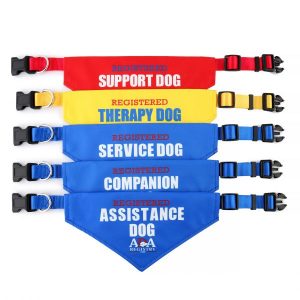
Service Dog Bandana
$39.95 Learn more This product has multiple variants. The options may be chosen on the product page
Custom ID Cards
Custom ID Cards
All States
Canada Cards
Custom Service Dog Tags
Official Dog Vests

Smart Vests
Official Public Access Kits
Complete Kits
USA & CANADA Letters
High Quality Bandanas
Service Dog Tags
Smart Tags
ESA TAGS