New Mexico Service Dog Laws
Register Any Breed
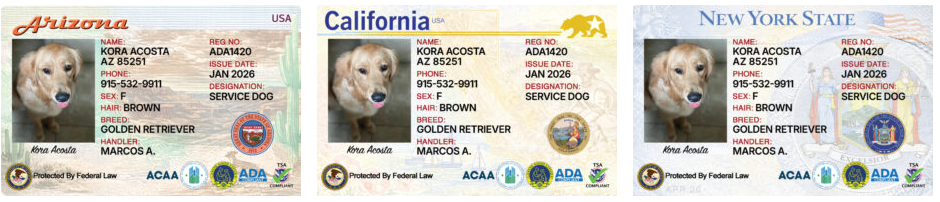
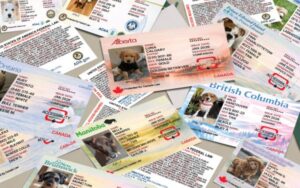
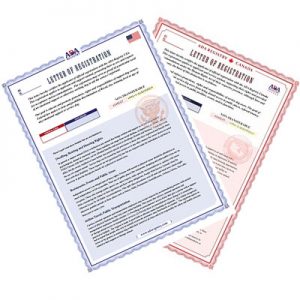
Example Cards Available In USA And Canada
Overview of Service Dog and Legal Definitions in New Mexico
Understanding the laws surrounding service dogs in New Mexico involves distinguishing between federal and state regulations. These laws ensure that individuals with disabilities can fully participate in society by granting rights to those using service animals. To navigate this legal landscape effectively, it’s crucial to define what constitutes a service dog and understand where these animals differ from other types of assistance animals.
What is a Service Dog?
Service dogs are specially trained to perform tasks or do work directly related to an individual’s disability. Tasks can range from guiding visually impaired individuals to alerting a person with diabetes when blood sugar levels become unsafe. The Americans with Disabilities Act (ADA) specifies that these dogs must be trained specifically to assist their handler, distinguishing them from other categories of animals that provide comfort or emotional support.
How Service Dogs Differ from Other Types of Assistance Animals
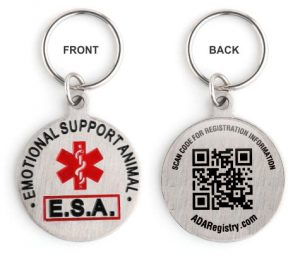
While service dogs perform critical tasks for individuals with disabilities, assistance animals like emotional support animals (ESAs) or therapy dogs provide comfort through their presence. Unlike service dogs, ESAs do not require specific training to perform tasks related to a disability. Thus, the rights afforded to ESAs differ significantly from those granted to service dogs, especially concerning access to public facilities and accommodations. New Mexico aligns with federal definitions, recognizing service dogs but not extending the same public access rights to ESAs.
Key Federal Laws Affecting Service Dogs (e.g., ADA, FHA, ACAA)
Several federal laws protect the rights of service dog handlers. The ADA mandates that public entities and businesses accommodate individuals with service dogs without additional charges. Under the Fair Housing Act (FHA), landlords must provide reasonable accommodations for individuals with service animals. The Air Carrier Access Act (ACAA) ensures that service dogs can accompany their handlers in aircraft cabins without additional fees. These laws collectively ensure that service dog handlers maintain accessibility and integration across various facets of life.
State-Specific Service Dog Laws in New Mexico
While New Mexico adheres to federal guidelines regarding service dogs, state-specific legislation enhances these protections. Service dogs are recognized under New Mexico law, supplementing the ADA by ensuring public accommodation and providing specific rights concerning housing and travel.
Housing Rights and Responsibilities
Under both the FHA and New Mexico state law, individuals with service dogs must be granted reasonable accommodations in housing situations. Landlords cannot impose pet fees or deposits, provided the animal is a genuine service dog. While ESAs also have some support under the FHA, they do not receive the same breadth of accommodations granted to service dogs within public domains.
Public Access and Accommodation
In line with the ADA, New Mexico allows service dogs to accompany their handlers into public places, including restaurants, hotels, and stores. Businesses may not charge extra fees or deny service based solely on the presence of a service dog. If the function or training of a service dog is not obvious, a business can only ask if the animal is required due to a disability and what tasks it is trained to perform.
Register Any Breed
Example Cards Available In USA And Canada
Transportation and Travel Rules
The rights afforded under the ACAA are reflected at the state level, permitting service dogs to travel in airplane cabins at no additional cost. Within New Mexico, service dogs have access to public transportation without incurring extra charges. This ensures that individuals with disabilities can travel freely and confidently throughout the state.
Employment and Workplace Considerations
Under the ADA and mirrored by New Mexico state laws, employers must offer reasonable accommodations for service dogs in the workplace, providing these do not introduce undue hardship on operations. Employers in New Mexico are encouraged to engage in interactive discussions with employees to facilitate necessary arrangements, enhancing the employment prospects for individuals with disabilities.
Documentation, Requirements, and Processes in New Mexico
Understanding the documentation and verification processes in New Mexico helps service dog handlers navigate both compliance and advocacy situations.
Service Dog Documentation and Who Can Issue It
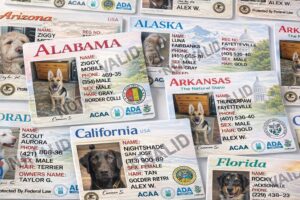
Certified documentation, such as identification cards or vest embossments, is commonly issued by training organizations, though the ADA does not require formal documentation for service dogs. In New Mexico, handlers are not obliged to provide documentation for their service dogs in public places; however, organizations may offer state identification voluntarily to minimize conflicts or confusion.
Landlord, Business, and Provider Verification Rules
In most cases, landlords and businesses are limited in their requests for documentation. They cannot request proof of disability or extensive documentation regarding the service dog’s training. Typically, only two questions are permitted: if the dog is required due to a disability and what task it is trained to perform. This line of inquiry aims to balance verification needs with the handler’s right to privacy.
Rights, Limitations, and Legal Risks
Comprehending both the rights and limitations of service dog handlers is essential to mitigate potential legal issues.
Rights Service Dog Handlers Have in New Mexico
Service dog handlers in New Mexico have extensive rights, including access to public spaces, reasonable workplace accommodations, and inclusion in housing. These rights ensure that individuals with disabilities can experience equitable and inclusive living and working environments.
Limits on Service Dog Protections and Common Restrictions
Despite these extensive rights, some limitations exist. For instance, service dogs can be excluded if they pose a direct threat to safety or cause significant disruption. Additionally, handlers are responsible for their dog’s care and hygiene in public places. Failing to adhere to these responsibilities may result in eviction from certain areas.
Penalties for Fraud or Misrepresentation
Misrepresenting a pet as a service dog undermines the integrity of existing protections and may result in penalties. In New Mexico, knowingly portraying a pet as a service dog without proper justification is considered a misdemeanor, potentially resulting in fines. This measure ensures that genuine service dogs and their handlers are respected and protected.
Practical Guidance for Service Dog Handlers in New Mexico
Service dog handlers can take practical steps to ensure they remain compliant with laws and avoid disputes.
How to Qualify for a Service Dog Legitimately
To qualify for a service dog, an individual must have a documented disability and a need for a service dog to perform tasks related to that disability. Engaging with accredited training organizations and taking advantage of state-sponsored resources are excellent starting points for those seeking a legitimate service dog.
How to Talk to Landlords, Airlines, and Employers
When communicating with landlords, airlines, or employers, service dog handlers should be prepared to explain their dog’s role, emphasizing that it performs specific tasks that aid in managing a disability. Having succinct and clear explanations aids in fostering understanding and cooperation without unnecessary conflict.
Summary of Service Dog Laws in New Mexico
Service dog laws in New Mexico ensure that individuals with disabilities can live and travel with dignity and autonomy. Key highlights include:
- Accessibility Rights: Guaranteed access to public spaces, housing, and transportation without additional fees.
- Documentation: No forced requirement for formal documentation, but identification aids smooth interactions.
- Limitations and Responsibilities: Handlers must maintain control and care standards for their service dogs.
- Penalties for Fraud: Legal repercussions exist for misrepresenting a pet as a service dog.
By understanding these elements, handlers can navigate daily life confidently and in compliance with laws.


-
Public Access Kits
$149.00 Learn more This product has multiple variants. The options may be chosen on the product page -
Quick Ship Premium Vests
$48.00 – $82.00 Learn more This product has multiple variants. The options may be chosen on the product page -
Service Dog Bandana
$39.95 Learn more This product has multiple variants. The options may be chosen on the product page
Custom ID Cards

Custom ID Cards
All States
Canada Cards
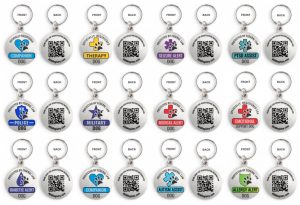
Custom Service Dog Tags
Official Dog Vests
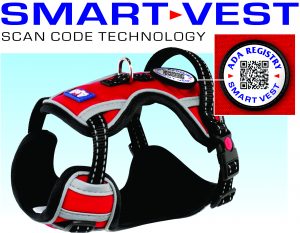
Smart Vests
Official Public Access Kits
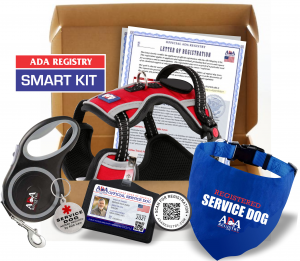
Complete Kits
USA & CANADA Letters
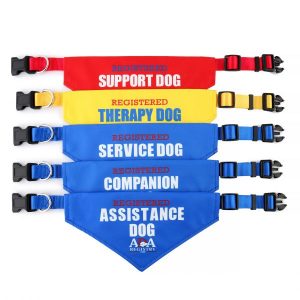
High Quality Bandanas
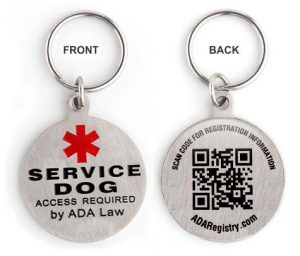
Service Dog Tags
Smart Tags
ESA TAGS