New York Service Dog Laws
Register Any Breed
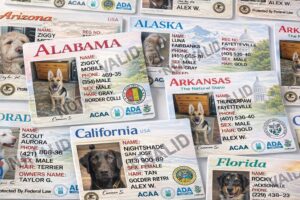
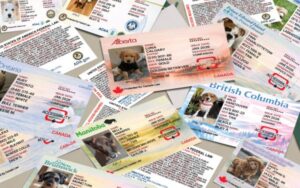
Example Cards Available In USA And Canada
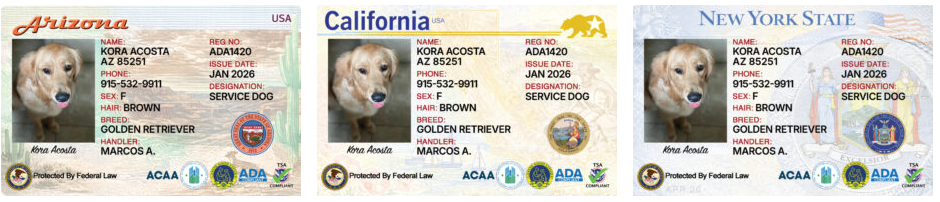
Navigating the complex landscape of service dog laws in New York requires understanding both federal guidelines and state-specific regulations. Whether you are a service dog handler, a business owner, or a landlord, knowing the rights and responsibilities related to service dogs can help foster compliance and respect across communities. This guide provides a detailed look at New York service dog laws and serves as an informational resource for all stakeholders.
Overview of Service Dog and Legal Definitions in New York
What is a Service Dog?
Under the Americans with Disabilities Act (ADA), a service dog is defined as a dog trained to perform specific tasks for individuals with disabilities. These tasks can include guiding individuals with vision impairments, alerting those with hearing impairments, pulling wheelchairs, calming someone with PTSD during an anxiety attack, and other tasks directly related to a person’s disability. In New York, this definition is consistent with federal guidelines, ensuring that service dogs are distinguished by their role and training rather than any particular certification or registration.
How Service Dogs Differ from Other Types of Assistance Animals
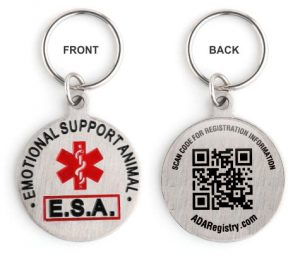
Service dogs differ fundamentally from emotional support animals (ESAs) and therapy animals. While service dogs are trained to perform tasks that directly assist with a person’s disability, ESAs provide comfort by their mere presence and do not require specific task training. Therapy animals are trained to provide comfort to a broader audience, such as in hospitals or schools, rather than being dedicated to a single handler’s disability. In New York, only service dogs as defined by the ADA are afforded full public access rights, while ESAs and therapy animals are typically subject to separate housing and access rules.
Key Federal Laws Affecting Service Dogs (e.g., ADA, FHA, ACAA)
Several federal laws influence service dog regulations, including:
- ADA (Americans with Disabilities Act): Provides the primary framework for service dog access in public areas, ensuring handlers can bring their service dogs to places open to the public.
- FHA (Fair Housing Act): Under FHA, reasonable accommodations must be provided for service animals in housing, even if the residence has a “no pets” policy.
- ACAA (Air Carrier Access Act): Outlines regulations for service dogs on airlines, allowing them to fly in the cabin without additional fees if they meet specific criteria.
State-Specific Service Dog Laws in New York
Housing Rights and Responsibilities
In New York, adherence to the Fair Housing Act assures individuals with disabilities the right to reasonable accommodations, including the presence of a service dog. Landlords must allow service dogs in all housing situations, even in buildings with pet restrictions. Documentation requests can include asking for verification of the individual’s disability and the necessity of a service dog, as long as it’s related to the accommodation being sought.
Public Access and Accommodation
Public accommodations in New York must allow service dogs to accompany their handlers in all areas where the public is normally allowed to go. This includes restaurants, stores, hospitals, and educational institutions. The state aligns closely with federal ADA guidelines, prohibiting discrimination and ensuring full and equal access for service dog handlers.
Transportation and Travel Rules
Service dogs in New York enjoy free access to most modes of public transportation. Subway systems, buses, trains, and even taxis are expected to accommodate service dogs. For air travel, New York residents must follow the provisions of the ACAA, which allows service dogs to travel in the aircraft cabin but can require documentation of training and health.
Register Any Breed
Example Cards Available In USA And Canada
Employment and Workplace Considerations
Employers in New York must provide reasonable accommodations for employees with service dogs, as mandated by the ADA and the New York Human Rights Law. The interplay between state and federal laws ensures that employers can request minimal proof that the dog is a service animal and that it aids the employee in performing job functions. Employers are encouraged to engage in an interactive process to determine appropriate accommodations.
Documentation, Requirements, and Processes in New York
Service Dog Documentation and Who Can Issue It
In New York, no official state registry for service dogs exists, and neither registration nor certification is needed for ADA protection. Handlers can be asked if their animal is a service dog and what tasks it is trained to perform. Healthcare providers or rehabilitation specialists typically issue documentation corroborating the need for a service dog, but business owners cannot demand proof of certification.
Landlord, Business, and Provider Verification Rules
Landlords and businesses may verify if an animal is a service dog by asking:
- If the dog is required because of a disability.
- What work or task the dog has been trained to perform.
They cannot, however, ask for a demonstration, request medical documentation, or insist on special identification for the dog.
Rights, Limitations, and Legal Risks
Rights Service Dog Handlers Have in New York
Service dog handlers in New York are legally entitled to enter public spaces with their service animal. They can also demand accommodations in housing and expect non-discrimination in employment. These rights ensure that handlers have equal access to services and opportunities.
Limits on Service Dog Protections and Common Restrictions
While service dogs are granted extensive access rights, there are limitations. For example:
- Control and Behavior: A service dog must be under control at all times. This typically means being harnessed, leashed, or tethered unless it interferes with the work of the dog.
- Removal for Cause: A service dog may be legally excluded if it poses a direct threat to the health and safety of others or is not housebroken.
Penalties for Fraud or Misrepresentation
In New York, it is illegal to misrepresent a pet as a service animal. This fraud not only undermines the rights of those who legitimately need service dogs but can lead to fines and legal repercussions, emphasizing the importance of honesty in representations.
Practical Guidance for Service Dog Handlers in New York
How to Qualify for a Service Dog Legitimately
Qualifying for a service dog involves:
- Verification of Disability: A medical or psychiatric evaluation confirming the disability.
- Prescribing a Service Dog: A professional’s recommendation for a service dog as part of treatment.
- Training: Enrolling with recognized training organizations to ensure the dog is equipped for specific tasks.
How to Talk to Landlords, Airlines, and Employers
Effective communication includes:
- Being prepared with evidence of your dog’s training and purpose.
- Understanding and articulating your rights under federal and state laws.
- Engaging in constructive dialogue, ensuring all parties are informed and compliant.
Summary of Service Dog Laws in New York
– Service dogs in New York receive comprehensive protection under federal and state laws.
– No certification is required, but handlers must be ready to explain the animal’s function.
– Misrepresentation is a punishable offense, stressing the need for transparency.
– Ensuring understanding and communication with landlords and employers protects rights and responsibilities.
– Ongoing education and adherence to laws promote harmonious integration of service dogs in public and private spheres.
Understanding and adhering to these guidelines enables service dog handlers in New York to comfortably navigate their daily lives while ensuring respect, compliance, and mutual understanding within the community.


-
Public Access Kits
$149.00 Learn more This product has multiple variants. The options may be chosen on the product page -
Quick Ship Premium Vests
$48.00 – $82.00 Learn more This product has multiple variants. The options may be chosen on the product page -
Service Dog Bandana
$39.95 Learn more This product has multiple variants. The options may be chosen on the product page
Custom ID Cards
Custom ID Cards
All States
Canada Cards
Custom Service Dog Tags
Official Dog Vests
Smart Vests
Official Public Access Kits
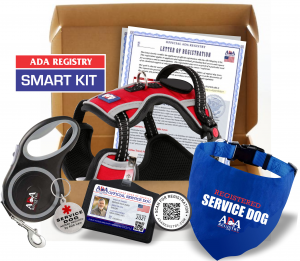
Complete Kits
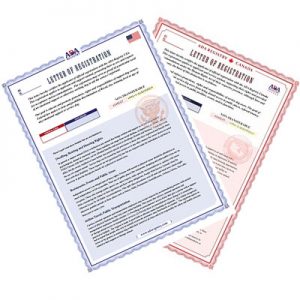
USA & CANADA Letters
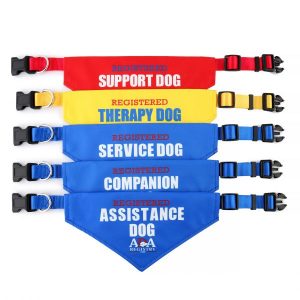
High Quality Bandanas
Service Dog Tags
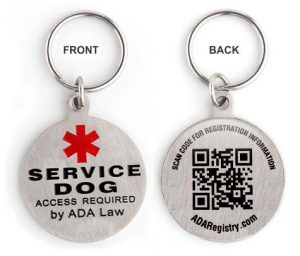
Smart Tags
ESA TAGS