Ohio Service Dog Laws
Register Any Breed
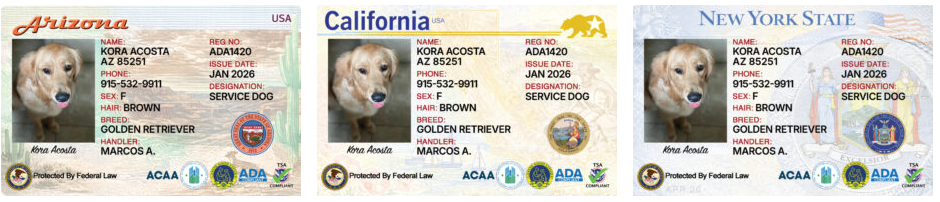
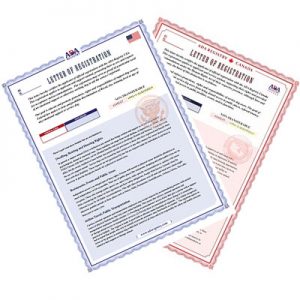
Example Cards Available In USA And Canada

Service dogs serve a vital role in assisting individuals with disabilities, granting them greater independence and access to public life. Understanding the legal landscape surrounding service dogs in Ohio is essential for both handlers and business owners, ensuring compliance and reducing potential conflicts. This guide delves into the definitions and laws applicable to service dogs in Ohio, while also offering practical advice for handlers and those interacting with service dogs.
Overview of Service Dog and Legal Definitions in Ohio
What is a Service Dog?
A service dog is defined under the Americans with Disabilities Act (ADA) as a dog that has been individually trained to perform tasks or do work to assist a person with a disability. Such disabilities can include physical, sensory, psychiatric, intellectual, or other mental disabilities. Tasks performed by service dogs might encompass guiding individuals with visual impairments, alerting those with hearing difficulties, pulling a wheelchair, providing alerts during a seizure, or calming a person with PTSD during an anxiety attack.
How Service Dogs Differ from Other Types of Assistance Animals
Unlike service dogs, emotional support animals (ESAs) and therapy dogs do not receive individual task-specific training to mitigate disabilities. ESAs provide comfort and company, which can be therapeutic for individuals with mental health issues, but they are not recognized as service animals under the ADA. Similarly, therapy dogs provide emotional benefits and are often used in therapeutic settings but are not seen as service dogs under the law.
Key Federal Laws Affecting Service Dogs
Federal laws provide a foundational understanding of service dog regulations. The ADA prohibits discrimination and ensures that people with disabilities have the same rights and opportunities as everyone else. The Fair Housing Act (FHA) allows service dogs and emotional support animals to reside with their owners, regardless of pet policies. The Air Carrier Access Act (ACAA) provides for service dogs to fly with their handlers in the cabin without additional fees.
State-Specific Service Dog Laws in Ohio
Housing Rights and Responsibilities
In Ohio, the Fair Housing Act protects individuals who use service dogs, allowing them to live with their assistance animals regardless of a landlord’s pet policy. Tenants must inform landlords about their need for a service dog and may need to provide documentation supporting this requirement. However, landlords cannot charge pet fees or deposits for service dogs.
Public Access and Accommodation
Service dogs are permitted in public accommodations such as restaurants, hotels, and stores under both federal and Ohio state law. Businesses must allow service dogs to accompany their handlers into all areas open to the public, though they may ask if the dog is required due to a disability and what tasks it performs. A service dog can be excluded if it is out of control or not housebroken.
Transportation and Travel Rules
Ohio residents benefit from the ACAA, which ensures service dogs can accompany their handlers on flights. Within Ohio, public transportation systems must also allow service dogs to travel with individuals, guaranteeing their rights to access without extra fees. When traveling in taxis or rideshares, service dogs must be accommodated.
Register Any Breed
Example Cards Available In USA And Canada
Employment and Workplace Considerations
The ADA requires that employers provide reasonable accommodations for employees with disabilities, including the use of service dogs. Employees may be required to demonstrate the necessity of the service dog for work, and employers must engage in a cooperative dialogue to reasonably accommodate the worker’s needs without causing undue hardship.
Documentation, Requirements, and Processes in Ohio
Service Dog Documentation and Who Can Issue It
Ohio does not specifically require registration or certification for service dogs. However, handlers may present documentation from a licensed healthcare provider that specifies the need for a service dog to mitigate their disability. This can be useful in housing and employment contexts to smooth discussions and provide necessary proof.
Landlord, Business, and Provider Verification Rules
While Ohio law aligns with federal mandates, landlords and business owners can verify a service dog’s role by asking if it is required for a disability and what tasks it has been trained to perform. However, they cannot request proof of the disability or demand documentation certifying the animal’s training.
Rights, Limitations, and Legal Risks
Rights Service Dog Handlers Have in Ohio
Service dog handlers in Ohio enjoy the right to access public places, housing, transportation, and workplaces alongside their dogs without discrimination. They are exempt from pet-related fees in housing and public accommodations.
Limits on Service Dog Protections and Common Restrictions
There are certain scenarios where service dogs may be lawfully excluded. If the dog’s presence compromises safety or fundamentally alters the nature of a service, such exclusion is justified. Additionally, if a service dog is aggressive or not under control, its removal is permissible.
Penalties for Fraud or Misrepresentation
Misrepresenting a pet as a service dog carries consequences. Ohio imposes penalties on individuals fraudulently claiming their pet as a service dog. Legal repercussions may include fines or other disciplinary actions, highlighting the importance of integrity in representing service animals.
Practical Guidance for Service Dog Handlers in Ohio
How to Qualify for a Service Dog Legitimately
To qualify for a service dog, one needs to document a disability that benefits from the assistance of a trained dog. Engaging with a professional trainer or a service dog organization can streamline the process and ensure that the dog’s training aligns with specific needs.
How to Talk to Landlords, Airlines, and Employers
Clear and proactive communication is crucial. When discussing the necessity of a service dog with landlords, airlines, or employers, focus on the tasks the dog performs and how it mitigates the handler’s disability. Providing documentation from healthcare providers can aid in illustrating the necessity and legality of the dog’s presence.
Summary of Service Dog Laws in Ohio
Ohio’s service dog laws balance federal protections with state-specific stipulations. Handlers must be prepared with necessary documentation and informed about their rights to effectively advocate for themselves and their service animals.
Key Points for Service Dog Handlers in Ohio:
- Understand the definition and purpose of service dogs under the ADA.
- Know your rights: access to public places, housing, transportation, and employment.
- Communicate clearly with landlords, employers, and service providers.
- Be aware of restrictions and scenarios where your service dog might be lawfully excluded.
- Avoid misrepresenting pets as service animals to circumvent legal penalties.
- Maintain cooperation with authorities and businesses to ensure seamless interactions.
This comprehensive understanding of Ohio service dog laws will empower handlers to navigate public spaces, housing accommodations, and employment scenarios with greater confidence, ensuring mutual respect and legal compliance.


-
Public Access Kits
$149.00 Learn more This product has multiple variants. The options may be chosen on the product page -
Quick Ship Premium Vests
$48.00 – $82.00 Learn more This product has multiple variants. The options may be chosen on the product page -
Service Dog Bandana
$39.95 Learn more This product has multiple variants. The options may be chosen on the product page
Custom ID Cards

Custom ID Cards
All States
Canada Cards

Custom Service Dog Tags

Official Dog Vests

Smart Vests
Official Public Access Kits
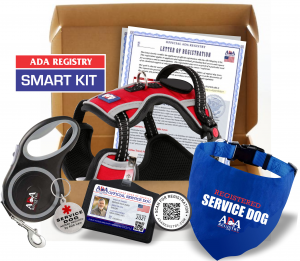
Complete Kits
USA & CANADA Letters
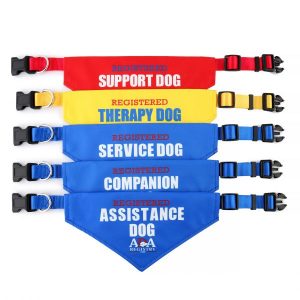
High Quality Bandanas
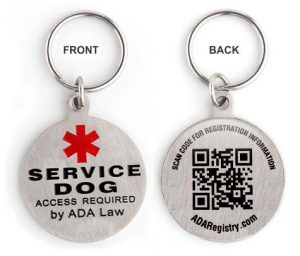
Service Dog Tags
Smart Tags
ESA TAGS